 A MustartPower guide
Portable J1772 EV Chargers: Are They Worth the Convenience?
A portable j1772 charger offers flexibility for EV owners who need backup charging on the road, but the trade-off between speed and convenience matters.
A portable j1772 charger offers flexibility for EV owners who need backup charging on the road, but whether it’s worth buying depends on your charging habits and how often you travel beyond your home network.
Most EV owners rely on wall-mounted chargers at home, but a portable option fills a real gap: you can charge at different locations without installation. The question is whether the slower speeds and limited power justify the cost and convenience factor.
What is a portable j1772 charger and why consider one?
A portable j1772 charger is a compact, plug-in device that connects your EV to standard household or commercial outlets. Unlike wall chargers that stay installed in one place, you pack it, take it with you, and plug into available power sources.
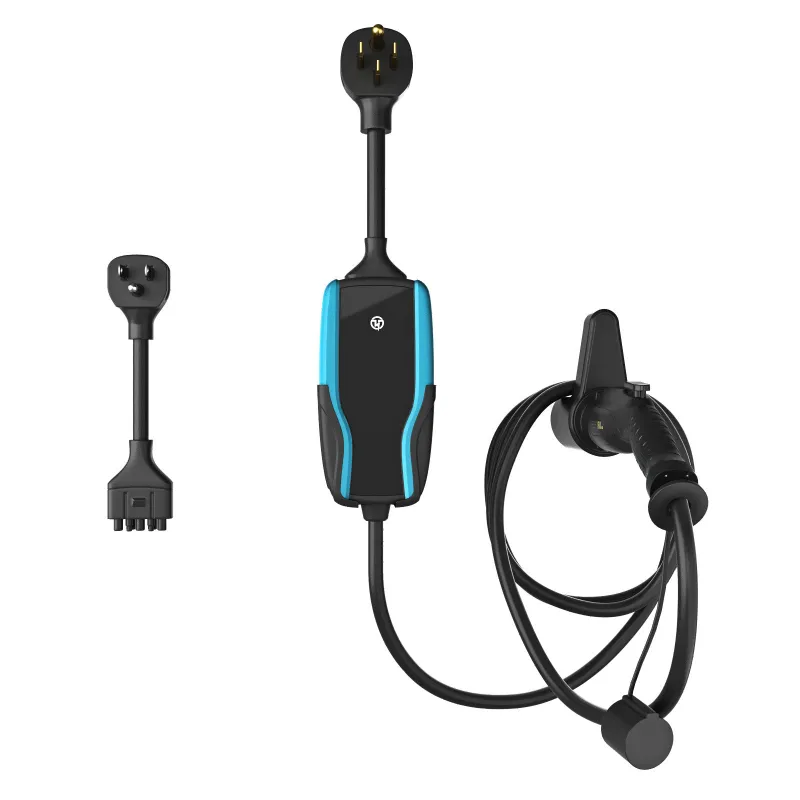
The portable j1772 charger comes in two main configurations: level 1 and level 2. Level 1 uses a standard 120V outlet and adds 3 to 5 miles of range per hour. Level 2 steps up to 240V and charges 5 to 10 times faster, adding 25 to 30 miles per hour depending on the charger’s amp rating.
Real use cases where owners reach for portables:
- Road trips to areas without public charging infrastructure
- Temporary moves or extended stays away from home
- Backup power if your primary charger fails
- Testing before committing to a wall installation
- Situations where landlords or apartments don’t permit permanent installation
How does a j1772 level 2 charger compare to level 1?
| Feature | Level 1 | Level 2 |
|---|---|---|
| Voltage | 120V | 240V |
| Typical Power | 1.4 to 1.8 kW | 3.3 to 19.2 kW |
| Range per Hour | 3 to 5 miles | 25 to 30 miles |
| Outlets | Any standard household outlet | NEMA 14-50, NEMA 6-50, others |
| Installation | Plug and go | May need electrician for outlet |
| Cost | $300 to $600 | $400 to $1,200 |
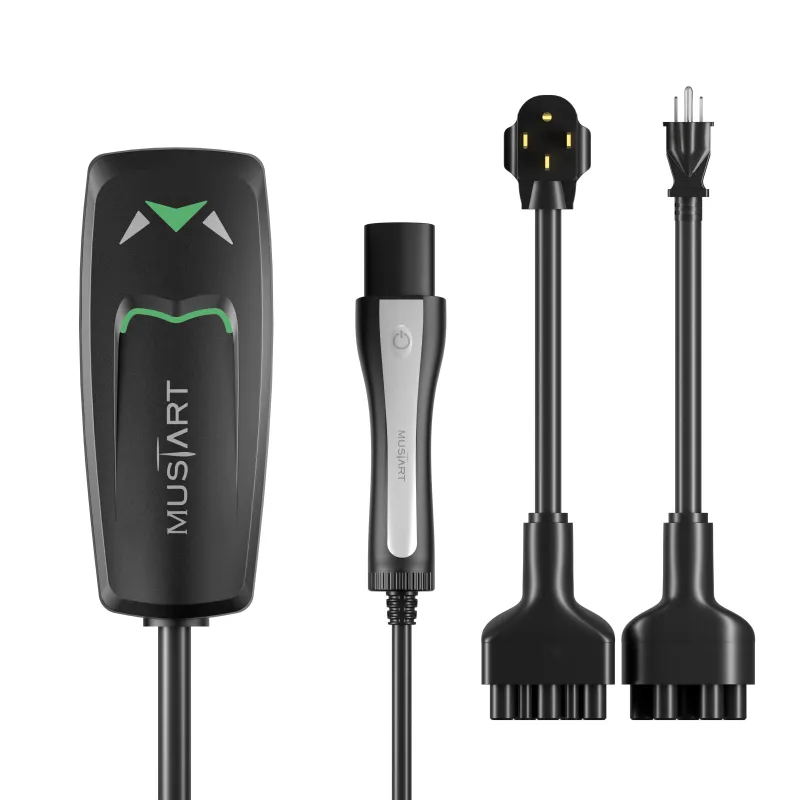
A j1772 level 1 charger works anywhere but charges slowly, so it suits overnight charging or topping up between short trips. A j1772 level 2 charger requires access to a 240V outlet but delivers real charging speed that works for day trips and travel.
The tesla level 1 charger follows the same principle but with Tesla-specific connectors. If you own a Tesla, you’ll also see tesla level 2 charger options, which use the same speedier charging logic but fit Tesla vehicles.
What outlet types matter for portable charging?
Your charging speed depends directly on the outlet you plug into. The most common outlets for level 2 portable chargers are NEMA standards that define voltage and amp capacity.
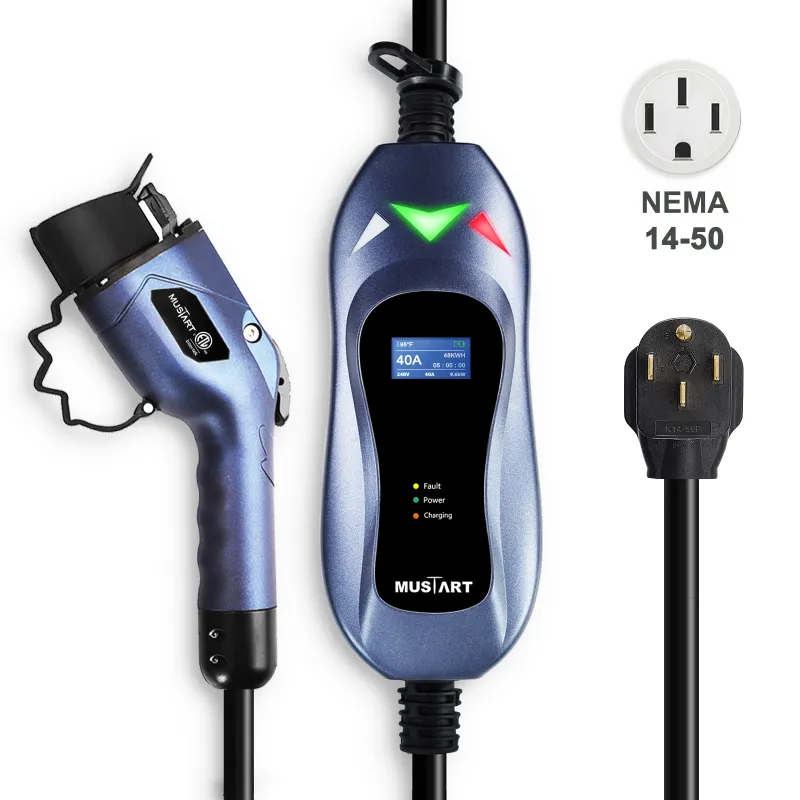
A plug nema 14-50 delivers 240V at 50 amps, supporting full power level 2 charging. You’ll find these in RV parks, some newer homes, and commercial locations. They’re considered the standard for home level 2 if you’re upgrading from level 1.
The schumacher 240v 50a nema 14-50 level 2 ev wall charger shows what a home installation looks like if you want fixed charging. For portable needs, chargers that work with this outlet type give you maximum flexibility across different locations.
Other outlets like NEMA 6-20 or NEMA 5-15 exist, but they deliver lower amperage and slower charging. Check what outlets are available before buying; a portable charger is only useful if compatible power sources exist where you plan to use it.
Should you buy a portable over a wall charger?
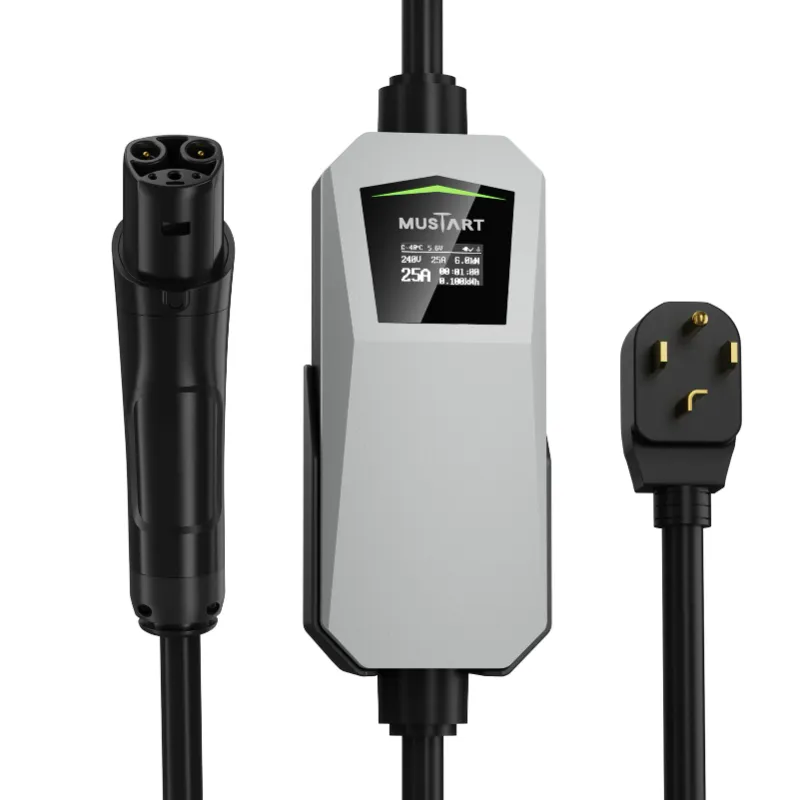
Wall chargers aren’t portable, but they’re cheaper per use over time because you own the installation. A tesla level 2 charger or dewalt level 2 40amp smart ev charger mounted at home charges every vehicle you own and serves as your primary energy source.
A portable charger makes sense if you:
- Travel frequently and need charging flexibility across multiple locations
- Don’t own your home or can’t install a permanent charger
- Want backup charging without a large upfront installation cost
- Travel between vehicles or temporarily borrow an EV
A portable doesn’t replace home charging. Instead, it supplements it. The convenience of having a charger you can take anywhere is real, but the slower speeds and limited outlet availability mean it’s best used as a secondary or travel option, not your main power source.
For pricing and current availability, check the latest offers at MustartPower. They carry multiple models and regularly update their selection.
Real-world considerations for portable j1772 chargers
Portables offer flexibility, but several practical factors affect whether they’re right for you:
- Weight and storage: Level 2 portables weigh 10 to 30 pounds with cable coiled. You’ll need trunk or cargo space for regular travel.
- Outlet availability: Rural areas and older RV parks may lack 240V outlets, limiting your charger to level 1 speeds.
- Charging time reality: Even with level 2, a full battery charge takes 8 to 12 hours on a portable. Expect longer if weather is cold or the outlet’s amperage is limited.
- Temperature and weather: Portable chargers perform differently in extreme heat or cold. Some models include safety features to handle this; others throttle power.
- Cable durability: Portables live in your vehicle and get moved frequently. Thicker cables last longer but add weight. Thinner cables are convenient but wear faster.
According to Mobile Energy Insights and industry fleet charging data, portable charging adoption is growing among owners who split time between multiple locations, not as a primary home solution.
Who benefits most from a portable j1772 charger?
Portable chargers appeal to specific owner profiles rather than all EV drivers.
- Travelers and nomads: If you spend months in an RV or move between rental properties, a portable gives you charging independence without relying on public networks.
- Multi-vehicle households: Own both an EV and a traditional car? A portable works on any EV with a j1772 port, so one charger serves multiple vehicles.
- Apartment and condo residents: Many can’t install permanent chargers. A portable lives in your car or garage and moves with you if you relocate.
- Fleet and commercial users: Small businesses or tradespersons who operate multiple EVs benefit from one portable charger they rotate between vehicles.
If you charge primarily at home and rarely travel, a fixed wall charger is the better investment. If you’re rarely in the same place twice, a portable becomes essential.
For equipment that fits your specific needs, grab the code to see what models MustartPower has in stock right now, plus current pricing.
Key takeaway
A portable j1772 charger isn’t a replacement for home charging, but it solves a real problem for owners who charge in multiple locations or can’t install a permanent charger. Level 2 portables offer genuine speed and flexibility; level 1 options are truly portable but slow. The question isn’t whether it’s worth owning one, but whether your lifestyle and travel patterns actually need the convenience it provides.
Questions
Can I use a portable j1772 charger anywhere?
A portable j1772 charger works at any outlet that matches its connector type, but charging speed depends on the outlet's voltage and amperage. Level 1 works at any standard 120V outlet; level 2 requires a 240V outlet like NEMA 14-50. Many rural areas and older buildings lack 240V power, limiting you to slower level 1 charging.
How long does it take to charge with a portable j1772 charger?
Level 1 adds 3 to 5 miles per hour and typically charges a full battery in 24 to 48 hours. Level 2 adds 25 to 30 miles per hour, typically reaching a full charge in 8 to 12 hours. Cold weather and lower amperage outlets reduce these speeds significantly.
Is a portable j1772 charger cheaper than a wall charger?
Portable chargers cost less upfront (typically $300 to $1,200) than a wall installation with an electrician, which can run $1,000 to $3,000. However, if you charge daily at home, a fixed charger spreads its cost across more uses and becomes cheaper per charge over time.
What's the difference between a tesla level 2 charger and a j1772 charger?
Tesla vehicles use a different connector than the SAE j1772 standard. A tesla level 2 charger works only with Tesla EVs, while a j1772 charger works with any non-Tesla EV that has a j1772 port. Both offer the same 240V level 2 speeds when matched to the correct vehicle.
Can I use a portable charger as my only EV charging source?
Technically yes, but it's not practical for daily drivers. Slow speeds, limited outlet availability, and the need to physically plug in at different locations make portables best suited as backup or travel chargers, not primary charging infrastructure.
Do portable j1772 chargers work in cold weather?
Portable chargers function in cold weather, but most models throttle charging power to protect the battery. Extremely cold temperatures (below 0°F) can significantly reduce charging speed or cause the charger to pause until the battery warms up.
Products in this guide
Shopping at MustartPower? See the discount code
$10 OFF All Orders
More in this series
Can You Use a Level 1 Charger Long-Term? Pros and Cons Explained27 Aug 20264 minNEMA 14-50 vs 6-50 Outlets: What’s the Difference for Your Tesla?27 Aug 20265 minHow to Install a 240V Tesla Charger at Home: A Step-by-Step Guide27 Aug 20266 minLevel 1 vs Level 2 Tesla Chargers: Which One Do You Actually Need?27 Aug 20264 min