 A Leonids guide
What to Look for in an Oval Lab Diamond Engagement Ring: A Buyer’s Guide
Learn everything you need to know before buying an oval lab diamond engagement ring, from cut quality and thin-band settings to metal choices and pricing by carat.
Choosing an engagement ring is one of the biggest jewelry decisions you will ever make, and an oval lab diamond engagement ring offers a brilliant mix of classic elegance and modern sustainability. Oval diamonds elongate the finger, sparkle similarly to a round brilliant, and typically cost less per carat than their round counterparts because of higher rough-yield during cutting. In this guide we walk through the cut qualities, setting styles, metal choices, and pricing factors that matter most so you can shop with confidence.
Why the Oval Cut Works So Well for Engagement Rings
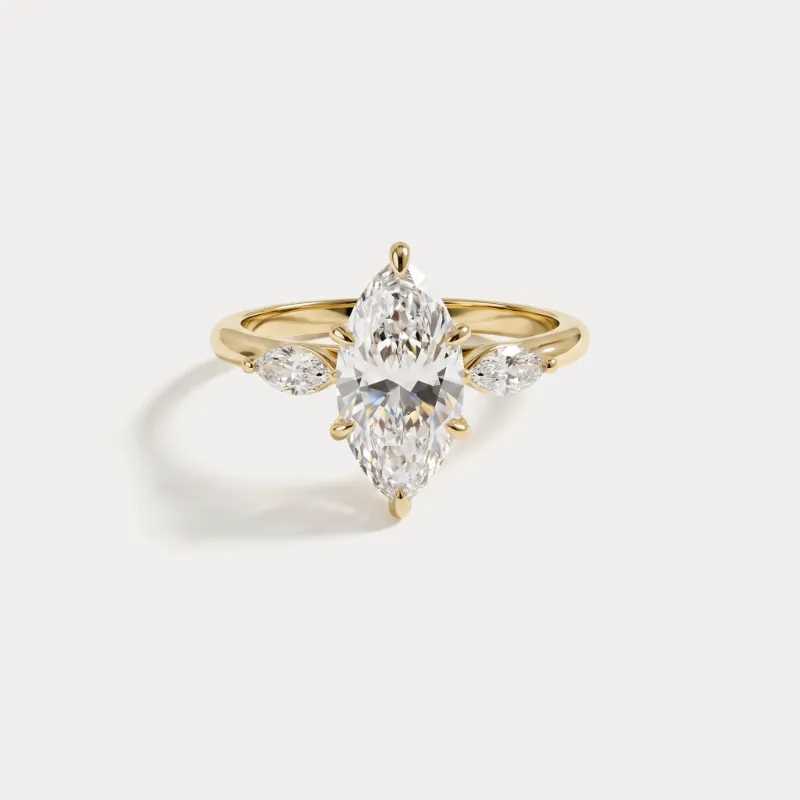
The oval modified brilliant cut was developed in the 1960s by Lazare Kaplan, and it has become one of the most sought-after shapes in the lab grown diamond world. It delivers exceptional fire and brilliance because its 56 to 58 facets behave much like a round brilliant. Beyond the sparkle, the elongated silhouette creates a flattering finger-lengthening effect that makes the stone appear larger than its actual carat weight. That visual bonus is one reason many shoppers compare oval and marquise shapes side by side. If you love that slender profile, you might also want to see our marquise ring collection for a slightly different take on an elongated silhouette.
Oval Engagement Rings Thin Band: How Setting Shape Affects the Look
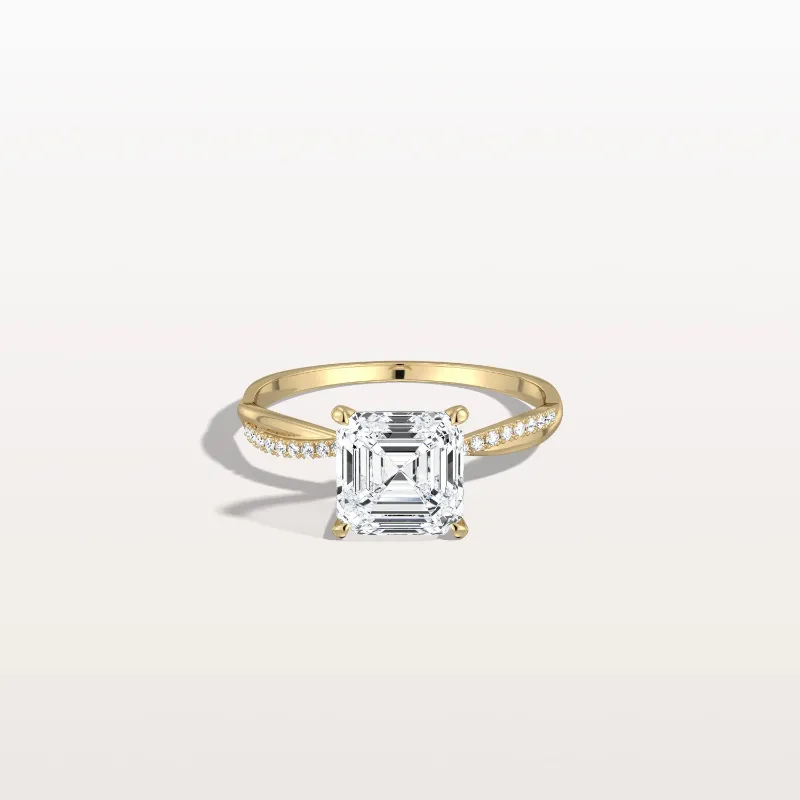
A thin band is the most popular style choice for oval diamonds right now, and for good reason. A slim shank, often 1.5 mm to 2.0 mm wide, puts all the visual weight on the center stone while keeping the ring comfortable for daily wear. When you pair an oval engagement rings thin band with a lab diamond, the result feels airy and modern.
That said, durability matters. We recommend a band thickness of at least 1.6 mm for a solitaire with a 1 to 2 carat center stone, and 1.8 mm if you plan to stack wedding bands. The setting itself also influences how the stone is held. A four-prong or six-prong basket setting provides excellent light exposure and security. A bezel setting offers more protection and a sleek, almost futuristic look. Whichever route you choose, make sure the prongs or bezel frame the oval’s elegant curve rather than hiding it.
Understanding Oval Lab Diamond Quality: The 4 Cs
The four Cs apply to lab grown diamonds the same way they apply to mined diamonds. Here is what to prioritize specifically for an oval shape.
Cut: This is the most critical C for ovals. Unlike round brilliants that have a standardized cut grade from labs like GIA, oval diamonds rely more on symmetry and proportions. Look for Excellent or Ideal cut grades, and watch for a “bow-tie” effect (a dark shadow across the middle). A well-cut oval minimizes the bow-tie, while a poorly cut one makes it glaring.
Color: Lab diamonds in the D-to-F range are colorless and the most popular for engagement rings. G and H offer a near-colorless look at a more accessible price point and pair beautifully with yellow or rose gold.
Clarity: Because ovals have large facets that can show inclusions more easily, VS1 or VS2 clarity is a safe sweet spot. You get an eye-clean stone without paying the premium for internally flawless.
Carat: The elongated shape makes an oval look larger face-up than a round of the same carat weight. A 1 carat oval has about the same face-up area as a 1.15 carat round, so you get more visual presence for your budget.
Oval Lab Diamond Pricing by Carat Comparison
Carat Weight | Typical Face-Up Look | Best For — | — | — 1 Carat | Similar presence to a 1.15 ct round | Slim bands, minimalist solitaires 2 Carat | Bold yet elegant, elongates most finger sizes | Statement solitaires, halo settings 3 Carat | Substantial coverage | Three-stone settings, wide-band designs 4 Carat | Maximum presence, requires sturdy setting | Showpiece rings with hidden halos
For current pricing on a specific oval lab diamond ring, we recommend checking the latest deals at the store. You can check the latest price on their oval selections, and our readers get 15% off all orders.
Metal Choices: Why 750 Gold Is a Favorite
The metal you choose frames your center stone and affects the overall feel of the ring. 750 gold: which is 18-karat gold, meaning 75 percent pure gold alloyed with other metals, is our top recommendation for durability and color richness. It comes in three main shades:
- 750 Yellow Gold: Warm and traditional, a beautiful contrast against colorless or near-colorless lab diamonds
- 750 White Gold: Cool and modern, makes D-color diamonds look icy bright; usually rhodium-plated for extra shine
- 750 Rose Gold: Romantic and trending, especially popular with oval and cushion cuts
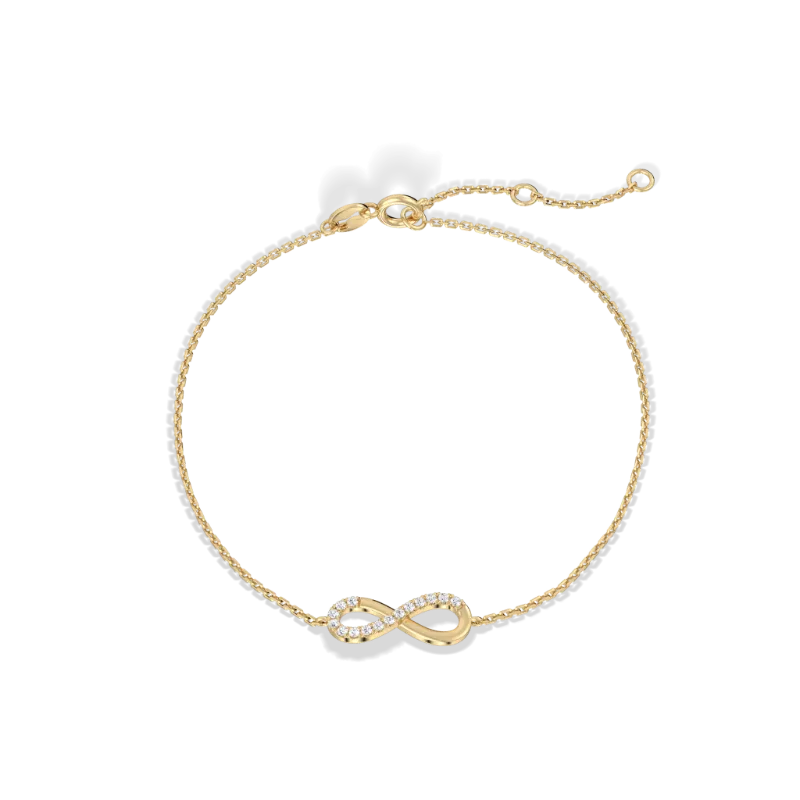
Gold is naturally soft, but 750 (18K) strikes an excellent balance between purity and strength for everyday ring wear. The Leonids collection includes several oval engagement rings set in 750 gold, and you can browse their full 750 gold lineup to see the options.
Matching Your Oval Ring with Other Lab Grown Pieces
Once you have chosen your oval engagement ring, you may want to coordinate other pieces for the wedding day or everyday stacking. Lab grown diamond jewelry makes this easy because the stones are identical in optical and chemical properties to mined diamonds, and the collection options are extensive.
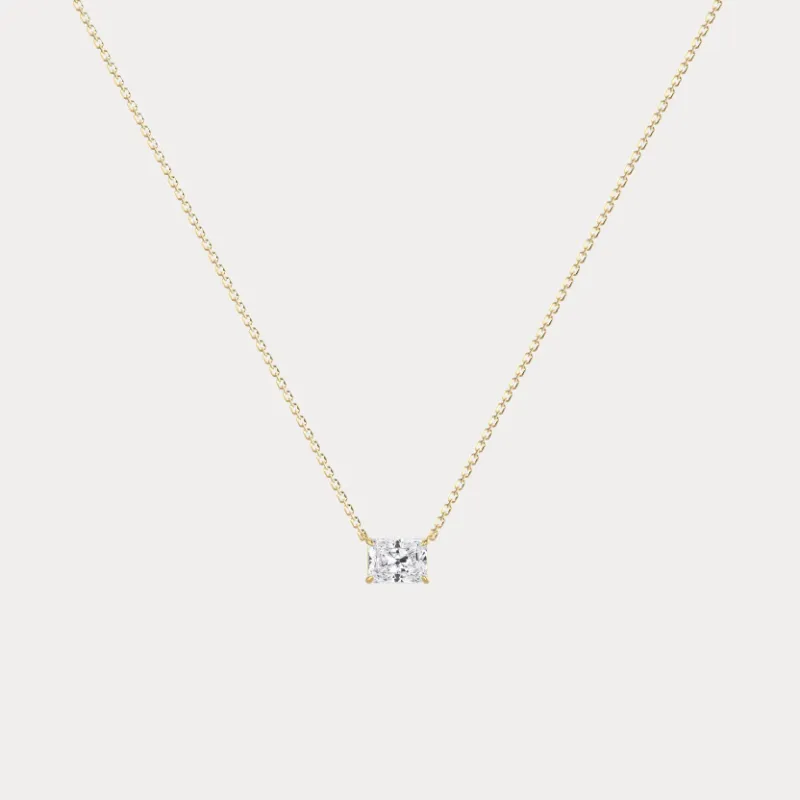
A lab grown diamond necklace or a simple lab diamond pendant worn at the neckline echoes the sparkle of your ring without competing with it. For the wedding or reception, a lab tennis bracelet adds movement and light that photographs beautifully with the ring. Many of our readers also choose a diamond promise ring in a complementary shape to gift before the proposal, or to wear on the opposite hand as a stacking accent.
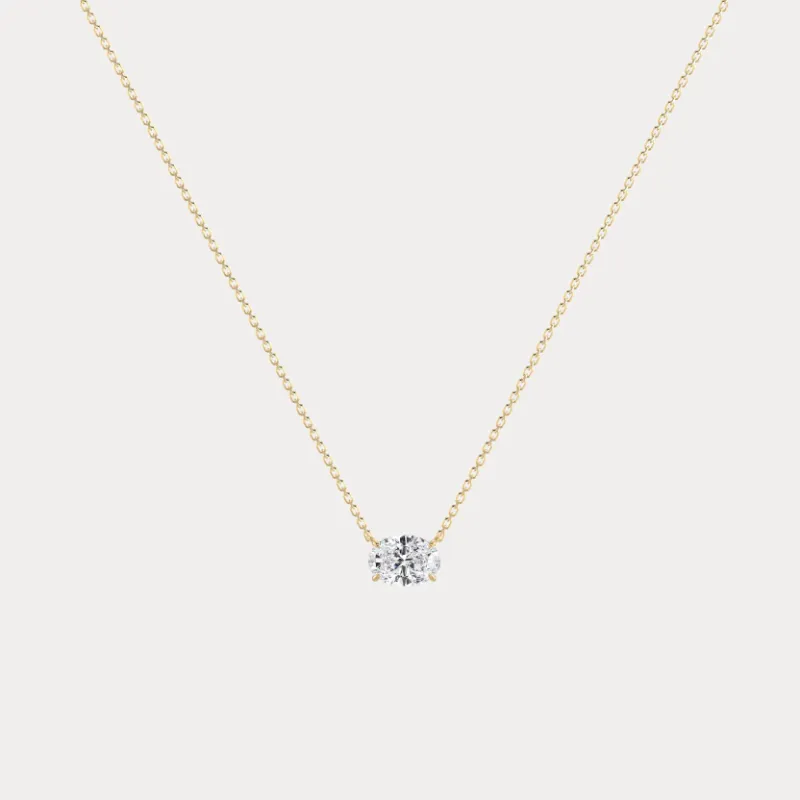
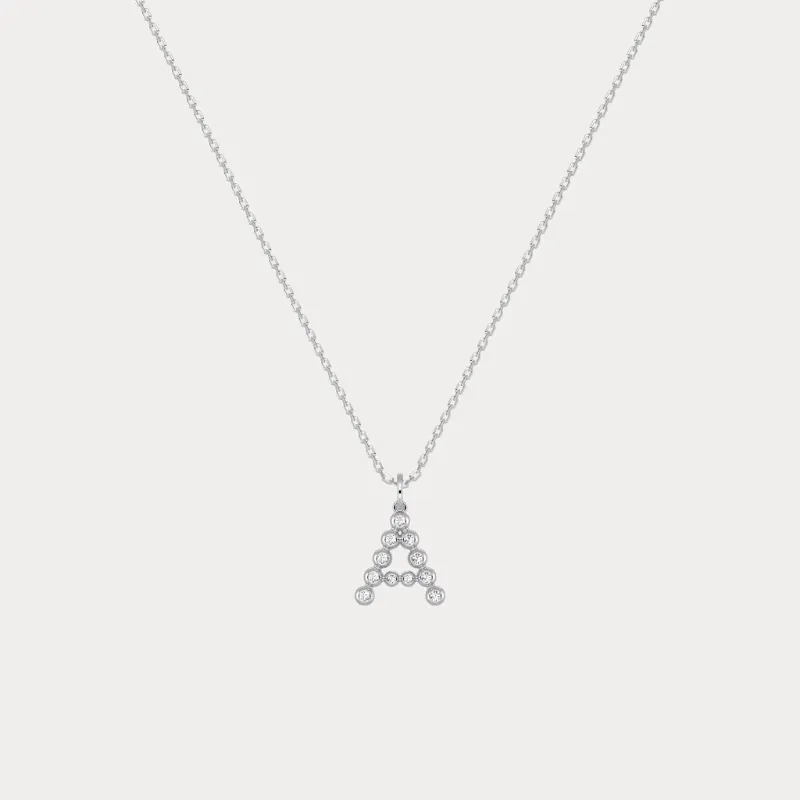
If you are building a full bridal set, the Leonids lab grown diamond necklaces and lab grown diamond pendants offer clean, timeless designs that match the precision cut of an oval engagement ring. You can also personalize your set with a bubble initial necklace for a subtle name- or initial-accent that makes the gift feel one-of-a-kind.
How to Shop for an Oval Lab Diamond Engagement Ring with Confidence
Shopping online for a lab diamond ring is different from walking into a store, but in many ways it is better, you have access to more stones, clearer pricing, and detailed video inspections. Here is our process for evaluating any oval lab diamond engagement ring before you buy:
- Check the certificate. Every lab diamond should come with a grading report from IGI, GIA, or GCAL. Look at the Cut grade and Symmetry grade specifically.
- Request a 360-degree video. A well-cut oval should show even brightness across the crown with only a faint bow-tie at extreme angles.
- Know the dimensions. An ideal oval length-to-width ratio falls between 1.35 and 1.50. Longer ratios (1.50+) look more elongated; shorter ratios (1.30 to 1.35) look squatter and closer to a round.
- Compare total cost. Lab diamonds typically cost 60 to 85 percent less than mined equivalents of the same quality. A 2 carat oval lab grown diamond price is often dramatically more affordable than a mined 2 carat, which allows you to size up or invest in a higher color or clarity grade.
If you want a sense of real-world pricing, the Leonids store regularly updates its inventory with certified oval lab diamonds. Grab the code for 15 percent off before you finalize your choice.
Final Thoughts on Choosing Your Oval Lab Diamond Engagement Ring
An oval lab diamond engagement ring delivers exceptional brilliance, a flattering silhouette, and outstanding value compared to both round brilliants and mined diamonds. Focus on cut quality and symmetry first, choose a thin band or a sturdier setting based on your lifestyle, and pick a 750 gold metal tone that complements the stone color. The rest (carat size, matching pendants, stacking bands) is the fun part. Whether you go for a simple solitaire or a three-stone design with side baguettes, the oval shape is a choice that will age beautifully on your hand.
Questions
What is the best length-to-width ratio for an oval lab diamond engagement ring?
Most buyers prefer a ratio between 1.35 and 1.50. A ratio closer to 1.35 gives a slightly fuller oval, while 1.45 to 1.50 produces a more elongated, slender silhouette.
Do oval lab diamonds show a bow-tie effect?
Many oval diamonds show some bow-tie, a dark band across the middle. A well-cut stone from a reputable grading lab will minimize this. Always ask for a 360-degree video and inspect the diamond under direct and diffuse light.
How much does a 2 carat oval lab grown diamond engagement ring cost?
Pricing varies by cut, color, and clarity grade. Lab diamonds typically cost 60 to 85 percent less than mined equivalents. For current prices on specific stones, check the Leonids store and use our discount code for 15 percent off.
Is a thin band durable enough for a 2 carat oval lab diamond?
A thin band of at least 1.6 mm can securely hold a 2 carat oval stone if the setting uses strong, well-placed prongs. For extra security, a 1.8 mm to 2.0 mm band or a cathedral setting adds stability without sacrificing a slim look.
Can I wear a lab grown diamond necklace or lab diamond pendant with my oval engagement ring?
Absolutely. Lab diamond necklaces and pendants complement an oval engagement ring beautifully. Many brides choose a simple lab diamond pendant for the wedding day or a lab tennis bracelet to add sparkle that coordinates with the ring's brilliance.
What metal is best for an oval lab diamond engagement ring?
750 gold (18-karat) is a top choice because it is durable, holds stones securely, and comes in yellow, white, and rose tones. White gold matches colorless diamonds, while yellow and rose gold add warmth and contrast.
Products in this guide
 Shopping at Leonids? See the discount code
15% OFF All Orders
Shopping at Leonids? See the discount code
15% OFF All Orders
More in this series
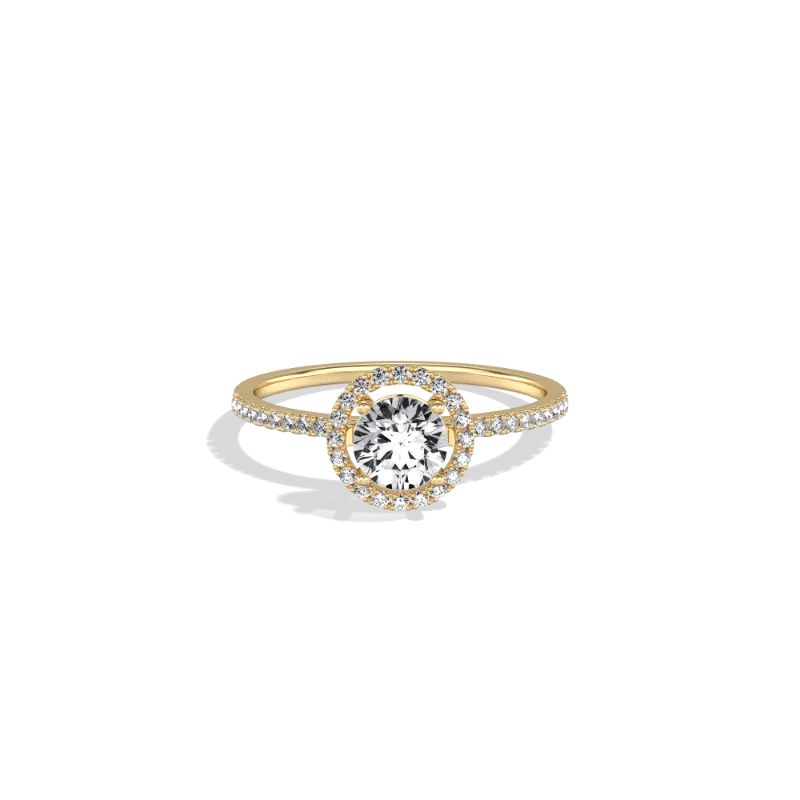 Can You Wear a Diamond Promise Ring Every Day? Longevity Guide9 Sep 20264 minLab Grown Diamond vs Mined Diamond: Is There a Visible Difference?9 Sep 20264 min
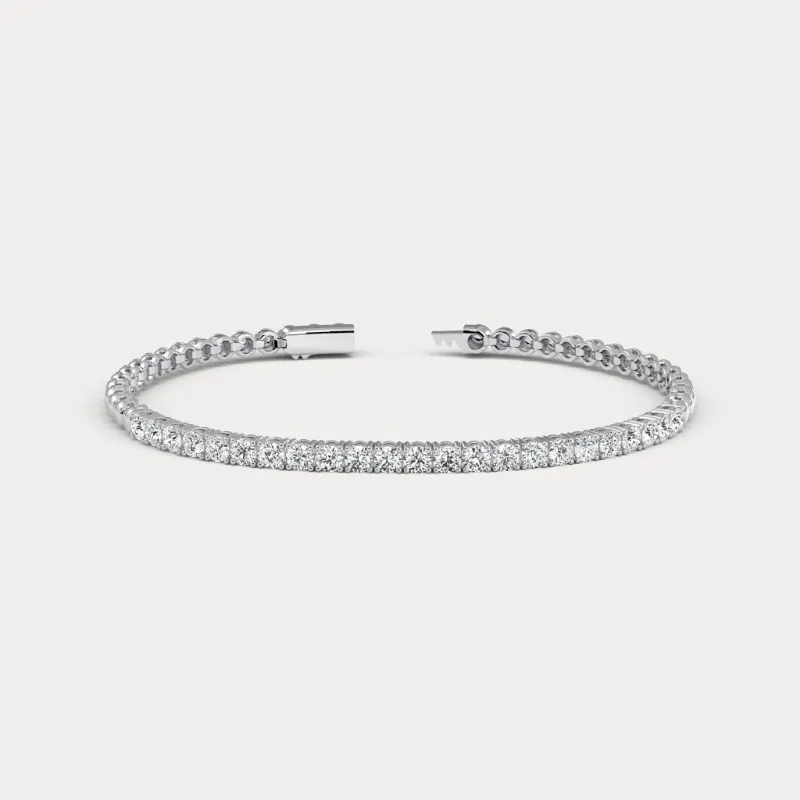 How Long Does a Lab Tennis Bracelet Stay Shiny? Durability Tips9 Sep 20265 minHow to Clean and Care for Your Lab Grown Diamond Necklace at Home9 Sep 20265 min
 Marquise vs Asscher Cut: Which Lab Diamond Ring Suits Your Style?9 Sep 20264 min