 A Tophatters guide
How to Choose the Right Rifle Scope for a 4X30 Setup
A 4x30 rifle scope offers fixed magnification and a 30mm objective lens, making it ideal for close to mid-range shooting where speed and durability matter.
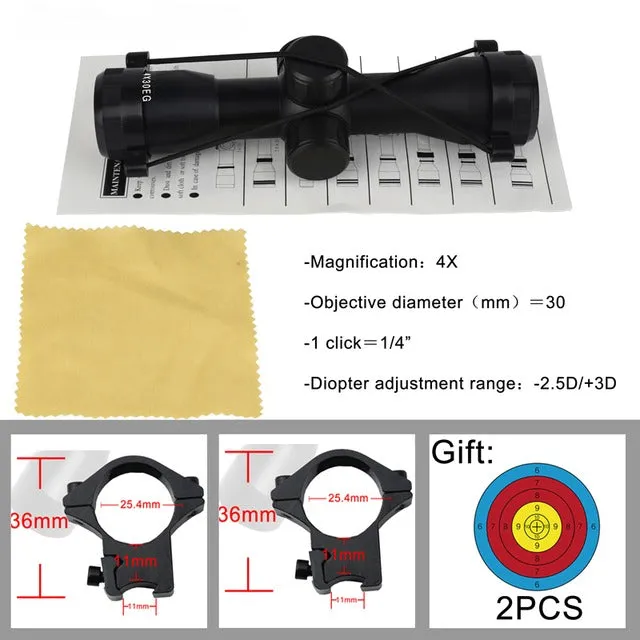
A 4×30 rifle scope delivers fixed 4x magnification with a 30mm objective lens, making it a solid choice for fast target acquisition at close to mid-range distances. This compact, rugged setup excels in brush hunting, tactical applications, and situations where you need a wide field of view without the weight or complexity of variable magnification.
Understanding 4×30 Scope Specifications
The numbers tell you exactly what you’re getting. The “4x” means the target appears four times closer than with your naked eye, while “30” refers to the objective lens diameter in millimeters. This combination produces a bright, clear image in most daylight conditions without the bulk of larger objective lenses.
Key specs to evaluate:
- Exit pupil: A 4×30 delivers a 7.5mm exit pupil (30 ÷ 4), which matches the maximum dilation of the human eye in low light and ensures you see the full image even with slight eye positioning changes
- Eye relief: Look for at least 3 inches to avoid scope bite from recoil, especially on centerfire rifles
- Field of view: Typically 28 to 35 feet at 100 yards for a 4x scope, far wider than 6x or 8x alternatives
- Weight: Most 4×30 models run 10 to 14 ounces, keeping your rifle balanced
Compared to a 4×20 or 4×25, the larger objective lens on a 4×30 scope gathers more light and improves clarity in dawn or dusk conditions. If you’re considering a step up to 5×30, remember that the narrower field of view and reduced exit pupil make fast target tracking harder.
When a 4×30 Setup Works Best
Fixed 4x magnification shines in specific scenarios where simplicity and speed trump long-range precision. We recommend this configuration for brush hunting whitetail deer, hog control in dense cover, and tactical carbine setups where most shots happen inside 200 yards.
Ideal applications:
- Lever-action and scout rifles: The compact length and low mounting height complement traditional iron-sight-equipped firearms
- Backup or truck guns: Durability and zero adjustments that hold through rough handling
- Beginner shooters: No magnification ring to fumble with under pressure, just aim and shoot
- Older eyes: The 7.5mm exit pupil forgives imperfect cheek welds and helps shooters who struggle with smaller exit pupils on higher magnification scopes
This setup falls short for prairie dog shooting past 300 yards or precision rifle competition where you need to resolve small details. A 4×30 won’t replace a variable 3-9x or dedicated long-range optic, but it outperforms them in tight quarters.
Glass Quality and Coatings Matter
Objective lens size means nothing if the glass is cheap.
What to prioritize:
- Fully multi-coated lenses: Every air-to-glass surface gets multiple anti-reflective layers, boosting light transmission to 90% or higher and reducing glare
- Low dispersion glass: Controls chromatic aberration (color fringing) at high-contrast edges like a dark treeline against bright sky
- Sealed and purged tubes: Nitrogen or argon filling prevents internal fogging when temperature swings from a warm truck to cold morning air
The difference between a quality 4×30 and a budget model shows up immediately in side-by-side testing. Premium glass delivers crisp edge-to-edge sharpness, while cheap optics go soft and dark toward the periphery. Check the latest price on proven models rather than gambling on unknown brands.
Mounting Height and Eye Relief
Proper mounting makes or breaks a 4×30 scope setup. The compact tube length and moderate objective diameter give you flexibility, but you still need to match ring height to your rifle’s comb and action.
Mounting considerations:
- Low rings (0.75 to 0.9 inches): Work for flat-topped receivers and bolt guns with low combs; bring the scope close for a natural cheek weld
- Medium rings (0.9 to 1.0 inches): Safe choice for most hunting rifles, clearing windage turrets and ejection ports
- Scout-style forward mounts: Some shooters place a 4×30 ahead of the action for both-eyes-open shooting and faster target transitions
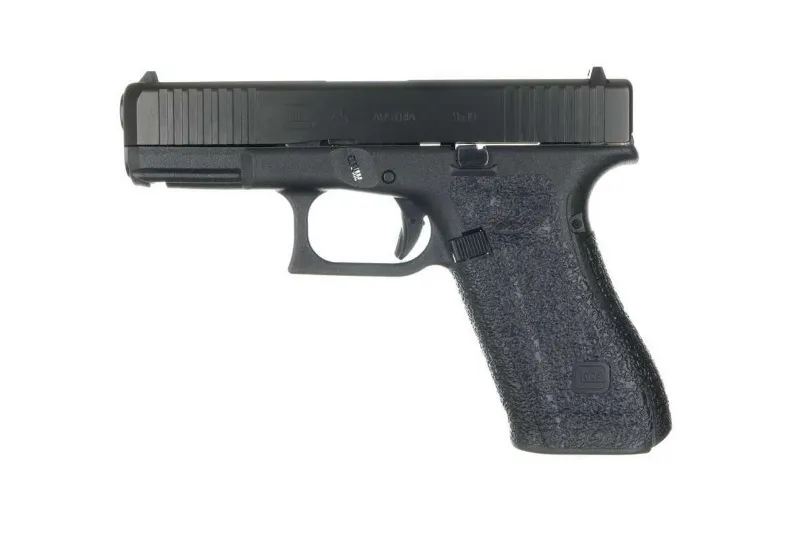
Always verify eye relief before final tightening. Position the scope so the full image appears with your natural shooting posture, then check that 3 to 4 inches separate your eye from the ocular lens. Fire a few rounds to confirm the scope doesn’t creep under recoil. If you’re pairing this optic with aftermarket talon grips or other rifle upgrades, test the complete system together.
Reticle Options for Fixed 4x Magnification
Simple reticles work best at fixed 4x. Complex holdover systems and illuminated Christmas trees shine at variable magnification, but they clutter the view when you can’t dial up power.
Popular 4×30 reticle choices:
| Reticle Type | Best For | Limitation |
|---|---|---|
| Duplex / Plex | General hunting, fast acquisition | No precise holdover references |
| German #4 | Low-light shooting, fine center post | Thicker posts obscure small targets |
| Mil-Dot / MOA | Tactical, measured holdovers | Requires memorizing subtensions at 4x |
| BDC (Bullet Drop) | Specific cartridge/load combos | Only accurate for one ballistic profile |
We prefer a clean duplex for hunting and a mil-dot for tactical use. Avoid reticles designed for higher magnification; their details vanish at 4x. Some manufacturers offer a 4×30 scope with an illuminated center dot, which helps in very low light but adds cost and battery dependence.
Durability and Warranty
A 4×30 often lives on rough-use rifles that see truck beds, ATV racks, and weather extremes. Construction quality determines whether your zero survives.
Durability checklist:
- One-piece tube construction with no weak joints
- Capped or locking turrets that won’t shift from bumps
- O-ring seals at every junction
- Lifetime or no-questions-asked warranty from the manufacturer
Comparing 4×30 to Other Fixed Magnification Scopes
If you’re weighing a 4×30 against alternatives, here’s how the common fixed-power options stack up for similar roles.
Quick comparison:
- 4×20 scope: Lighter and more compact but dims noticeably in early morning or late evening; fine for rimfire or air rifles
- 4×25 scope: Middle ground that sacrifices some light-gathering to save an ounce or two
- 5×30 scope: Slightly better detail resolution at distance, but the narrower field of view and smaller exit pupil (6mm) make close-range work harder
For most hunters and shooters who want a simple, bombproof setup, the 4×30 hits the sweet spot. You gain meaningful low-light performance over smaller objectives without the tunnel vision of higher magnification.
Making Your Final Decision
Start by defining your typical shooting distance and lighting conditions. If most shots happen inside 150 yards in woods or brush, a quality 4×30 will serve you better than a heavier variable scope you never adjust. If you regularly shoot past 300 yards or need to identify small details, step up to variable magnification.
Decision framework:
- Budget under $150: Expect trade-offs in glass quality; prioritize sealed construction and a solid warranty over features
- Mid-range $150 to $300: Sweet spot for hunters; fully multi-coated optics and reliable zero retention
- Premium $300+: Exceptional glass, bombproof internals, and warranties that cover everything short of deliberate destruction
Read actual user reviews and check return policies before committing. The best 4×30 scope for your friend’s.308 might not suit your.223 carbine or shooting style. When you’re ready to buy, visit our Tophatters discount code page for current pricing and our exclusive 15% off sitewide offer.
We’ve guided hundreds of shooters through optics selection, and the 4×30 consistently delivers for those who value simplicity and speed. Match the glass quality to your budget, mount it correctly, and this setup will serve you for decades of reliable shooting.
Questions
What is the effective range of a 4x30 rifle scope?
A 4x30 scope works best from 25 to 200 yards, where the fixed 4x magnification provides enough detail for accurate shot placement without sacrificing field of view. Experienced shooters can push to 300 yards on larger targets, but the limited magnification makes precise aiming difficult beyond that distance.
Will a 4x30 scope work in low light conditions?
Yes, the 30mm objective lens and 7.5mm exit pupil deliver good low-light performance for dawn and dusk hunting. The large exit pupil matches your eye's maximum dilation, capturing available light efficiently. However, quality glass coatings make a bigger difference than objective size alone in truly dim conditions.
Can I use a 4x30 scope on a rimfire rifle?
Absolutely. A 4x30 is an excellent choice for.22 LR and other rimfire calibers, offering more magnification than most shooters need for small game and plinking while maintaining a wide field of view. Just verify the scope is rated for rimfire use, as some models are built only for centerfire recoil.
How does a 4x30 compare to a variable 3-9x scope?
A 4x30 is lighter, simpler, and often more durable with fewer moving parts, making it faster for close-range shooting. A 3-9x variable offers more versatility for mixed-distance shooting but adds weight, complexity, and typically costs more for comparable glass quality.
What ring height should I use for mounting a 4x30?
Most bolt-action and semi-auto rifles work best with low to medium rings (0.75 to 1.0 inch height), which positions the scope for a natural cheek weld while clearing the objective lens and turrets. Measure from your receiver to the objective bell and consult the ring manufacturer's charts to confirm clearance.
Do I need special tools to mount and zero a 4x30 scope?
You'll need a properly sized screwdriver or hex wrench for your ring screws, a bore sighter or collimator to get on paper quickly, and a torque wrench if you want to follow manufacturer specs. Most shooters can mount and zero a 4x30 in under an hour with basic tools and a 25-yard range.
Products in this guide
Shopping at Tophatters? See the discount code
15% OFF Sitewide
More in this series
 The 3/4 Bra Cup: Who It’s For and How to Find Your Fit7 Aug 20266 min
 Tophatters Dynamometer Explained: What a Force Gauge Measures7 Aug 20265 min
 Mini Air Hockey Table Buying Guide: What to Look for Before You Order7 Aug 20265 min
 Glass Dildo Care Guide: Cleaning, Storage, and Safety Tips7 Aug 20264 minTalon Grips vs Factory Grips: Which Gives You Better Control on Your Pistol?7 Aug 20265 min