 A BODEGA cooler guide
How to Choose Between a Compressor Fridge and Electric Cooler for Road Trips
An electric cooler uses thermoelectric cooling that's affordable and lightweight, while a compressor fridge delivers freezer-grade performance with higher efficiency for extended trips.
An electric cooler relies on thermoelectric technology that’s lightweight and budget-friendly, while a compressor fridge uses vapor-compression refrigeration for true freezing capability and superior energy efficiency on multi-day road trips. Your choice depends on trip duration, power availability, and whether you need ice-cold drinks or frozen food storage.
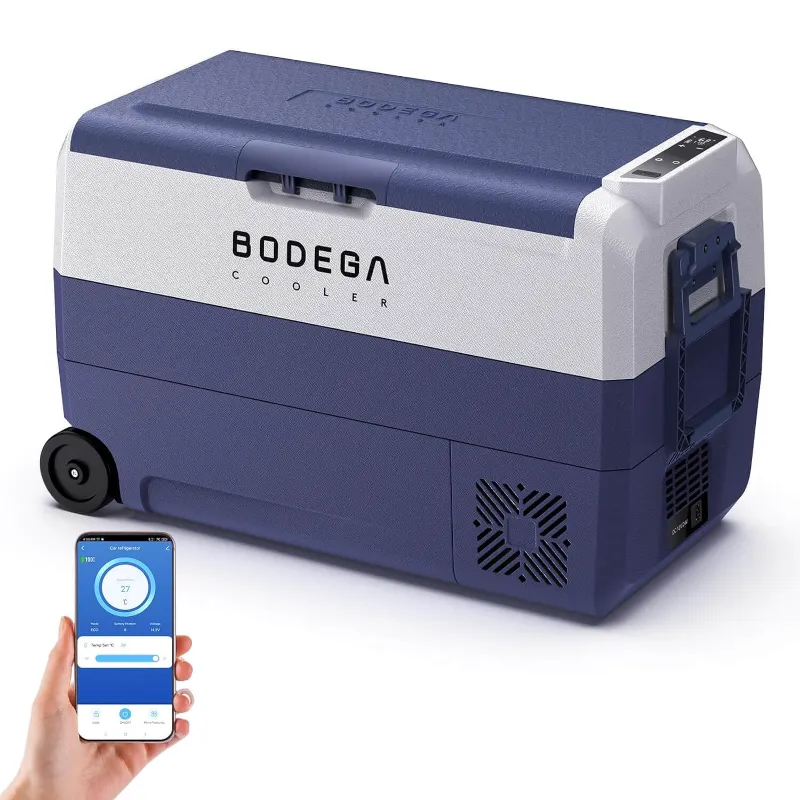
A portable freezer with compressor tech will outperform cheaper alternatives in heat and endurance, but thermoelectric models shine for day trips and casual tailgating. Here’s how to match the technology to your travel style.
How Electric Cooler Technology Works
Thermoelectric coolers use a Peltier module to transfer heat from the interior to exterior fins. When 12V power flows through the module, one side chills while the other exhausts warmth. This solid-state design has no moving compressor parts, making it quieter and lighter than refrigerator-based alternatives.
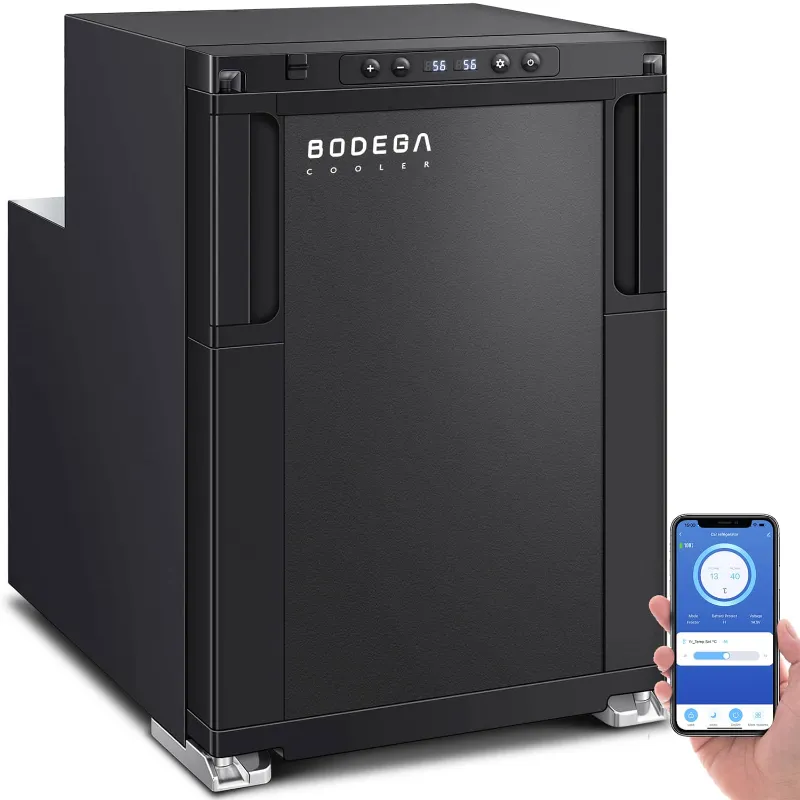
The tradeoff is cooling depth. Most thermoelectric units drop internal temperature 35 to 40°F below ambient air, so on a 90°F day you’ll reach around 50 to 55°F inside. That keeps beverages cold but won’t freeze anything. A 12v refrigerator with compressor technology, by contrast, can hit 0°F or below regardless of outside heat.
Thermoelectric models also draw continuous power. They don’t cycle on and off like a compressor, so they pull 3 to 5 amps constantly when plugged in. For short drives that’s fine, but overnight in a parked vehicle they can drain your starter battery unless you add a secondary power source.
Compressor Fridge Performance and Efficiency
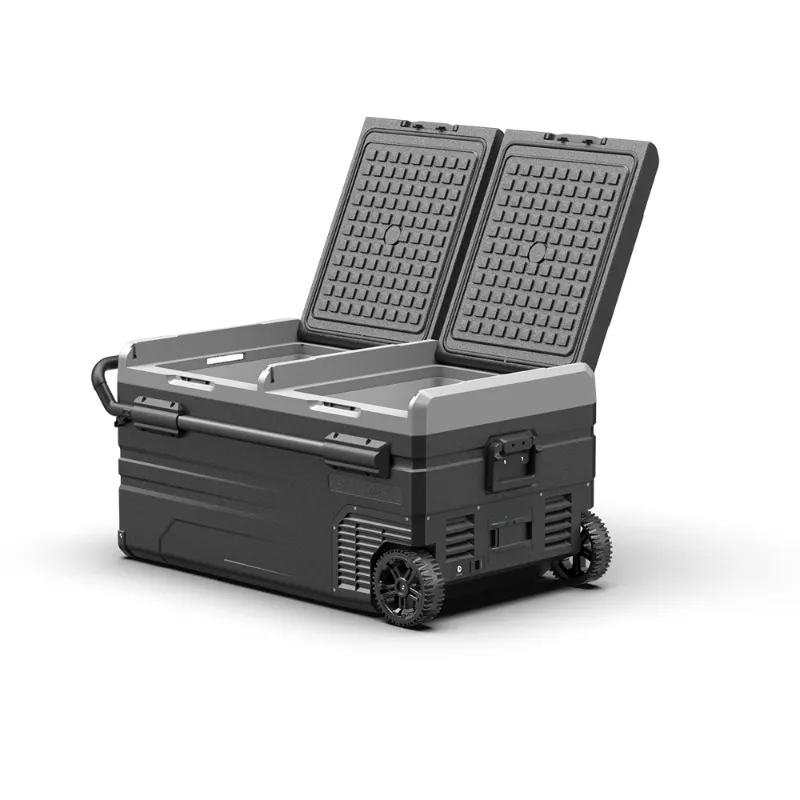
A compressor fridge operates like your kitchen refrigerator, cycling a compressor motor to compress refrigerant and create deep cold. Once the set temperature is reached, the compressor shuts off until the interior warms. This intermittent duty cycle saves significant battery power on long trips.
A quality bodega cooler will pull 0.7 to 1.2 amps per hour averaged across a full day, versus 3 to 5 amps continuous for an electric cooler for car use.
Compressor models also maintain precise temperature control. You set a digital thermostat to your target (whether 35°F for drinks or -10°F for ice cream) and the unit holds it within a few degrees. Ambient heat has minimal impact, so they perform consistently in desert sun or humid Southeast summers. Car and Driver’s testing confirms compressor units freeze consistently even in triple-digit heat.
The downsides are weight and cost. Compressor fridges weigh 25 to 50 pounds empty, and entry models start around double the price of basic thermoelectric coolers.
Which Type Suits Different Road Trip Scenarios
Day trips and weekend camping: A small electric cooler for car trips under 48 hours works well. Plug it into your 12V outlet while driving, and it’ll keep lunch and drinks chilled. Expect to unplug overnight or risk battery drain. These units typically cost less and weigh 10 to 20 pounds, fitting easily behind a seat.
Extended overlanding or van life: Choose a portable freezer with compressor. The efficiency pays off when you’re off-grid for days, and true freezing capability lets you store raw meat, frozen meals, and ice packs. Pair it with a dual-battery system or portable power station for reliable operation when the engine is off.
Tailgating and festivals: An electric cooler with battery compatibility offers the best convenience. Look for models that accept AC, DC, and battery pack input so you can move from vehicle to picnic site. Thermoelectric units shine here because the 35 to 40°F cooling delta is plenty for beverages, and the lighter weight makes hauling easier.
Work trucks and delivery vans: If you’re running the engine daily, a plug in electric cooler on 12V works fine for lunch and hydration. For crews that need all-day cold without idling, a compressor model with low-voltage shutoff protects your starter battery while delivering consistent cooling.
Outdoor Gear Lab ranks compressor models highest for multi-day reliability, while thermoelectric coolers score well for casual use and portability.
Power and Battery Considerations
Thermoelectric models require a constant 12V supply. Most draw 45 to 60 watts, translating to 3.5 to 5 amps. Run one for 10 hours on a 50 amp-hour battery, and you’ll pull 35 to 50 amp-hours, enough to risk a no-start if you’re using your vehicle’s starter battery. Add a check the latest price on a quality portable power station or auxiliary battery for peace of mind.
Compressor fridges pull higher starting current (5 to 7 amps for a few seconds) but then settle into a duty cycle. Over a full day, a 40-liter compressor unit typically consumes 20 to 30 amp-hours, roughly half the total draw of thermoelectric. Most include adjustable low-voltage cutoff to protect your battery, shutting down at 11.8V or 12.2V before your engine won’t crank.
If you’re planning to leave the unit powered overnight or during multi-day camping, budget for a 100+ amp-hour lithium battery or generator. Solar panels can supplement daytime draw, especially with the lower consumption of compressor technology.
Comparing Cost, Weight, and Features
| Feature | Electric Cooler (Thermoelectric) | Compressor Fridge |
|---|---|---|
| Cooling depth | 35 to 40°F below ambient | Freezes to 0°F or lower |
| Power draw | 3 to 5 amps continuous | 0.7 to 1.2 amps average (cycling) |
| Weight | 10 to 20 lbs (smaller capacity) | 25 to 50 lbs (similar capacity) |
| Entry price | Lower (budget-friendly) | Higher (premium performance) |
For casual users who drive daily and need beverage cooling, a basic electric cooler for truck or car trips delivers solid value. You’ll spend less upfront and the lighter weight wonts tax your vehicle’s cargo capacity.
Serious travelers and overlanders should budget for a compressor model. The efficiency and freezing capability justify the cost when you’re living out of your vehicle or taking week-long trips. A 12v refrigerator pays for itself in saved ice purchases and spoiled-food waste over a single season of heavy use.
We also recommend checking whether your unit includes dual-zone capability, USB charging ports, or app-based temperature monitoring. These features appear more often on compressor models and add real convenience on the road.
Making Your Final Decision
Start by mapping your typical trip profile. If most outings last under two days with daily driving, an electric cooler portable model gives you cold drinks without the investment of a full compressor system. Look for units with both AC and DC adapters so you can pre-chill at home before departure.
For off-grid camping, vanlife, or any scenario where you’ll park for more than 24 hours, choose a compressor-based portable freezer. The energy savings and freezing power are non-negotiable when you’re away from shore power. Pair it with adequate battery capacity and you’ll enjoy fresh and frozen food anywhere.
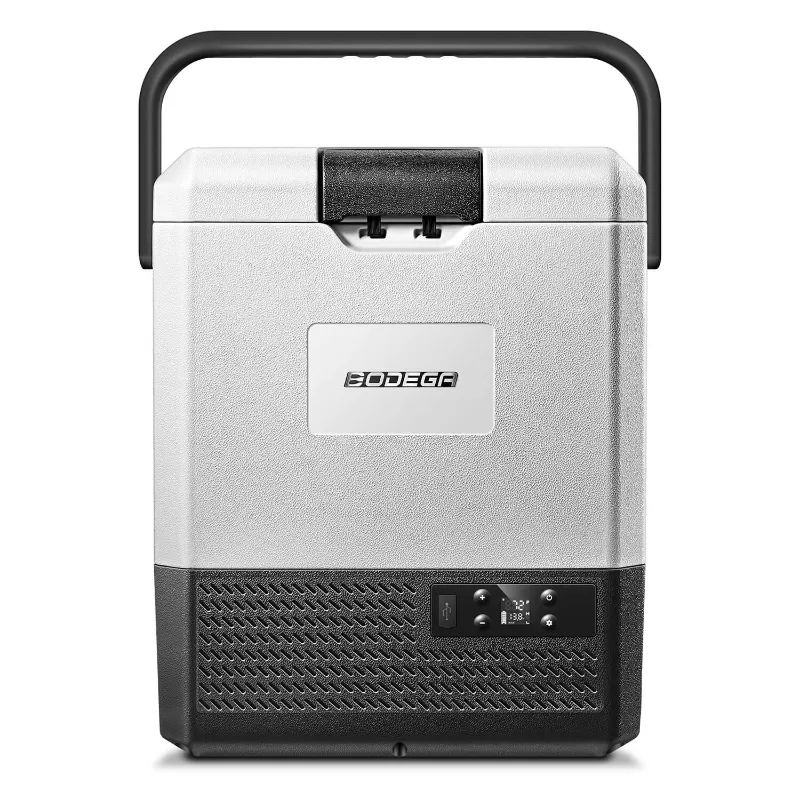
Also consider whether you need a mini fridge for home use that doubles as a travel cooler. Some compact compressor models work equally well in an RV, dorm, or garage, giving you year-round utility beyond road trips.
Before you buy, grab the code for 12% off at BODEGA and compare real-world specs. Read independent reviews like those from Food & Wine to see how each model performs under load. Match the technology to your power setup, trip length, and cooling needs, and you’ll enjoy reliable refrigeration no matter where the road takes you.
Questions
Can an electric cooler freeze ice or food?
Most thermoelectric electric coolers cannot freeze items. They cool 35 to 40°F below ambient temperature, so on a hot day they reach around 50°F. A compressor fridge is required for true freezing capability down to 0°F or below.
Will running a 12V cooler drain my car battery overnight?
Yes, thermoelectric coolers draw 3 to 5 amps continuously and can drain a starter battery in 8 to 10 hours. Compressor fridges use less power and often include low-voltage cutoff protection. Always use a secondary battery or power station for overnight operation when the engine is off.
Which is more energy efficient for a week-long camping trip?
A compressor fridge is significantly more efficient over multiple days. It cycles on and off, consuming roughly half the amp-hours of a thermoelectric cooler that runs continuously. For extended off-grid trips, compressor technology saves battery capacity and lets you run longer between charges.
Do I need a special power setup to run a portable freezer in my truck?
For trips longer than a day, install a dual-battery system or portable power station with 100+ amp-hours. Most compressor portable freezers include 12V, 110V, and sometimes solar input, plus low-voltage shutoff to protect your starter battery from over-discharge.
Are thermoelectric coolers quieter than compressor models?
Yes, thermoelectric coolers have no moving compressor and only a small fan, making them nearly silent. Compressor fridges produce a low hum when the compressor cycles on, similar to a household refrigerator, but modern units are quieter than older models.
Can I use a compressor fridge as a regular mini refrigerator at home?
Absolutely. Many portable compressor fridges work on 110V AC power and function as a mini refrigerator in a dorm, office, or garage when not on the road. This dual-purpose flexibility adds value if you want year-round use beyond road trips.
Products in this guide
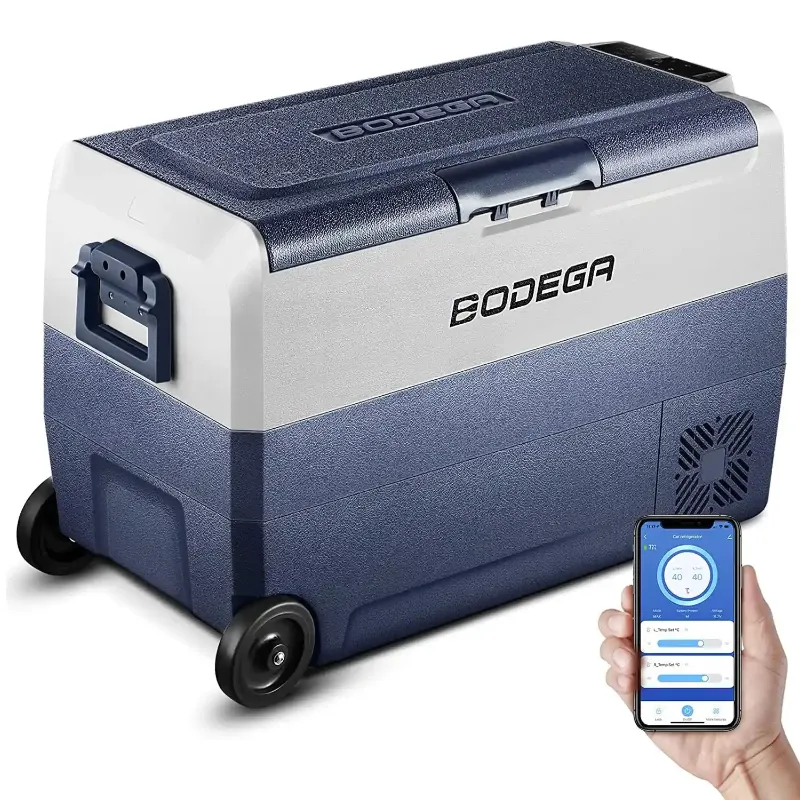 Shopping at BODEGA cooler? See the discount code
12% OFF All Orders
Shopping at BODEGA cooler? See the discount code
12% OFF All Orders
More in this series
How Long Does a Portable Freezer Keep Food Frozen Without Power?13 Aug 20265 min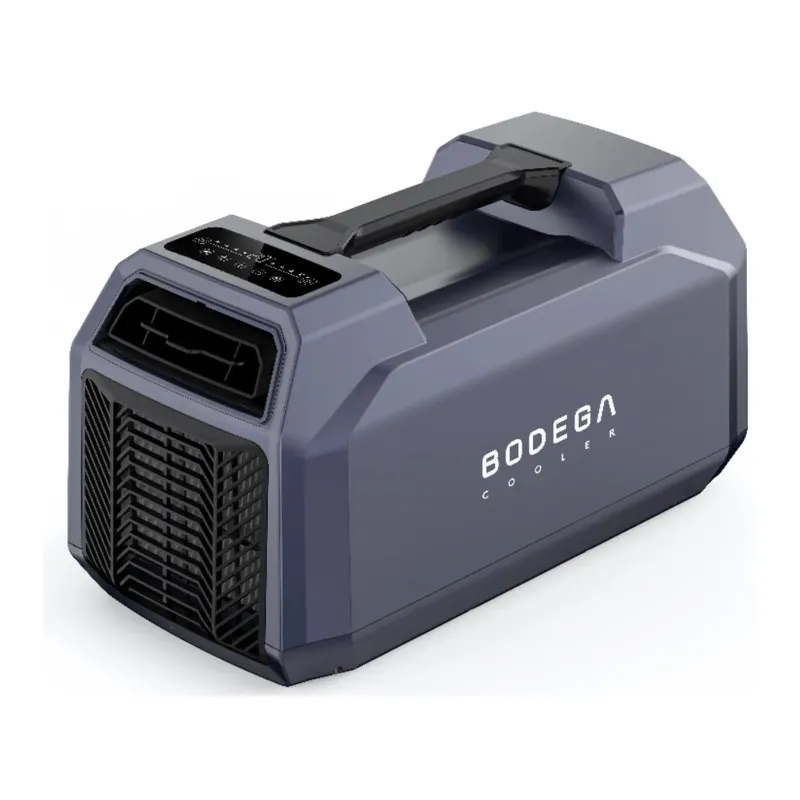 Can a 6000 BTU Portable Air Conditioner Cool a Bedroom Effectively?13 Aug 20265 min
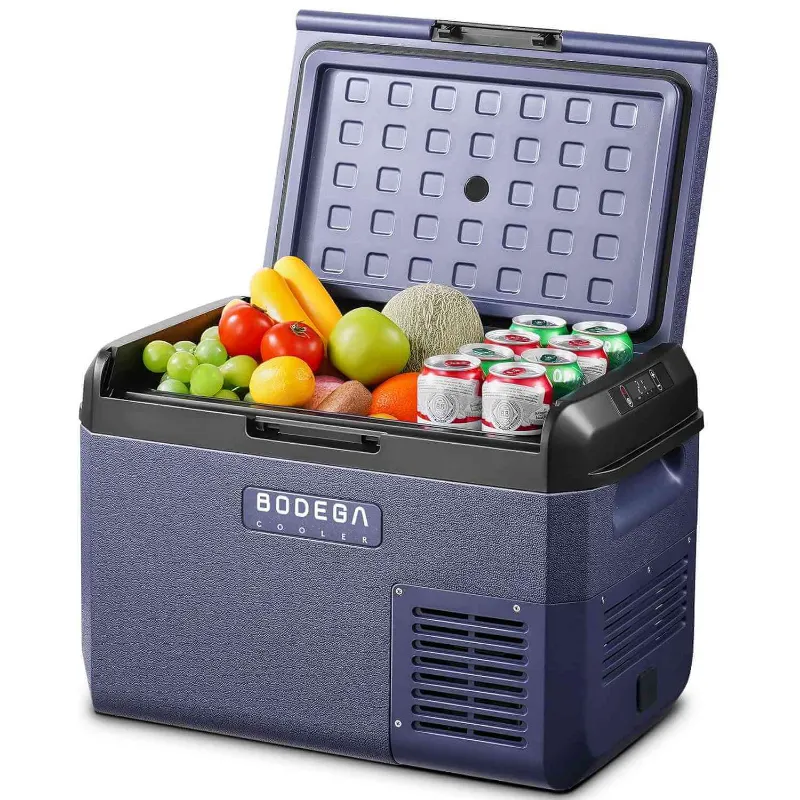 Best Mini Fridge Size for Dorm Rooms and Small Apartments13 Aug 20264 minBODEGA Cooler vs Kohree Portable Fridge: Which One Fits Your Vehicle?13 Aug 20265 minDo 12V Refrigerators Drain Your Car Battery? What You Need to Know13 Aug 20265 min