 A Delta North Tea guide
How to Brew Blue Lotus Tea for Better Sleep and Relaxation
Brewing organic blue lotus herbal sleep blend tea bags correctly unlocks their full calming potential for a restful night's sleep.
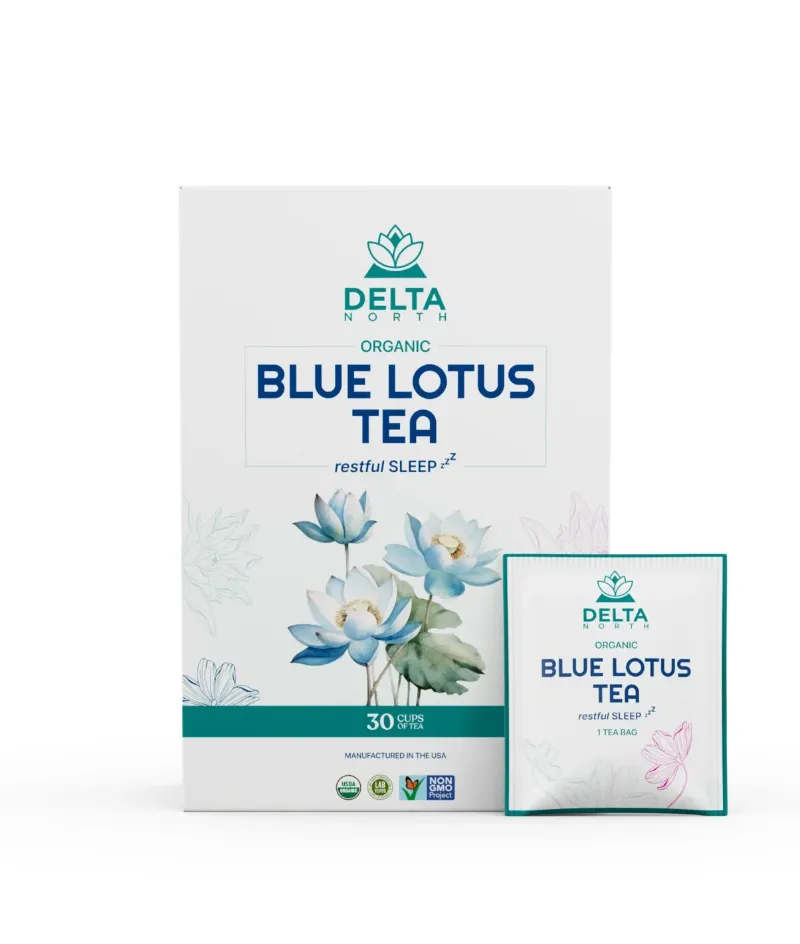
The right water temperature and steeping time unlock the flower’s natural sedative properties without creating bitterness. Whether you’re new to blue lotus tea or looking to optimize your evening routine, this guide walks you through every step to brew a perfect cup.
What Makes Blue Lotus Tea Effective for Sleep
Blue lotus (Nymphaea caerulea) contains aporphine and nuciferine, two alkaloids that interact with dopamine and serotonin receptors to produce mild sedative and anti-anxiety effects. When brewed correctly, these compounds infuse into hot water and create a calming tea that helps quiet racing thoughts before bed.
The effectiveness depends heavily on water temperature and steeping duration. Too hot or too long and you’ll extract bitter tannins that overpower the delicate floral notes. Too cool or too brief and you won’t pull enough active compounds from the petals. Check the brewing instructions on the blue lotus flower tea package as well.
Step-by-Step Brewing Instructions for Organic Blue Lotus Herbal Sleep Blend Tea Bags
Follow these steps to brew a consistently effective cup every time.
Basic method:
- Heat fresh, filtered water to 200°F to 208°F (just below a full boil; if you see small bubbles forming at the bottom, you’re in range)
- Place one organic blue lotus herbal sleep blend tea bags into your mug or teapot
- Pour 8 to 10 oz of hot water over the tea bag
- Cover your mug with a small plate or lid to trap aromatic compounds
- Steep for 5 to 8 minutes depending on desired strength
- Remove the tea bag and enjoy warm
For stronger relaxation effects:
- Use two tea bags in 12 oz of water
- Extend steeping time to 8 to 10 minutes
- Add the spent tea bag to a second cup for a milder follow-up brew
We suggest covering the cup during steeping, which keeps the temperature stable and stops volatile oils from evaporating. Don’t skip this step if you want maximum potency.
For the best price on your order, grab the discount code before you stock up.
Flavor Pairing and Enhancement Options
Blue lotus has a naturally mild, slightly sweet floral taste with earthy undertones. Some batches lean more vegetal, while others showcase honey-like notes. If you find the flavor too subtle or want to mask any grassiness, try these combinations:
Natural sweeteners:
- Raw honey (adds antimicrobial benefits and rounds out floral notes)
- Maple syrup (complements earthy undertones)
- Stevia (zero-calorie option that doesn’t interfere with sleep)
Flavor boosters:
- Fresh lemon or lime juice (brightens the cup and adds vitamin C)
- A cinnamon stick steeped alongside the tea bag (warming and slightly sweet)
- 2 to 3 fresh mint leaves (cooling contrast to floral notes)
- A thin slice of fresh ginger (adds gentle warmth without overstimulation)
Milk or cream:
Some tea drinkers add a splash of warm oat milk or coconut milk to create a latte-style bedtime drink. We suggest this with stronger brews (two bags or extended steeping) so the blue lotus flavor doesn’t disappear completely.
Avoid adding caffeine sources like chocolate or caffeinated teas, which counteract the sleep-promoting effects you’re brewing for.
Dosage Guidelines and Timing for Sleep Support
Start with one tea bag per 8 oz serving and assess your response over 3 to 5 nights before increasing.
Beginner dosing:
- Night 1-3: One tea bag, 5-minute steep
- Night 4-7: One tea bag, 7-minute steep or two tea bags, 5-minute steep
- Adjust based on how you feel
Timing strategy:
Drink your blue lotis tea 30 to 45 minutes before you want to fall asleep. This gives the alkaloids time to absorb and begin working as you complete your bedtime routine. Drinking it too early may cause effects to peak before you’re in bed; too late and you might still be winding down when you want to be asleep.
Pair it with dimmed lights and screen-free time for best results.
Check the current pricing and discount to see how much you’ll save when buying in bulk.
Brewing Methods Compared: Tea Bags vs Loose Flower
| Method | Convenience | Potency Control | Cleanup |
|---|---|---|---|
| Tea bags | High (pre-portioned, no strainer needed) | Moderate (consistent single-serve dose) | Minimal (toss bag) |
| Loose flower | Moderate (requires scale or measuring spoon) | High (adjust grams per cup precisely) | More involved (rinse infuser) |
Tea bags offer the easiest entry point and most consistent results batch to batch. Loose flower gives you more control over strength and lets you inspect petal quality, but requires a tea infuser and creates more cleanup.
For travel or office use, tea bags win hands down. For home experimentation and customizing your ideal dose, loose flower provides flexibility. Both formats work equally well when brewed at the correct temperature and time.
Storage Tips to Preserve Potency
Blue lotus alkaloids degrade when exposed to light, heat, moisture, or oxygen. Follow these storage practices to keep your tea effective for months:
- Keep tea bags in their original sealed pouch or transfer to an opaque, airtight container
- Store in a cool, dark cabinet away from the stove, dishwasher, or windowsill
- Avoid refrigeration (condensation introduces moisture)
- Use within 12 months of opening for peak potency
If your tea starts smelling musty or loses its floral aroma, it’s past its prime. Fresh blue lotus should have a distinct sweet, slightly hay-like scent when you open the package.
Who Should Try Blue Lotus Tea and Who Should Skip It
Best suited for:
- Adults with mild to moderate difficulty falling asleep due to stress or racing thoughts
- People looking for a non-habit-forming alternative to melatonin or pharmaceutical sleep aids
- Anyone interested in traditional herbal relaxation practices from ancient Egypt and Southeast Asia
Not recommended for:
- Pregnant or breastfeeding individuals (insufficient safety data)
- People taking prescription sedatives, antidepressants, or dopamine-related medications (potential interactions)
- Anyone with liver conditions (blue lotus is metabolized hepatically)
- Individuals who need to wake up for nighttime responsibilities (effects can cause grogginess if sleep is interrupted)
Always check with your healthcare provider before adding any new herbal supplement to your routine, especially if you take medications or have underlying health conditions. Blue lotus is generally well-tolerated but not appropriate for everyone.
Start with the method outlined above, pay attention to how your body responds, and adjust steeping time or dosage as needed.
Questions
How long should I steep organic blue lotus herbal sleep blend tea bags?
Steep for 5 to 8 minutes in water heated to 200°F to 208°F. Start with 5 minutes for a milder cup and work up to 8 minutes if you want stronger relaxation effects.
Can I reuse blue lotus tea bags for a second cup?
Yes, you can steep the same tea bag a second time for a milder cup, though it will be weaker. Add an extra minute or two to the steeping time for the second brew.
Will blue lotus tea make me groggy in the morning?
Start with one tea bag and see how you feel the next morning. If you do feel lingering effects, try reducing your dose or drinking it earlier in the evening.
What does blue lotus tea taste like?
Blue lotus has a mild, slightly sweet floral flavor with earthy undertones. Some describe it as lightly vegetal with honey-like notes. It's much subtler than chamomile or lavender tea.
Can I drink blue lotus tea every night?
It's smart to take occasional breaks (one to two nights off per week) to prevent your body from building tolerance to the calming effects.
Is blue lotus tea safe to combine with melatonin?
The sedative effects of blue lotus and melatonin may be additive. Start with lower doses of each and monitor how you respond, or consult your healthcare provider before combining sleep aids.
Products in this guide
Shopping at Delta North Tea? See the discount code
20% OFF All Orders
More in this series
Can You Drink Blue Lotus Tea Every Night? Safety and Dosage Guide24 Aug 20264 minBlue Lotus Tea Bags vs Loose Flower: Which Should You Buy?24 Aug 20264 minHow Long Does Blue Lotus Tea Take to Work?24 Aug 20265 minDoes Blue Lotus Tea Really Help With Sleep? What to Expect24 Aug 20264 minBlue Lotus Tea vs Chamomile: Which Herbal Sleep Tea Works Better?24 Aug 20264 min