 A Delta North Tea guide
Blue Lotus Tea vs Chamomile: Which Herbal Sleep Tea Works Better?
We tested organic blue lotus herbal sleep blend tea bags against chamomile to find out which herbal sleep tea delivers better relaxation and rest.
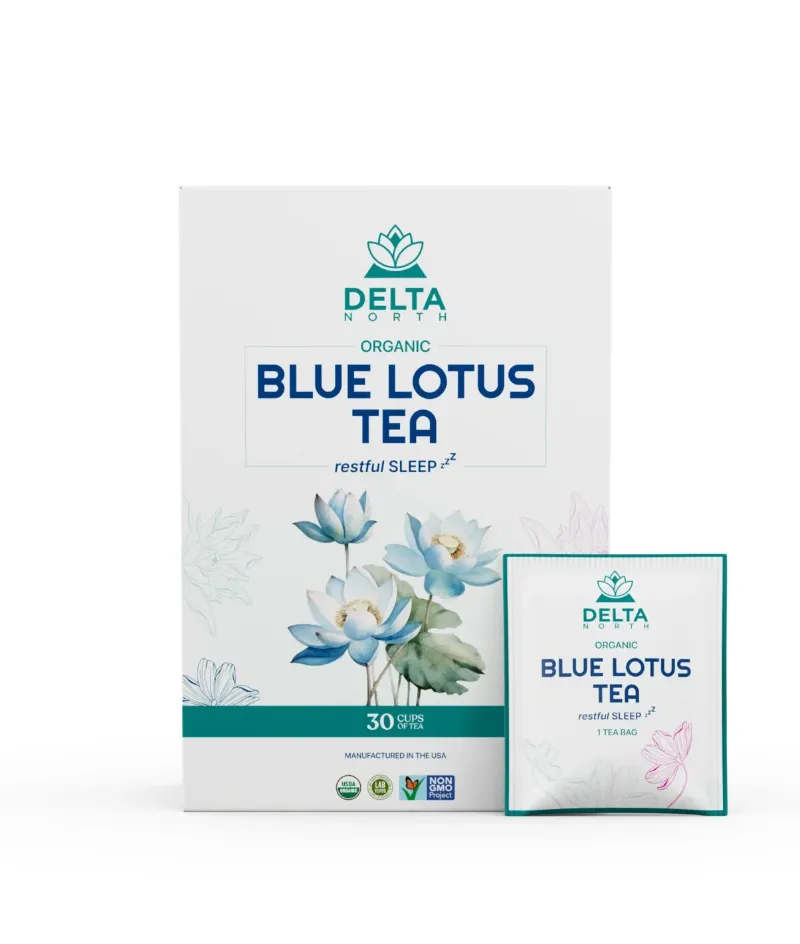
Organic blue lotus herbal sleep blend tea bags offer a more pronounced calming effect than chamomile, especially for people who find traditional herbal teas too mild. Both are effective sleep aids, but blue lotus contains alkaloids like nuciferine and aporphine that interact with serotonin and dopamine receptors, while chamomile relies on apigenin, a flavonoid that binds to GABA receptors.
If you’re looking to save on your next order, grab the code for 20% off before comparing these two popular sleep teas.
How Blue Lotus and Chamomile Affect Sleep Differently
Blue lotus and chamomile take different pharmacological routes to relaxation, which explains why they feel distinct when you drink them.
Blue lotus mechanisms:
- Nuciferine acts as a dopamine receptor antagonist, reducing mental chatter
- Aporphine stimulates serotonin and dopamine pathways, creating mild euphoria before sleep
- Effects typically begin within 20 to 30 minutes and last 2 to 3 hours
- Users report a noticeable body-relaxation sensation and dream vividness
Chamomile mechanisms:
- Apigenin binds to benzodiazepine receptors in the brain, producing gentle sedation
- Anti-inflammatory compounds reduce physical tension
- Effects are subtler and build over 30 to 45 minutes
- Best known for calming anxiety rather than inducing deep relaxation
We find blue lotus tea works better for people who struggle with racing thoughts at bedtime, while chamomile suits those with mild nervousness or digestive discomfort that interferes with sleep.
Taste, Preparation, and Convenience Comparison
The sensory experience and ease of use differ significantly between these two herbal teas.
| Feature | Blue Lotus | Chamomile |
|---|---|---|
| Flavor profile | Earthy, slightly bitter, floral undertones | Sweet, apple-like, gentle floral |
| Steep time | 5 to 10 minutes in 200°F water | 5 minutes in 200°F water |
| Best consumed | 30 to 60 minutes before bed | 30 to 45 minutes before bed |
| Availability | Specialty herbal tea retailers | Widely available in grocery stores |
Blue lotus flower tea has a more complex, acquired taste that some people love and others need to sweeten with honey or blend with other herbs. Chamomile is universally approachable and rarely needs flavor adjustments.
For convenience, both are available in loose-leaf and bag formats. We prefer tea bags for evening routines because cleanup is faster when you’re already winding down. If you want the simplest prep method, check the latest price on pre-portioned organic options.
Who Should Choose Blue Lotus Over Chamomile
Blue lotus is the better choice if you fit one or more of these profiles:
- You’ve built tolerance to chamomile. After months of nightly chamomile use, many people stop noticing its effects. Blue lotus offers a stronger alternative.
- You want lucid or vivid dreams. Blue lotus is traditionally used as a oneironaut herb, and modern users consistently report more memorable dream activity.
- You need help with restlessness, not just anxiety. Chamomile calms the mind, but blue lotus also relaxes the body in a way that feels more tangible.
- You’re interested in botanical history. Blue lotus was used in ancient Egyptian rituals and traditional medicine, giving it a cultural dimension chamomile lacks.
Blue lotis tea (an alternate spelling you’ll see on some product pages) delivers the same alkaloid profile, so don’t worry if you encounter slight name variations when shopping.
Who Should Stick with Chamomile
Chamomile remains the gold standard for certain sleep situations:
- You’re pregnant or breastfeeding. Chamomile has a longer safety record in these populations, while blue lotus lacks sufficient research.
- You prefer subtle effects. Some people find blue lotus too sedating or don’t enjoy the mild euphoria it can produce.
- You have digestive issues at night. Chamomile soothes the stomach and reduces bloating, which blue lotus doesn’t specifically target.
- You want a tea your whole household will drink. Chamomile’s flavor is more universally liked, especially among children and older adults.
Chamomile also costs less per serving and is easier to find in stores, which matters if you drink sleep tea every single night.
Combining Blue Lotus and Chamomile for Enhanced Sleep
How to blend them:
- Use a 1:1 ratio if you’re new to blue lotus
- Steep together for 7 to 10 minutes in the same cup
- Add a small amount of honey or lemon balm if the flavor is too earthy
- Drink 45 minutes before your target sleep time
This approach lets you use a smaller dose of blue lotus while still getting noticeable effects, which can help you assess your tolerance. Some specialty retailers offer pre-blended sleep formulas that include both herbs along with valerian, passionflower, or lavender.
Safety, Dosage, and What to Expect
Both teas are generally safe for most adults, but there are a few practical considerations.
Blue lotus safety notes:
- Start with one cup (one tea bag or 1 to 2 grams loose-leaf) to assess your response
- Avoid driving or operating machinery within 2 hours of consumption
- Do not combine with alcohol, benzodiazepines, or other sedatives
- May cause mild nausea or dizziness at higher doses
- Not recommended during pregnancy due to limited research
Chamomile safety notes:
- Allergic reactions are possible if you’re sensitive to ragweed, daisies, or chrysanthemums
- Can interact with blood thinners like warfarin
- Generally safe for daily long-term use in moderate amounts
- Rarely causes drowsiness strong enough to impair next-day function
We recommend cycling your sleep teas every few weeks to prevent tolerance buildup. Use blue lotus for 10 to 14 days, switch to chamomile or another herb, then return if needed.
Where to Buy and How to Save
Delta North Tea specializes in high-quality blue lotus products that are lab-tested for purity and potency. You’ll find both loose-leaf and convenient tea bag formats, and the company sources organic blue lotus from reputable farms.
For the best value, visit our discount code page to access 20% off your order. This applies to all tea products, including the organic blue lotus herbal sleep blend tea bags and any chamomile or blended options the store carries.
When shopping, look for:
- Organic certification to avoid pesticides
- Third-party lab testing for alkaloid content and contaminants
- Whole flower or finely cut herb rather than dust or filler
- Opaque, resealable packaging to preserve freshness
Both blue lotus and chamomile lose potency over time, so buy in quantities you’ll use within 6 months and store them in a cool, dark place away from moisture.
Questions
Can you drink organic blue lotus herbal sleep blend tea bags every night?
You can, but we recommend cycling it with other sleep herbs every 2 to 3 weeks to prevent tolerance buildup. Blue lotus remains effective with occasional breaks, whereas nightly use may gradually reduce its calming effects.
How long does it take for blue lotus tea to make you sleepy?
Most people feel the first relaxing effects within 20 to 30 minutes, with peak sedation around 45 to 60 minutes after drinking. Chamomile takes slightly longer, usually 30 to 45 minutes to produce noticeable calm.
Is blue lotus tea stronger than chamomile for anxiety?
Yes, blue lotus typically produces a more pronounced calming sensation due to its alkaloids that interact with dopamine and serotonin receptors. Chamomile is gentler and works better for mild everyday stress rather than acute restlessness.
Can you mix blue lotus tea with chamomile in the same cup?
Absolutely. A 1:1 blend combines chamomile's digestive soothing with blue lotus's stronger sedative effects. Steep both together for 7 to 10 minutes and adjust the ratio based on how strong you want the relaxation effect.
Does blue lotus flower tea show up on drug tests?
No, blue lotus alkaloids are not typically screened for in standard drug tests. However, it's always best to inform your employer or testing agency if you're using any herbal supplements regularly.
Which tea is safer for long-term nightly use?
Chamomile has a longer documented history of safe daily use. Blue lotus is generally safe but lacks extensive long-term studies, so most herbalists recommend cycling it or using it a few times per week rather than every single night.
Products in this guide
Shopping at Delta North Tea? See the discount code
20% OFF All Orders
More in this series
Can You Drink Blue Lotus Tea Every Night? Safety and Dosage Guide24 Aug 20264 minBlue Lotus Tea Bags vs Loose Flower: Which Should You Buy?24 Aug 20264 minHow Long Does Blue Lotus Tea Take to Work?24 Aug 20265 minDoes Blue Lotus Tea Really Help With Sleep? What to Expect24 Aug 20264 minHow to Brew Blue Lotus Tea for Better Sleep and Relaxation24 Aug 20264 min