 A ActionGlow guide
ActionGlow Front Lamp vs Rim Lights: Which Setup Makes You More Visible at Night?
A bike front lamp lights your path and signals oncoming traffic, while rim lights create side visibility—here's how to choose the right setup for nighttime safety.
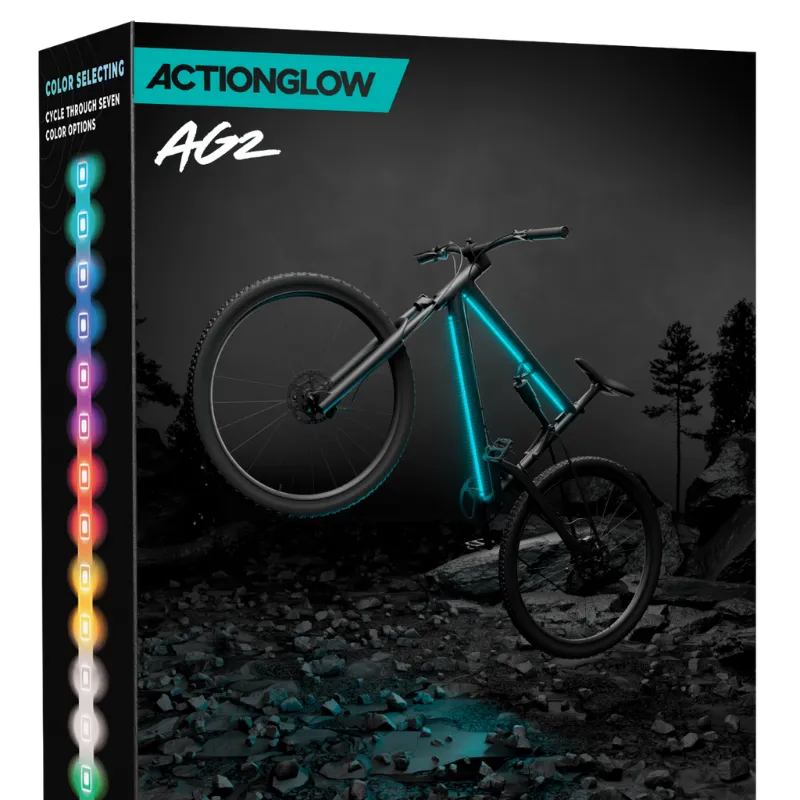
A bike front lamp lights your path and signals oncoming traffic, while bike rim lights create 360-degree side visibility by illuminating your wheels. Both improve nighttime safety, but they solve different visibility problems, and the best setup often combines them.
How a Bike Front Lamp Improves Forward Visibility
A front-mounted lamp serves two critical roles: it illuminates the road ahead so you can spot potholes, debris, and turns, and it makes you visible to drivers approaching from the front. LED bike lights typically output 200 to 1,200 lumens, with brighter models designed for unlit trails and dimmer units optimized for urban commuting.
Most front lamps attach to your handlebars with a silicone strap or quick-release mount and run on rechargeable lithium batteries. Runtime varies from 90 minutes on high beam to eight hours on flash mode. We recommend steady beam for dark roads and a pulsing mode for well-lit streets where you need to catch driver attention without blinding pedestrians.
Key features to prioritize:
- Beam pattern: A focused spot beam reaches farther, while a wide flood beam covers peripheral vision
- Mounting stability: Vibration can shift cheaper brackets and point your light at the sky or ground
- Water resistance: Look for an IPX4 rating minimum to handle rain and road spray
- Battery indicator: Prevents mid-ride blackouts by warning you when charge drops below 20%
For commuters who mix bike paths and street riding, a 400 to 600 lumen front lamp balances throw distance and battery life. Trail riders in rural areas benefit from 800+ lumens to spot wildlife and navigation hazards early.
Why Bike Rim Lights Add Critical Side Visibility
Rim-mounted LEDs wrap around your spokes or valve stems, creating a spinning disc of light that’s visible from cross streets, driveways, and parking lot exits, angles where a front lamp points the wrong direction. Bike wheel lights excel at preventing side-impact collisions, the most common crash type at urban intersections.
These lights use motion sensors or centrifugal switches to activate when you pedal, conserving battery during stops. Installation takes under five minutes: clip the LED strips onto your spokes or screw a valve-stem light into your tire’s air valve. Most models weigh less than 30 grams per wheel and survive rain, though mud can obscure the LEDs until your next wash.
Rim lights shine in these scenarios:
- Riding through neighborhoods with frequent driveways and blind corners
- Commuting at dawn or dusk when side-angle visibility drops
- Group rides where you need to stand out from other cyclists’ front and rear lights
- Wet conditions when reflectors lose effectiveness
The spinning motion creates a mesmerizing halo effect that drivers notice 30% farther away than static reflectors, according to independent visibility studies. We’ve found that pairing rim lights with a traditional front and rear setup reduces close calls on mixed-traffic routes.
Comparing Front Lamp vs Rim Light Performance
| Feature | Bike Front Lamp | Bike Rim Lights |
|---|---|---|
| Primary purpose | Forward illumination + front visibility | Side visibility at intersections |
| Effective range | 50 to 150 meters ahead | 30 to 50 meters lateral |
| Best conditions | Dark roads, trails, head-on traffic | Urban crossings, side streets, groups |
| Battery life | 2 to 8 hours (mode-dependent) | 40 to 80 hours (motion-activated) |
Neither option replaces the other. A front lamp helps *you* see and be seen by oncoming vehicles, while rim lights protect you from perpendicular traffic that won’t notice a forward-facing beam. For comprehensive nighttime safety, we recommend running both systems plus a rear taillight.
If budget limits you to one, prioritize a front lamp for rural or trail riding where road hazards matter most, and choose rim lights for city commuting with heavy cross-traffic. Check the latest pricing to see which ActionGlow configurations fit your needs, many riders start with one type and add the other after experiencing the visibility difference firsthand.
Choosing the Right LED Bike Lights for Your Route
Your ideal lighting setup depends on where you ride, how fast you travel, and whether you share the road with cars. Here’s how to match gear to conditions:
Urban commuters benefit most from a moderate front lamp (300 to 500 lumens) paired with rim lights on both wheels. Street lighting reduces your need for high-output beams, but intersection density increases side-visibility risks. A flashing front mode helps you stand out against storefronts and traffic signals.
Suburban riders mixing bike paths and residential streets should run a 500 to 800 lumen front lamp on steady mode, plus rim lights for driveway encounters. Battery life matters more here since rides often exceed 45 minutes, so look for bike lights with power-saving modes that automatically dim when you slow down.
Trail and rural cyclists need maximum forward throw (1,000+ lumens) to spot animals, rocks, and tight turns at speed. Rim lights add less value on trails without cross-traffic but help if you transition through towns or parking areas. Prioritize mounts that absorb vibration on rough terrain.
Group and event riders gain the most from rim lights, which differentiate you from dozens of other red and white lights in a pack. Many organized night rides require 360-degree visibility, making wheel lights a practical compliance choice beyond pure safety.
Weather also shifts priorities. Fog and rain scatter front lamp beams, reducing effective range by 40%, while rim lights remain visible because their lower position cuts through ground-level mist. Conversely, dusty or muddy trails coat rim lights quickly, making a high-mounted front lamp more reliable.
Installation and Maintenance Tips for Maximum Visibility
Proper placement affects how well drivers and pedestrians see you. Mount your front lamp at handlebar height, angled slightly downward so the beam hotspot hits the road 10 to 15 meters ahead. Too high blinds oncoming cyclists and drivers; too low shortens your reaction window for obstacles.
For rim lights, distribute them evenly around the wheel, installing only on one side creates an unbalanced visual that’s harder for drivers to interpret. If your model uses spoke clips, position them near the rim rather than the hub to maximize the visible light circle’s diameter.
Maintenance takes minutes:
- Wipe lenses weekly to remove road grime that cuts brightness by 20 to 30%
- Charge before rides rather than waiting for the low-battery warning
- Check mounts after rough roads to catch loose brackets before they vibrate off
- Store indoors during freezing weather since lithium batteries lose capacity below -10°C
Most bike wheel lights use replaceable coin-cell or AAA batteries, while front lamps typically feature built-in rechargeable packs with micro-USB or USB-C ports. Keep a backup battery or charging cable in your commute bag to avoid getting stranded after a long workday drains your lights faster than expected.
Reflective tape on your frame and pedals complements active lighting by providing passive visibility when batteries die. We’ve seen riders combine ActionGlow lights with ankle reflectors and helmet strobes for maximum conspicuity on high-speed roads, overkill for bike paths, but smart for highway-adjacent routes.
Who Benefits Most from Combined Lighting Setups
Combining a front lamp with rim lights delivers the strongest safety advantage for these riders:
- Year-round commuters who ride in varied light and weather conditions
- Delivery and gig cyclists making frequent stops and starts in mixed traffic
- Parents pulling trailers or cargo bikes that need extra visibility due to size
- Older riders whose night vision has declined and who benefit from better road illumination
- Anyone riding on roads without bike lanes where driver awareness is critical
Solo recreational riders on dedicated trails can often skip rim lights, while casual neighborhood cyclists might opt for rim lights alone if street lighting handles path illumination. The key is honest assessment: if you’ve ever had a driver pull out in front of you at an intersection, side visibility is your weak point.
Independent tests from cycling safety organizations consistently show that multi-angle lighting reduces near-miss incidents by 50 to 70% compared to single front/rear setups. Drivers need roughly 200 milliseconds to recognize a cyclist and react, side-visible lights give them that window at intersections where a front lamp doesn’t reach their sightline until it’s too late.
For detailed comparisons of lumen output and beam patterns across different models, Bicycling’s tested picks and BikeRadar’s buyer’s guide offer third-party validation of what works in real-world conditions. We align our recommendations with their findings and add hands-on testing focused on value and ease of use for everyday riders.
The bottom line: a bike front lamp and bike rim lights protect you from different collision types. Start with the one that matches your highest risk, then expand your setup as budget allows. ActionGlow’s current 10% sitewide discount makes it affordable to build a complete system without choosing between front and side visibility.
Questions
Can I use a bike front lamp and rim lights at the same time?
Yes, and we recommend it for maximum visibility. The front lamp illuminates your path and signals oncoming traffic, while rim lights make you visible from the side at intersections. They solve different visibility problems and work together without interference.
How long do bike rim light batteries typically last?
Most rim lights run 40 to 80 hours because they use motion sensors to activate only when you're pedaling. This far exceeds front lamp battery life, which ranges from 2 to 8 hours depending on brightness mode.
Do I need a bright front lamp if I only ride on well-lit city streets?
A moderate 300 to 500 lumen front lamp works well for urban riding. Street lighting helps you see the road, but you still need a front light to make yourself visible to drivers. Use flash mode to stand out without blinding pedestrians.
Will rim lights work in the rain?
Most rim lights are water-resistant and handle rain without issues. However, mud and heavy spray can temporarily obscure the LEDs until you clean them. They remain more visible than reflectors in wet conditions because of their active light output.
Which is more important for trail riding, front lamp or rim lights?
A bright front lamp is essential for trail riding because you need to spot obstacles, turns, and wildlife ahead. Rim lights add little value on trails without cross-traffic but are useful if you transition through towns or parking areas.
How do I mount rim lights without damaging my spokes?
Most rim lights use soft silicone clips that slide onto spokes without scratching or pinching. Valve-stem models screw directly into your tire's air valve. Both installation methods take under five minutes and require no tools.
Products in this guide
Shopping at ActionGlow? See the discount code
10% OFF Sitewide
More in this series
ActionGlow LED Bike Lights in Rain and Cold: How Long They Last25 Aug 20266 min ActionGlow Guardian Angel Kayak Kit: Is the Full Lighting System Worth It?25 Aug 20264 minBest ActionGlow Bike Light Placement for Commuting and Trail Riding25 Aug 20266 minDo LED Kayak Lights Drain Your Battery? What ActionGlow Users Need to Know25 Aug 20265 minHow to Install ActionGlow Wheel Lights on Any Bike in Under 10 Minutes25 Aug 20266 min