 A Novaic points guide
48V Golf Cart Battery Charger Compatibility: What You Need to Know
A 48v golf cart battery charger must match your battery chemistry, amperage capacity, and connector type to charge safely and extend battery life.
What Makes a 48V Golf Cart Battery Charger Compatible
A 48v golf cart battery charger must match three critical factors: your battery chemistry (lithium vs. lead-acid), the amperage your battery can accept, and the physical connector type. Using the wrong charger can permanently damage your battery pack, void warranties, or create a safety hazard.
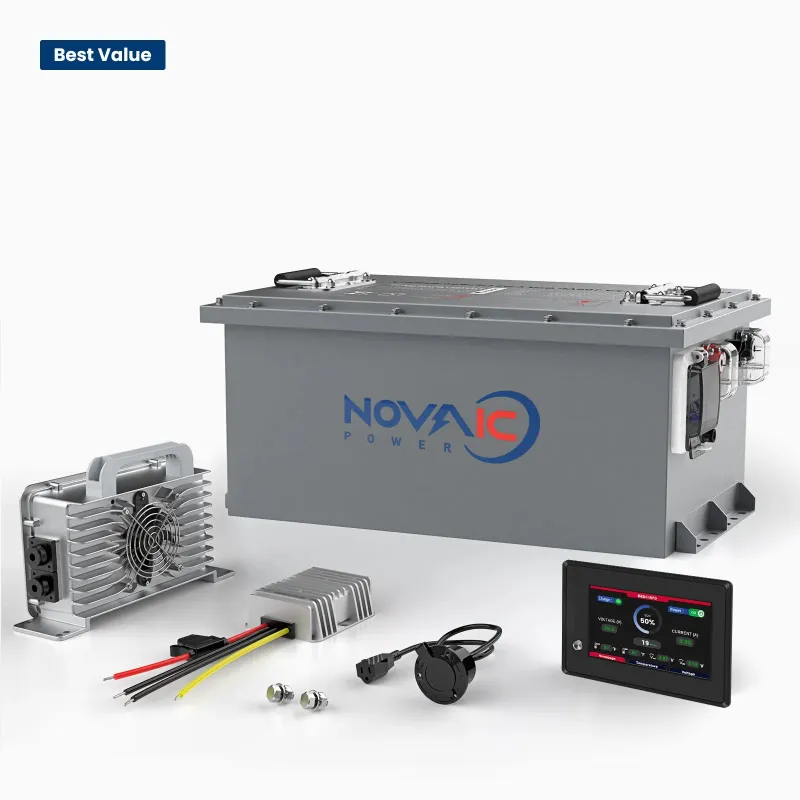
Most cart owners assume any 48-volt charger will work, but lithium batteries like the 48v 105ah deep cycle lifepo4 battery require a completely different charging profile than flooded lead-acid packs. Before you buy, confirm your battery type and check the manufacturer’s recommended charge parameters.
Chemistry Compatibility: Lithium vs. Lead-Acid Chargers
Lithium and lead-acid batteries demand different voltage curves and termination logic. A lead-acid charger typically pushes to 58 to 59 volts and uses a trickle or float stage, which can overcharge and damage lithium cells. Lithium chargers for 48v golf cart batteries stop at a precise cutoff voltage (usually 54.6 to 58.4 V depending on cell count) and skip the float stage entirely.
Key differences:
- Lead-acid chargers use bulk, absorption, and float stages; they can gas or overheat lithium packs
- Lithium-specific chargers terminate at a lower voltage and cut power cleanly to prevent cell imbalance
- Universal chargers offer selectable profiles, but you must set the correct mode every time
If you own a novaic lithium battery or similar LiFePO4 pack, verify that your charger explicitly supports lithium chemistry. Check current pricing and our discount code to save 3% on compatible chargers.
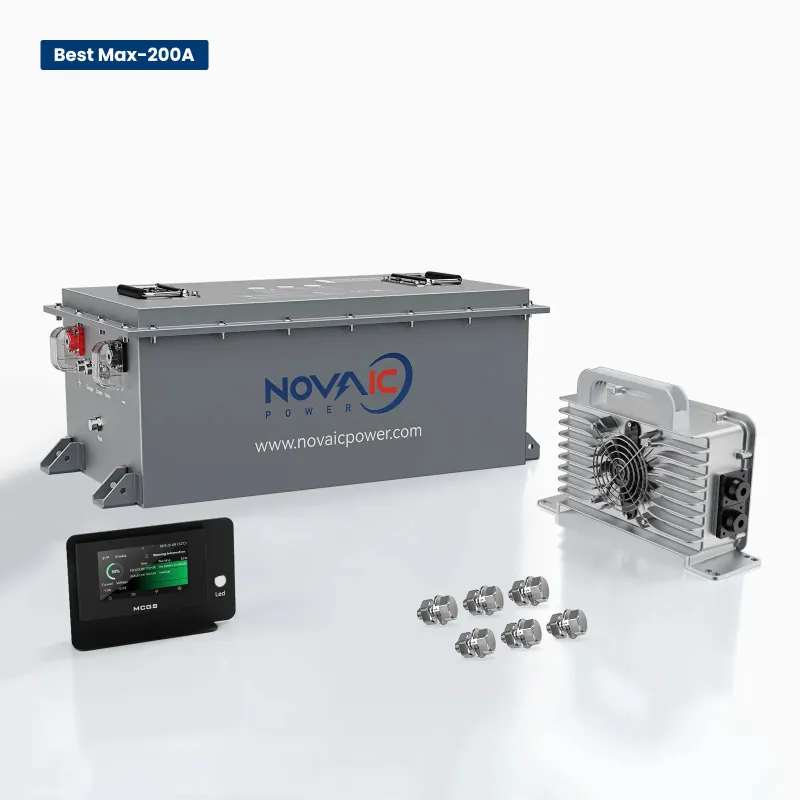
For club car batteries 48 volt systems originally equipped with lead-acid, upgrading to lithium means replacing the OEM charger unless it already has a lithium mode. Many Club Car and EZ-GO factory chargers do not.
Amperage and Charging Speed: Matching Your Battery’s Capacity
Charger amperage determines how quickly your pack fills. A 48-volt 10-amp charger delivers roughly 480 watts, while a 25-amp unit pushes 1,200 watts. Larger battery banks benefit from higher amperage, but your battery’s maximum charge current rating sets the ceiling.
| Battery Capacity | Recommended Charger | Typical Charge Time |
|---|---|---|
| 50 to 75 Ah | 10 to 15 A | 5 to 7 hours |
| 100 to 150 Ah | 15 to 25 A | 4 to 6 hours |
| 200+ Ah | 25 to 40 A | 3 to 5 hours |
Oversized chargers (for example, a 40 A charger on a 50 Ah pack) can stress cells and reduce cycle life, especially in lithium packs without robust battery management systems. Undersized chargers simply take longer but rarely harm the battery. For daily use, we recommend a charger rated at 0.2C to 0.3C, that is, 20 to 30 percent of your battery’s amp-hour capacity.
A 48v golf cart trickle charger (typically 2 to 5 A) is useful for seasonal storage or maintaining charge between infrequent rides, but it will take 12 to 24 hours to fully replenish a depleted 100 Ah pack.
Connector Types and Physical Fitment
Even when voltage and chemistry align, a mismatched plug stops you cold. The most common 48-volt golf cart connectors include:
- Crowfoot (three-pin): standard on many Club Car models
- SB-50 (Anderson-style): popular retrofit and aftermarket choice
- Powerwise 2 / round DC barrel: used by some EZ-GO and Yamaha carts
- OBC (on-board charger) hardwired: integrated into the cart with no external plug
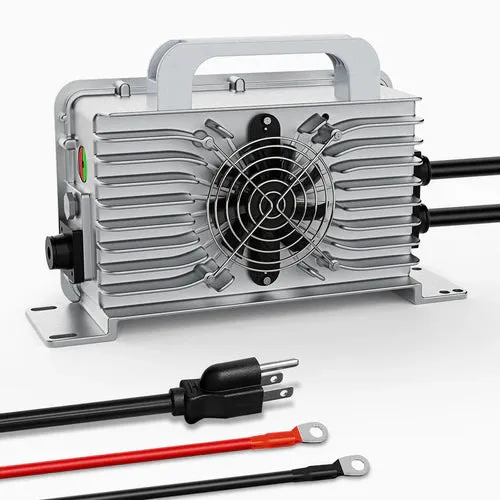
Before ordering a 48v golf cart battery charger, photograph your existing connector and measure the pin layout. Adapters exist for most combinations, but they add resistance and potential failure points. We prefer chargers that ship with the correct plug or offer interchangeable tips.
For owners of 72v golf cart battery or 72 volt lithium golf cart battery systems, note that 72-volt chargers use similar connector families but require higher voltage output (typically 82 to 88 V). Never attempt to charge a 72 V pack with a 48 V charger, even if the connector fits.
Manufacturer and BMS Communication Requirements
Modern lithium battery packs, including many 48s configurations, integrate a battery management system (BMS) that monitors cell voltage, temperature, and current. Some BMS units communicate with the charger via CAN bus or a signal wire to enable or disable charging. If your charger and BMS do not speak the same protocol, charging may fail silently or stop prematurely.
What to verify:
- Does your battery require a “smart” charger with BMS handshake?
- Can the charger read temperature sensors to pause charging if cells overheat?
- Does the BMS have a charge-enable output wire that must connect to the charger?
Most aftermarket lithium packs for golf carts use a simple enable/disable wire rather than full CAN bus, but higher-end systems demand protocol compatibility. Check your battery’s manual or contact the manufacturer if charging stops unexpectedly at partial state-of-charge.
Choosing the Best 48V Golf Cart Battery Charger for Your Setup
Once you have confirmed chemistry, amperage, and connector type, prioritize these features for long-term reliability:
- Automatic shutoff: prevents overcharge and extends battery life
- Temperature compensation: adjusts voltage based on ambient or battery temperature (critical for lead-acid)
- Cooling fan and heat sink: ensures the charger does not throttle or fail in hot environments
- LED or digital display: shows charge status, fault codes, and completion
- Weatherproof or indoor rating: match the enclosure to where you will mount the charger
For daily drivers, a wall-mounted charger with a detachable cable reduces wear on the cart’s receptacle. For multi-cart fleets, portable units let you rotate one charger across several vehicles.
Avoid generic no-name chargers that lack safety certifications (UL, CE, or FCC). A reputable best 48v golf cart battery charger will list its charge algorithm, supported chemistries, and warranty terms clearly in the product documentation. If the listing is vague on voltage cutoff or amperage, keep shopping.
Common Compatibility Mistakes and How to Avoid Them
Using a golf cart battery charger 36 volt on a 48 V system: the charger will never reach full voltage, leaving your pack chronically undercharged and reducing range. Always match nominal voltage exactly.
Charging a lithium pack with an old lead-acid charger: float voltage will overcharge lithium cells, triggering BMS protection or causing permanent capacity loss. Replace the charger or install a charge controller.
Ignoring connector polarity: reversing positive and negative can destroy the BMS, blow fuses, or start a fire. Double-check polarity with a multimeter before the first charge cycle.
Selecting a charger based on price alone: cheap chargers often lack thermal protection, accurate voltage regulation, and proper certifications. A failed charger can cost you an entire battery pack replacement.
By matching chemistry, amperage, connector, and communication protocol, you will ensure safe, efficient charging and maximize the lifespan of your investment. Whether you are running club car batteries 48 volt or upgrading to a lithium 48v 105ah deep cycle lifepo4 battery, the right charger is as important as the battery itself.
Questions
Can I use a lead-acid charger on a lithium 48V golf cart battery?
No. Lead-acid chargers use a float stage and higher voltage that can overcharge lithium cells, triggering BMS protection or causing permanent damage. Always use a charger designed for lithium chemistry.
What amperage charger do I need for a 100 Ah 48 volt golf cart battery?
A 15 to 25 amp charger is ideal for a 100 Ah pack, providing a full charge in 4 to 6 hours. Avoid chargers above 30 amps unless your battery's datasheet explicitly allows higher charge rates.
Will a 48v golf cart battery charger work on a 72 volt system?
No. A 48 V charger outputs 54 to 59 volts, far below the 82 to 88 volts required for a 72 V battery. You must use a charger matched to your system voltage.
How do I know if my charger connector will fit my golf cart battery?
Photograph your existing plug and compare pin layout, spacing, and diameter to the charger's connector. Common types include crowfoot, SB-50, and Powerwise 2, but carts vary by brand and year.
What is a trickle charger and when should I use one for my 48V cart?
A trickle charger delivers 2 to 5 amps and is designed for maintaining charge during storage or infrequent use. It takes much longer to fully charge a depleted battery compared to a standard 15 to 25 amp unit.
Do I need a smart charger for my Novaic lithium battery?
Most Novaic lithium batteries include a BMS that works with standard lithium chargers, but verify whether your model requires a charge-enable wire or CAN bus communication. Check the manual or contact Novaic support if charging stops prematurely.
Products in this guide
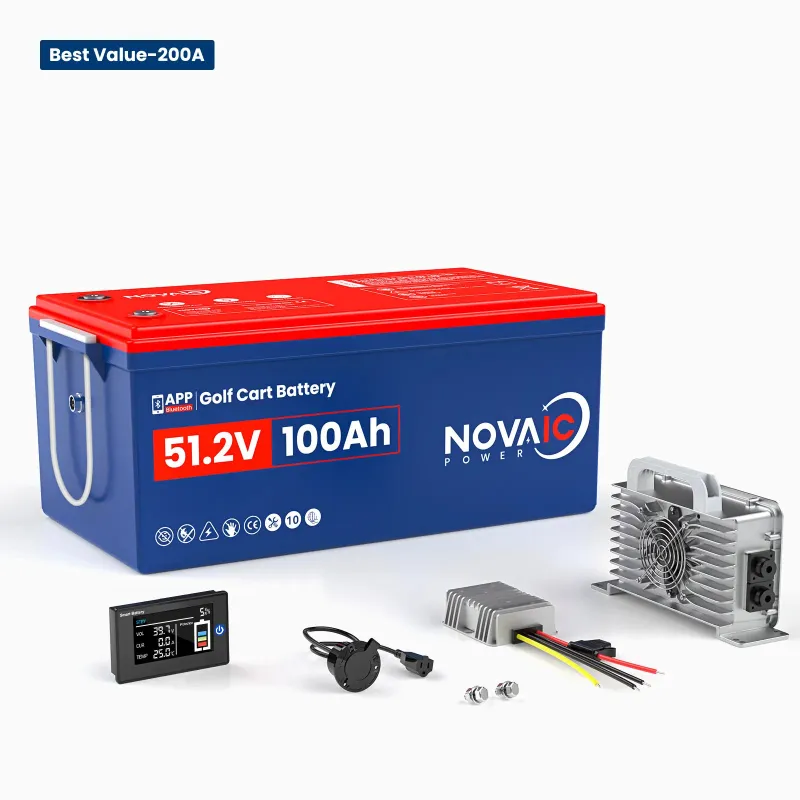 Shopping at Novaic points? See the discount code
3% OFF All Orders
Shopping at Novaic points? See the discount code
3% OFF All Orders