 A DynamicDNALabs guide
Paternity Test vs Sibling DNA Test: Which Should You Order?
A sibling DNA test analyzes whether two individuals share one or both biological parents, making it the right choice when parental DNA is unavailable.
Choose a paternity test when the alleged father can give a sample, and choose a sibling DNA test when he cannot. The paternity test vs sibling DNA test question comes down to who is available: a paternity test compares a child directly with the man who may be the father, while a sibling test compares two or more people to see whether they share one parent, both parents or neither.
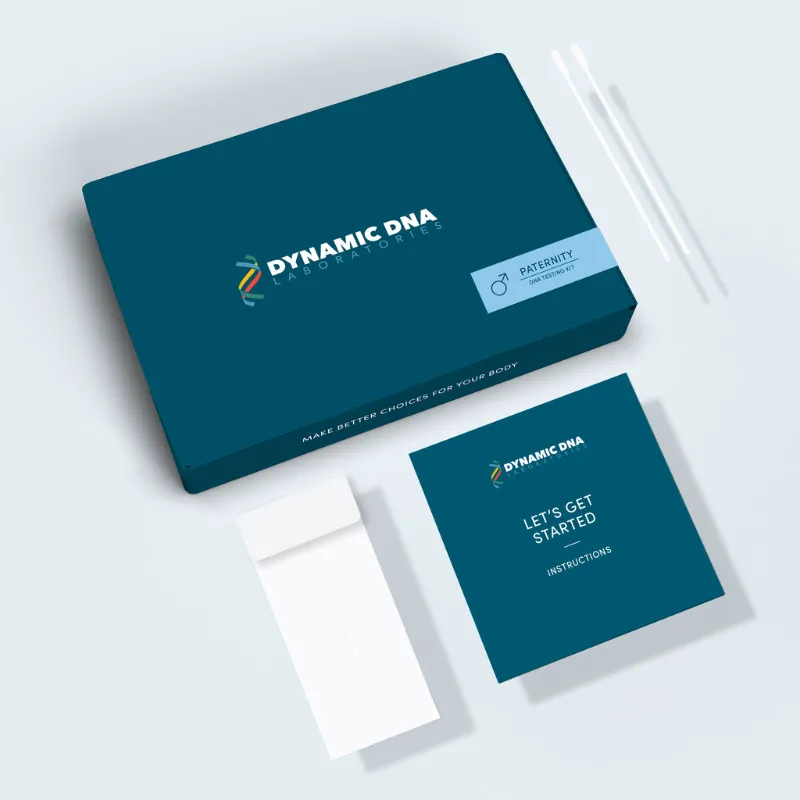
Because a paternity test looks at the father himself, it gives the clearest answer. A sibling DNA test is the fallback when the father has died, is unknown or will not take part, and its answer is a probability rather than a near certainty.
Paternity test vs sibling DNA test: the core difference
Every child inherits half of their DNA from each parent. A paternity test checks whether the child carries the father’s half at each marker the lab reads. If the markers line up, he is included as the father. If several do not, he is excluded. Labs describe inclusions as above 99.9% probability and exclusions as 100%, which is why paternity testing is treated as the most definitive option.
A sibling test has no parent sample to compare against, so the lab has to work backwards. It looks at how much genetic material the people in the test share and calculates a siblingship index, a number that says how much more likely the results are if they are related than if they are not.
| Question | Paternity test | Sibling DNA test |
|---|---|---|
| Who gives samples | Child and alleged father (mother optional) | Two or more possible siblings (mother optional) |
| What it answers | Is this man the biological father? | Do these people share one parent, both, or neither? |
| Type of result | Inclusion or exclusion | A likelihood score |
| Best when | The father can take part | The father cannot take part |
When a paternity test is the better choice
If the alleged father is willing and able to swab, a paternity test kit is almost always the right order. It needs fewer people and gives a clearer answer. We would choose it when:
- The alleged father can take part
- You want the most definitive answer from the fewest participants
- You may need legally admissible results later for custody, child support or immigration
- You want to avoid the grey zone that sibling results can land in
A DNA father test needs only the child and the alleged father, though adding the mother’s sample makes the analysis stronger, because the lab can separate out which half of the child’s DNA came from her. Fewer participants also means fewer kits to collect and post back.
How a sibling DNA test works without parents
Sibling DNA testing compares shared markers between two or more people to decide whether they are full siblings, half siblings or unrelated. On average, full siblings share about 50% of their DNA and half siblings about 25%, but those are averages. Two real full siblings can share a bit more or a bit less, which is why sibling results come back as likelihoods rather than a yes or no.
Sibling testing makes sense when:
- The alleged father has died or cannot be found
- He refuses to take part
- Two people want to know whether they share the same father
- Several siblings want to confirm how they are related
An at-home DNA test lets each person collect cheek swabs privately and post them to the lab. Ask the lab for its current turnaround before you order, since timing depends on when the last sample arrives and how many people are included.
Half sibling tests and the same father question
A common reason to order a sibling test is two children with different mothers who may share a father. A half sibling test compares the two directly. Sibship testing calculates how likely it is that two people share one biological parent compared with being unrelated.
Keep a few limits in mind:
- Half sibling results are less definitive than a paternity result
- They are reported as a likelihood, not as certainty
- Testing another known sibling can make the result clearer
- Adding a mother’s sample, where possible, strengthens the conclusion
- For two males, some labs can also compare Y chromosome markers, which pass from father to son
If the father cannot test but his parents can, grandparent testing is another route. Ask the lab whether that option fits your case before you order a lower cost paternity test or a sibling kit.
Cost and what drives the price
We do not list prices here because they change, but the pattern is consistent. Sibling tests usually cost more than a basic DNA paternity test, because the analysis is more involved, and each extra person adds to the total. Legal tests cost more than peace of mind tests because a clinic has to collect and document the samples.
No accredited lab offers a free sibling DNA test, though some government programs cover testing in specific legal cases. Be wary of very cheap tests that do not name their lab or its accreditation. For current prices, see the current DynamicDNALabs discount code before you order.
Home collection vs legal collection
Home kits and clinic collection go through the same lab analysis. The difference is who collects the samples and whether a court will accept the result.
Home collection is private and simple, costs less than a clinic visit and needs no appointment. The trade off is that no one witnesses who gave the sample, so the result is for personal knowledge only and will not be accepted for court, custody, child support or immigration. The DNA Sibling Test process uses cheek swabs rubbed inside the mouth for about 30 seconds each, then air dried and sealed in the envelopes provided.
For legal use you need chain of custody collection. The lab books an appointment at a clinic, participants show ID and are photographed, and every step is documented. DynamicDNALabs offers home DNA test kits as well as legal testing, so decide which you need before you buy.
Which test to order
Order a paternity test when the alleged father can take part. Order a sibling DNA test when he cannot and the question is whether two or more people share a parent. If neither fits, ask about grandparent or avuncular (aunt or uncle) testing, which compare the child with the alleged father’s parents or siblings.
Settle one more thing first: legal or peace of mind. It changes how samples are collected and what you pay. With that decided, both tests give reliable answers when an accredited lab runs them.
Questions
Paternity test vs sibling DNA test: which is more accurate?
A paternity test is more definitive because it compares the child directly with the alleged father. A sibling test infers the relationship from how much DNA two people share, so its result is a likelihood rather than a near certain inclusion or exclusion.
Can a sibling DNA test prove who the father is?
Not directly. It can show whether two or more people are likely to share the same biological father, which is indirect evidence about paternity. To name the father, he or his close relatives need to give samples.
Do both siblings need to give samples at the same time?
No. Each person can collect samples separately and post them in. The lab usually starts the analysis once every sample has arrived, so the result waits for the last one.
Can I use a home sibling DNA test for court or immigration?
No. Home collection has no witness or ID check, so there is no chain of custody. For court, custody, child support or immigration you need a legal test with documented collection at an approved facility.
What happens if sibling test results are inconclusive?
An inconclusive result means the lab could not reach a clear answer. Adding another sibling, including the mother's sample, or testing the alleged father's parents can often resolve it. Ask the lab which option fits your family.
Products in this guide
 Shopping at DynamicDNALabs? See the discount code
20% OFF All Orders
Shopping at DynamicDNALabs? See the discount code
20% OFF All Orders
More in this series
DNA Father Test: What Happens From Order to Result17 Sep 20264 min Do Personalized Vitamin Packs Really Work Better Than Multivitamins?17 Sep 20263 minCan a Cheap DNA Paternity Test Hold Up in Court?17 Sep 20265 minHow Long Does an At-Home DNA Test Take to Get Results?17 Sep 20264 minHow to Collect DNA Samples for an At-Home Paternity Test17 Sep 20264 min