 A DynamicDNALabs guide
How to Collect DNA Samples for an At-Home Paternity Test
An at home dna test requires clean cheek swabs from each person, proper drying time, and careful packaging to deliver lab-quality paternity results.
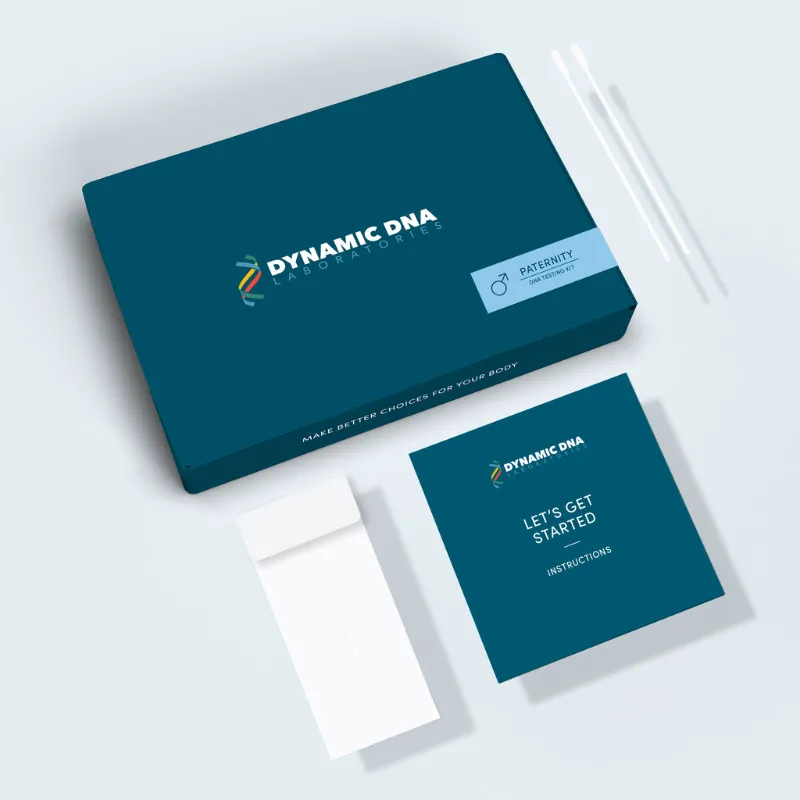
To collect DNA samples for an at-home paternity test, you rub a clean cheek swab firmly inside the mouth of the alleged father and the child, let each swab dry in its own labeled envelope, then seal and post them to the lab in the return mailer. The whole job is quick, but careful technique is what separates a usable sample from one the lab has to reject. Below we walk through each step, the common mistakes and what to do in special cases, whether you ordered an at-home DNA test for paternity or a sibling DNA test.
What you need before collecting DNA samples
A home paternity kit usually contains:
- Sterile swabs in sealed wrappers, several per person
- Collection envelopes labeled for each person (father, child and mother if she is included)
- An instruction sheet with the steps for that particular test
- A return mailer addressed to the lab
Check the contents against the packing list as soon as the kit arrives. If anything is missing or damaged, contact the lab before you collect anything. You will also want a clean, dry surface and a clock. Leave the swab wrappers closed until the moment you use them.
How to collect DNA samples for an at-home paternity test, step by step
The paternity test swab method is simple, but details matter. Follow the same order for each person.
Prepare the person being swabbed
Many kits ask that the person has not eaten, drunk anything but water, chewed gum or smoked for about 30 minutes before collection, and that babies have not fed during that time. Follow the timing on your kit’s instruction sheet if it differs.
Wash your hands well before handling any swab. As the collector, your own DNA must not get onto the samples.
Collect the cheek cells
- Open one swab wrapper and hold the swab by the handle only. Never touch the tip.
- Place the tip between the cheek and the gum.
- Rub and rotate the swab firmly against the inside of the cheek for the time the kit states, often around 30 seconds. Scrub rather than dab. LabCorp’s DNA testing page has more on how cheek swab collection works.
- Take the swab out without letting it touch the lips, tongue or anything else.
- Repeat with the next swab, usually on the other cheek.
With a baby, a second adult can gently steady the head. The swab does not hurt, but little ones tend to wriggle.
Dry and package each sample
Put each swab into its own envelope straight away and leave the envelope open so air can reach it. Let it dry fully at room temperature for as long as the kit instructs.
Never seal a damp swab. Moisture lets bacteria grow, and bacteria break down DNA. Once dry, seal the envelope and add the name and date if the kit asks for them. Some labs use preprinted barcode labels, so follow your kit’s directions.
Common collection mistakes that spoil results
- Cross-contamination: using one swab for two people, or touching the tip. Each person needs their own swabs, handled one at a time.
- Too few cells: dabbing lightly instead of rubbing firmly for the full time.
- Label mix-ups: swapping the father’s and child’s envelopes makes the result meaningless. Check names before sealing.
- Dirty drying spots: leaving swabs where dust, pet hair or kitchen splashes can reach them. Dry them somewhere clean and calm.
If there is any chance you will need the result for court, a home kit is not the right tool. Legal tests need a witnessed collection with a documented chain of custody. Kaiser Permanente’s guide to at-home DNA testing kits explains the difference between informational and legal testing.
Special collection cases
Babies and toddlers
Babies can usually be swabbed with the same cheek method. Keep to the no-feeding window your kit gives, and have a second adult help keep the baby calm. If you are unsure whether the kit suits a newborn, ask the lab before collecting.
Testing without the mother
A mother’s sample is helpful but usually not required for a paternity test kit. The lab compares the child’s DNA with the alleged father’s. If you want to check whether two people are siblings without either parent, order a sibling DNA test, which is analyzed differently.
Several children
Give each child their own set of labeled envelopes. Finish one child completely, set their envelopes aside, and wash your hands before starting the next. Never reuse a swab.
Shipping your samples and what happens next
When every swab is dry, sealed and labeled, put the envelopes in the return mailer and send it promptly. Turnaround times depend on the lab and the case; DNA Center notes that complex cases can take longer.
Keep the tracking number if your mailer has one. Labs usually confirm when the kit arrives and deliver results through a secure online portal, by email or by post, depending on the service. You can compare prices and see the current DynamicDNALabs discount code before you order.
At-home vs clinic-collected paternity tests
| Feature | At-home collection | Clinic or witnessed collection |
|---|---|---|
| Who collects | You, at home | A neutral third party |
| Privacy | High, no appointment | Needs an appointment and ID |
| Use in court | No, for personal knowledge only | Yes, with documented chain of custody |
| Cost | Usually lower | Usually higher |
For custody, child support or any legal matter, use a legal test with witnessed collection. A home test is for personal peace of mind. The science can be the same; what differs is the paperwork proving who gave each sample.
Tips for a usable sample the first time
- Read the whole instruction sheet first. Labs use slightly different methods.
- Use every swab provided, unless the kit says otherwise. More swabs give the lab more material to work with.
- Photograph each labeled envelope before sealing, as your own record.
- Post the kit promptly once the swabs are dry.
Collection is simple when you take it one step at a time. Once the kit is in the post, all that is left is waiting for the lab.
Questions
How do I collect DNA samples for an at-home paternity test?
Wash your hands, rub a swab firmly inside each person's cheek for the time the kit states, let each swab dry in its own labeled envelope, then seal and post them in the return mailer.
Can I eat or drink before collecting DNA samples?
Most kits ask you to avoid food, drinks other than water, gum and tobacco for a short time before swabbing. Follow the timing on your kit's instructions.
What happens if I touch the swab tip?
Your own DNA may get onto the sample. Throw that swab away and use a fresh one. If you run out, contact the lab for replacements.
Do I need the mother's DNA for a paternity test?
Usually not. The lab compares the child's DNA with the alleged father's. A mother's sample can help, so include it if your kit allows.
Will an at-home paternity test hold up in court?
No. Home tests are for personal knowledge. A court-admissible test needs witnessed collection with a documented chain of custody.
Products in this guide
 Shopping at DynamicDNALabs? See the discount code
20% OFF All Orders
Shopping at DynamicDNALabs? See the discount code
20% OFF All Orders
More in this series
DNA Father Test: What Happens From Order to Result17 Sep 20264 min Do Personalized Vitamin Packs Really Work Better Than Multivitamins?17 Sep 20263 minCan a Cheap DNA Paternity Test Hold Up in Court?17 Sep 20265 minHow Long Does an At-Home DNA Test Take to Get Results?17 Sep 20264 minPaternity Test vs Sibling DNA Test: Which Should You Order?17 Sep 20265 min