 A LiTime guide
Do You Need a DC to DC Charger for Your Dual Battery System?
A lithium battery charger alone won't properly charge your auxiliary battery while driving—that's where a DC to DC charger comes in.
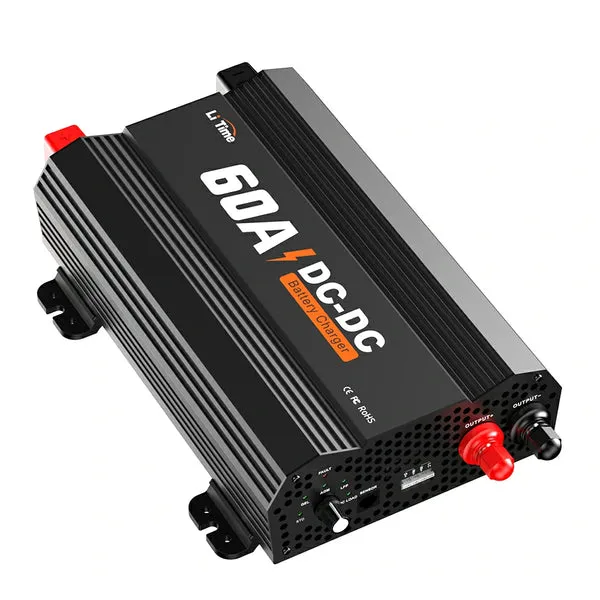
A lithium battery charger plugged into shore power handles your auxiliary bank beautifully at camp, but it won’t charge that second battery while you drive. For dual battery systems, a dc to dc charger sits between your alternator and auxiliary battery to regulate voltage and safely top off lithium chemistry on the road. Whether you need one, both, or can skip the DC to DC unit depends on your battery chemistry, how you recharge, and whether your alternator output matches modern lithium profiles.
When a DC to DC Charger Is Essential
Your vehicle’s alternator was designed for lead-acid starter batteries, not the higher voltage and bulk-charge appetite of litime batteries or other LiFePO4 packs. A DC to DC charger steps alternator output to the correct profile, prevents voltage sag that triggers low-voltage cutoffs, and protects your alternator from overheating.
You need a DC to DC unit if:
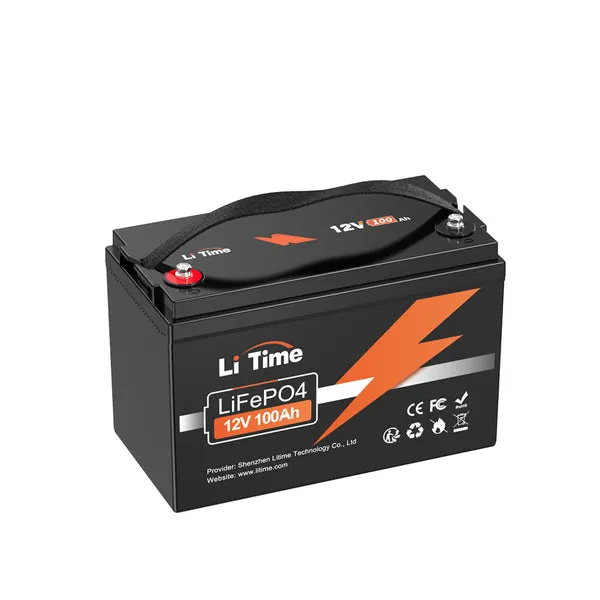
- Your auxiliary bank is lithium (LiFePO4) and your main starter is lead-acid or AGM
- You drive regularly and want to recharge while moving
- Your alternator is a smart or variable-voltage type (common in vehicles newer than 2015)
- You run a 12v battery auxiliary with sustained loads like a fridge or inverter
Skip the DC to DC charger only if your auxiliary battery is lead-acid, you already have a battery isolator or solenoid, and you never plan to upgrade to lithium. Even then, a DC to DC unit future-proofs the system and delivers faster, safer charging.
How Lithium Battery Chargers Fit the System
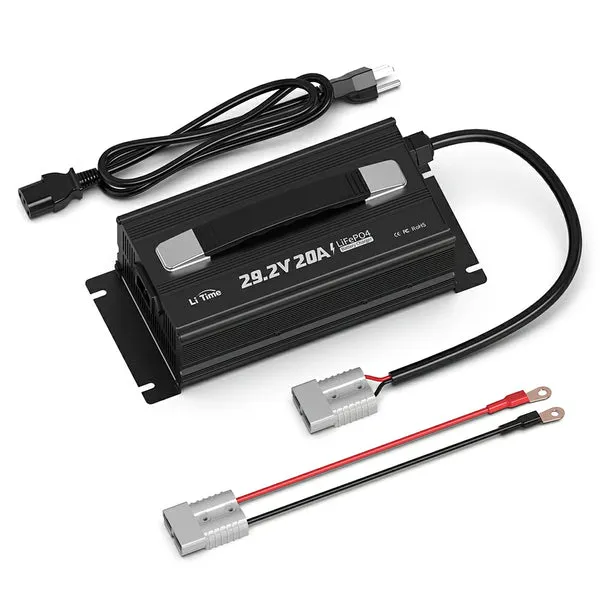
A standalone lithium battery charger connects to AC shore power or a generator and follows a constant-current, constant-voltage (CC-CV) profile tailored to LiFePO4 cells. These chargers are your primary tool when you’re parked at a campground, dock, or home base with 120V or 240V available.
Key advantages of a dedicated charger:
- Faster bulk stage: pushes the maximum current your battery management system allows
- Proper voltage ceiling: stops at 14.4V to 14.6V for lithium ion battery packs, preventing overcharge
- Temperature compensation: adjusts output if your battery runs hot or cold
- Multi-bank options: a lithium battery charger 2 bank model lets you charge starter and auxiliary simultaneously from one AC inlet
Pair your DC to DC charger with a shore-power unit so you can top off on the road and finish the job overnight. For sizing, match charger amperage to 20-30% of your battery’s amp-hour capacity (a 100Ah bank works well with a 20A to 30A unit). Check the latest price to compare single-bank and multi-bank chargers for your voltage.
Choosing Between 12V, 24V, and 48V Configurations
Voltage matters because your DC to DC charger and lithium battery charger must match your auxiliary bank’s nominal voltage. Most RVs, vans, and boats run 12V house systems; larger rigs and golf carts often use 24V or 48V to reduce wire gauge and improve efficiency.
| Voltage | Best For | Charger Type |
|---|---|---|
| 12V | RVs, vans, marine, small off-grid | Lithium battery charger 12v or 12V DC to DC |
| 24V | Class A motorhomes, larger boats, golf cart batteries | Charger 24v battery or 24V DC to DC |
| 48V | Solar homes, commercial golf carts | Lithium battery charger 48 volt (DC to DC units less common) |
If you’re replacing an old lead-acid auxiliary with a baterie lifepo4 pack, confirm your existing charger supports lithium profiles or plan to upgrade both the battery and charger together. A best lithium battery charger 12v for a 100Ah bank typically delivers 10A to 30A and includes Bluetooth monitoring.
Installing and Wiring Your Dual Charger Setup
Mount your DC to DC charger close to the auxiliary battery to minimize voltage drop, but keep it ventilated and away from engine heat. Run a fused positive cable from your starter battery (or alternator sense wire) to the DC to DC input, then connect the output to your auxiliary positive terminal. Ground both batteries to the chassis at separate, clean points.
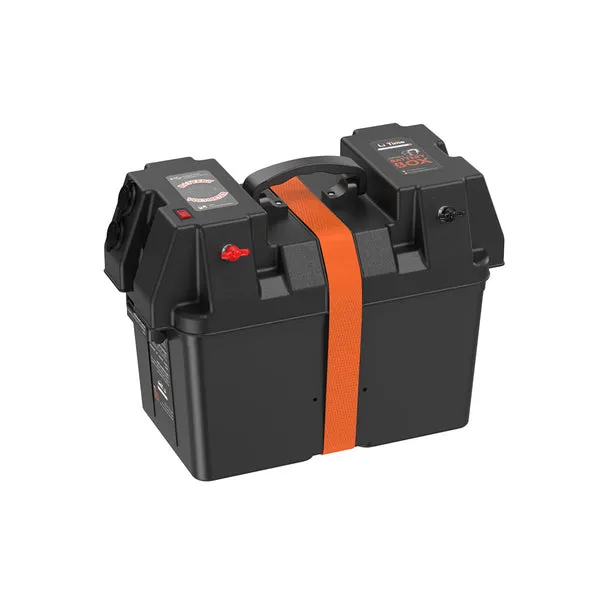
Your shore-power lithium battery charger mounts inside a battery box or nearby compartment, with AC input from your RV inlet or boat panel and DC output directly to the auxiliary bank. Many installers add a battery monitor or rs485 rs485 communication module so the charger talks to the battery management system and adjusts current in real time.
Critical installation steps:
- Use circuit breakers or fuses rated 25% above charger output on both DC to DC and shore-power lines
- Install an on/off switch on the DC to DC ignition wire so it only runs when the engine is on
- Check polarity twice before powering up, reverse polarity will damage lithium cells instantly
- Verify your marine starting battery or vehicle starter is isolated and won’t discharge into the house bank
For current wiring diagrams and a discount on compatible chargers, grab the code from our LiTime coupon page.
Common Scenarios: Which Charger Combination You Need
Weekend RV or van lifer (mostly shore power, occasional driving): Pair a 20A to 30A lithium battery charger 12v with a 20A DC to DC unit. Charge overnight at camp; top off the last 10-20% while driving to the next site.
Off-grid marine or sailboat (engine hours every day, rare shore access): A 40A DC to DC charger becomes your workhorse, supplemented by solar. Add a shore-power charger only if you dock monthly or plan a marina stay.
Golf cart or utility vehicle (daily discharge cycles, overnight charging): A robust charger 24v battery plugged into AC nightly handles 90% of your needs. Skip the DC to DC unless you also have a tow vehicle charging the cart batteries during transport.
Full-time overlander (mix of driving, solar, and generator): Install both a 30A to 40A DC to DC charger and a 30A lithium battery charger 12v 100ah model. Run the DC to DC while driving, the shore charger when you fire up the generator, and let solar float the bank during the day.
Maintaining Both Chargers for Long Battery Life
LiFePO4 cells tolerate partial state-of-charge better than lead-acid, but regular full cycles extend lifespan. Once a month, use your shore-power lithium battery charger to bring the bank to 100% and let the BMS balance cells. Your DC to DC unit rarely reaches true 100% because drive time ends before absorption completes, so it handles bulk charging and the AC unit finishes the job.
Store your chargers in a dry location and inspect connections every six months for corrosion or looseness. If your DC to DC charger has a temperature sensor, confirm it’s zip-tied to the battery case so it can throttle output on hot days. Most lithium battery packs include built-in over-temperature and over-voltage protection, but clean wiring and proper charger settings prevent the BMS from shutting down mid-charge.
We also recommend labeling each charger with its voltage, amperage, and the date you commissioned it. When you upgrade batteries or add capacity, you’ll know at a glance whether your existing chargers still match the bank’s appetite or need upsizing.
Questions
Can I use a regular car battery charger for lithium batteries?
No. Standard car chargers are designed for lead-acid and will overcharge lithium cells, triggering the BMS to shut down or causing permanent damage. Always use a charger with a lithium or LiFePO4 profile.
Do I need a DC to DC charger if I only charge from shore power?
No. If you never drive or only make short trips and rely entirely on AC shore power, a standalone lithium battery charger is enough. Add a DC to DC unit when you want to recharge the auxiliary battery from your alternator while driving.
What size DC to DC charger do I need for a 100Ah lithium battery?
A 20A to 30A DC to DC charger works well for a 100Ah bank, giving you a 0.2C to 0.3C charge rate. If you drive long distances daily, a 40A unit will top off the battery faster.
Can a lithium battery charger damage my starter battery?
No, as long as you wire it only to the auxiliary bank. Your starter battery uses a separate charging path from the alternator. A dual-bank charger can safely charge both if you configure each output for the correct chemistry.
How do I know if my alternator needs a DC to DC charger?
If your vehicle is newer than 2015 or has a smart alternator that varies voltage, a DC to DC charger is essential for lithium auxiliary batteries. Older fixed-voltage alternators may work without one, but a DC to DC unit still optimizes charge speed and protects both the alternator and battery.
Will a 24V lithium battery charger work on a 12V system?
No. Voltage must match your battery bank exactly. A 24V charger on a 12V battery will undercharge and fail to complete the cycle; attempting to force it can damage the battery management system.
Products in this guide
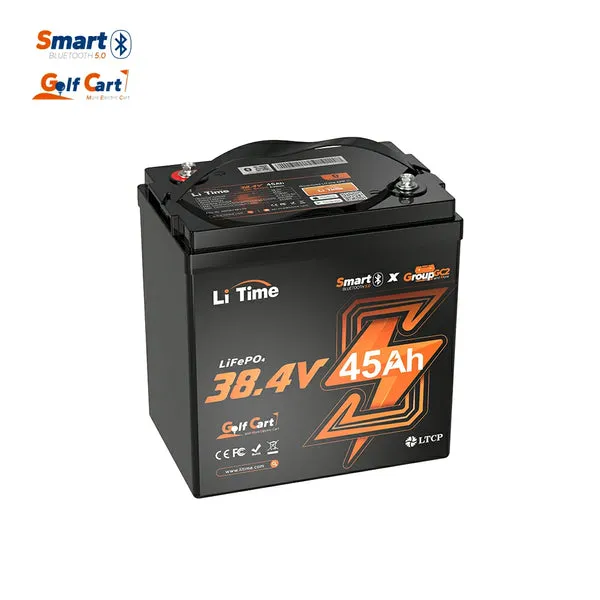
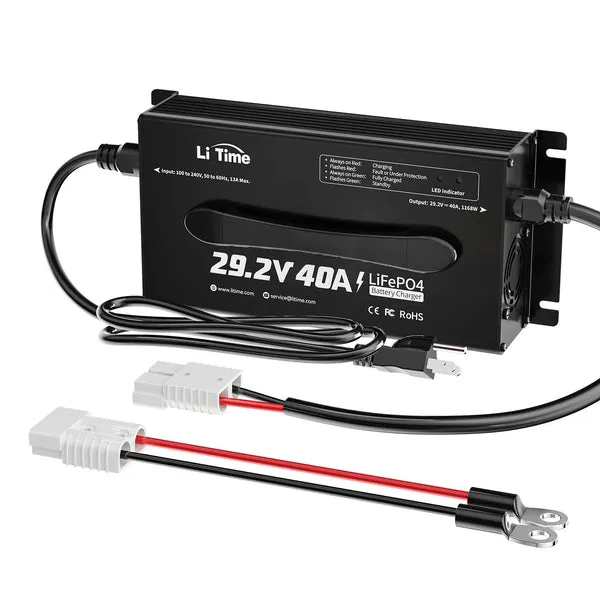 Shopping at LiTime? See the discount code
5% OFF All Orders
Shopping at LiTime? See the discount code
5% OFF All Orders