 A Bavaria Trachten guide
How Long Do Authentic Lederhosen Last With Regular Wear?
Quality lederhosen men depend on leather type, construction, and care, with authentic pairs lasting decades when maintained properly.
Authentic lederhosen men can last 20 to 50 years with regular wear when you choose full-grain leather and follow proper care routines. The lifespan depends heavily on leather quality, construction methods, and how often you wear them.
What Determines How Long Lederhosen Last
The leather type makes the biggest difference in durability. Full-grain deer leather and goat leather are traditional choices that develop a rich patina over decades without deteriorating. Cowhide offers excellent abrasion resistance but weighs more. Split leather and suede look appealing but wear through faster at stress points like knees and seat.
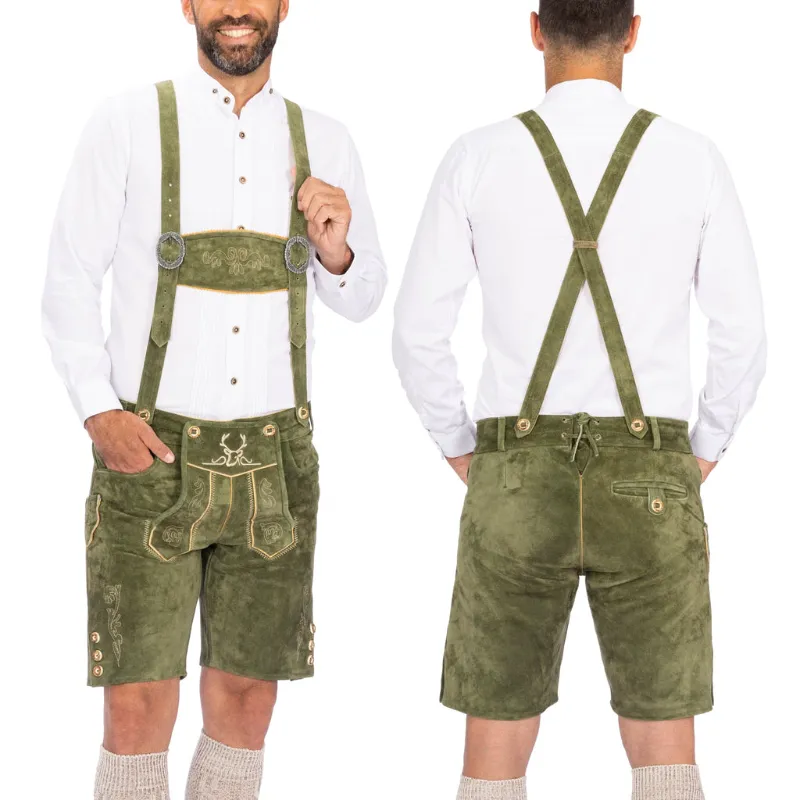
Construction quality matters just as much as the hide itself. Hand-stitched seams with waxed thread outlast machine stitching, especially around the H-strap suspension and button placket. Reinforced knee panels and gusseted crotches prevent the blowouts that retire cheaper pairs prematurely. When shopping for mens lederhosen, check that embroidery is stitched through the leather rather than glued appliqué, which peels away after a few washes.
Frequency of wear affects lifespan in surprising ways. Occasional use for festivals means your lederhosen oktoberfest might last 30+ years, but weekly wear accelerates patina development and requires more frequent conditioning. Alternating between two pairs extends both their lives by allowing leather to rest and natural oils to redistribute between wearings.
Leather Types and Their Longevity
Different leathers age at different rates, and understanding these differences helps you choose the right pair for your needs.
| Leather Type | Expected Lifespan | Best For |
|---|---|---|
| Full-grain deer | 30-50 years | Regular wear, comfort |
| Goat leather | 25-40 years | Lightweight, flexibility |
| Cowhide | 20-35 years | Durability, abrasion resistance |
| Split leather | 5-10 years | Budget, occasional use |
Full-grain hides retain the strongest fiber structure and develop character without compromising integrity. The natural surface resists moisture better than sanded or corrected leathers. When you’re comparing options at Bavaria Trachten, prioritize full-grain construction even if it costs more upfront.
Vegetable-tanned leather outlasts chrome-tanned alternatives in traditional wear. The tannins create a denser fiber network that stiffens initially but softens beautifully with body heat and movement. Chrome-tanned leather feels supple immediately but doesn’t develop the same depth or resilience over time.
Care Routines That Extend Lifespan
Leather conditioning every 6 to 12 months prevents the drying and cracking that kills most lederhosen prematurely. Use lanolin-based or beeswax leather balms rather than petroleum products, which can seal the surface and trap moisture underneath. Apply conditioner after cleaning, working it into seams and embroidery edges where cracking starts first.
Cleaning authentic lederhosen requires a light touch. Brush off dried dirt with a soft horsehair brush, then spot-clean stains with a damp cloth and saddle soap. Never machine wash or submerge leather lederhosen. For stubborn stains on the bib or fly, a leather-safe stain remover works better than aggressive scrubbing that damages the grain.
Storage between seasons protects your investment as much as active maintenance:
- Hang on wide wooden hangers that support the H-straps without creasing
- Store in a breathable garment bag, never plastic that traps humidity
- Keep away from direct sunlight and heat sources that dry out leather
- Stuff legs with acid-free tissue if storing for more than 3 months
- Apply a light coat of conditioner before long-term storage
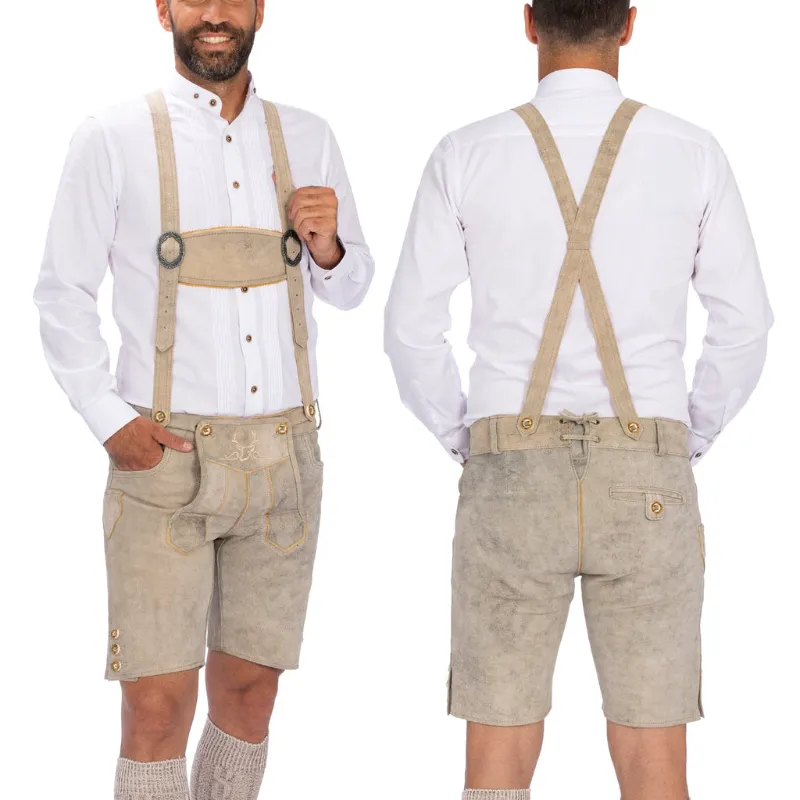
Air out your men’s oktoberfest attire after each wearing rather than folding them immediately into a drawer. Leather needs to breathe and release moisture absorbed from your body. Twelve hours on a hanger in a well-ventilated space prevents the musty smell and mildew that develop when damp leather stays compressed.
Signs Your Lederhosen Need Repair vs. Replacement
Dry, stiff leather responds well to aggressive conditioning. Apply leather balm daily for a week, working it in thoroughly, and most hardened pairs regain flexibility. If conditioning doesn’t restore suppleness after multiple applications, the fiber structure has broken down and replacement makes more sense than repair.
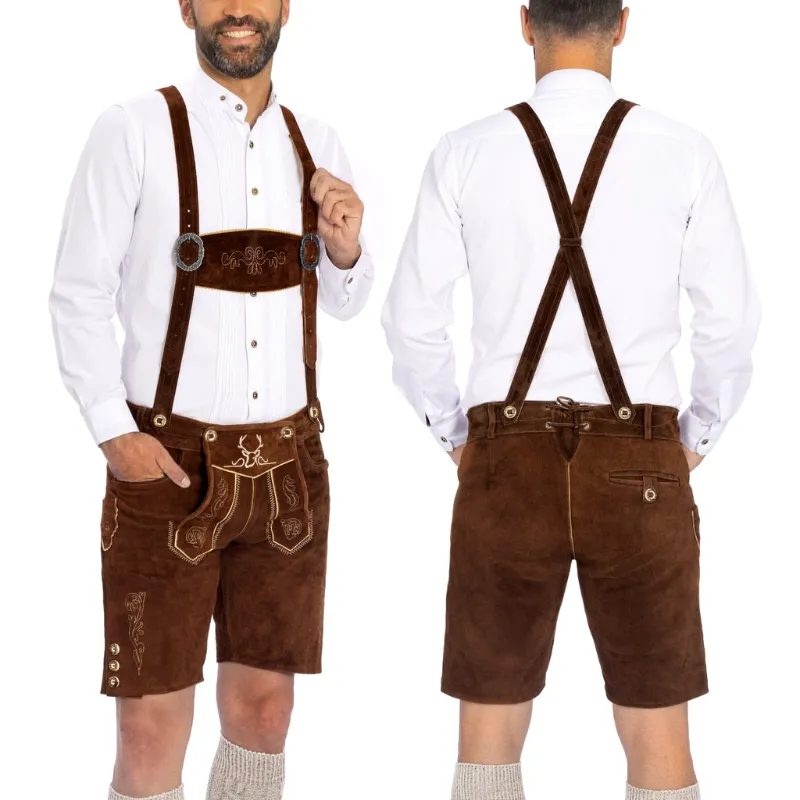
Seam separation, torn suspender attachments, and popped buttons are all repairable by a leather tailor or cobbler. Replacement hardware costs far less than new lederhosen, and reinforcing stress points during repair often extends lifespan beyond the original construction. Before you write off damaged leather shorts, get a repair quote from someone experienced with traditional garments.
Cracked or torn leather at flex points like knees and seat indicates the hide has reached the end of its life. Small surface cracks can be stabilized with flexible leather filler, but deep splits that expose underlayers won’t hold up to continued wear. At this point, the patina and embroidery might justify display or conversion to decorative use rather than disposal.
Getting the Most Value From Your Investment
Quality lederhosen cost more initially but deliver better cost-per-wear over their lifespan. A full-grain pair at premium pricing that lasts 30 years costs less annually than replacing budget versions every 3 to 5 seasons. When you check the current price, calculate the long-term value rather than just the upfront expense.
Proper sizing prevents premature wear from stress and rubbing. Lederhosen should fit snugly through the hips and thighs when new because leather stretches with wear. Too-tight pairs strain seams and buttons, while loose fits create friction points that abrade the leather. The suspender straps should lift the waistband to sit just below your natural waist without digging into shoulders.

Rotating accessories extends the system’s overall life. Pairing your lederhosen with a tyrolean hat and traditional shirt spreads the “costume” fatigue across multiple pieces rather than wearing out one item through overuse. Building a complete wardrobe means each piece gets worn less frequently while you maintain the authentic look at every event.
We recommend treating authentic lederhosen as a long-term wardrobe investment rather than disposable festival wear. With the right care routine and quality construction, your traditional Bavarian pieces will outlast trends and serve you for decades. Grab the discount code to save on premium leather that’s built to last generations, not just seasons.
Questions
How often should I condition my lederhosen?
Condition your lederhosen every 6 to 12 months depending on wear frequency. If you wear them weekly or notice the leather feeling dry or stiff, condition every 3 to 4 months. Use lanolin-based balms that penetrate deeply without sealing the surface.
Can I repair cracked leather on old lederhosen?
Small surface cracks can be stabilized with flexible leather filler and conditioning, but deep splits that go through the hide aren't repairable. If the leather tears when flexed, replacement makes more sense than attempting repair.
Do cheaper lederhosen last as long as expensive ones?
Budget lederhosen made from split leather or bonded materials typically last 5 to 10 years, while premium full-grain leather pairs last 20 to 50 years with proper care. The higher cost per year makes quality leather a better long-term investment.
What causes lederhosen to wear out fastest?
Lack of conditioning causes the most premature failures, leading to dried-out leather that cracks at flex points. Improper storage in plastic bags or damp spaces and aggressive cleaning methods also accelerate deterioration.
Should I buy lederhosen one size up so they last longer?
No, buy lederhosen that fit snugly when new because leather stretches with wear. Oversized pairs create friction and stress points that actually shorten lifespan, while properly fitted lederhosen mold to your body and develop even patina.
How do I know if my lederhosen are full-grain leather?
Full-grain leather shows natural grain patterns and minor surface variations rather than a uniform, plasticky appearance. The flesh side should be suede-textured, and the leather should feel substantial without excessive stiffness when new.
Products in this guide
Shopping at Bavaria Trachten? See the discount code
10% OFF All Orders
More in this series
Do Leather Shorts Work as Everyday Wear or Are They Only for Oktoberfest?20 Aug 20264 minComplete Men’s Oktoberfest Attire Guide: Lederhosen, Tyrolean Hat, and Essential Accessories20 Aug 20264 min What to Look for When Buying a German Beer Stein: Glass vs Ceramic vs Stoneware20 Aug 20265 min
 Dirndl Dress vs Lederhosen: Which Traditional Outfit Should You Wear to Oktoberfest?20 Aug 20265 minHow to Break In and Soften New Lederhosen Without Damaging the Leather20 Aug 20264 min