 A ZestiGreens guide
How to Grow Alfalfa Sprouts in a Jar: A Beginner’s Guide
Everything you need to know to grow crisp, fresh alfalfa seeds into sprouts using nothing more than a jar, a mesh lid, and a few minutes a day.
Growing your own alfalfa sprouts at home is one of the quickest wins in the kitchen garden. With nothing more than a jar, a mesh lid, and a tablespoon of alfalfa seeds, you can have crisp, fresh sprouts ready to eat in five to seven days. Here is exactly how we do it.
Why Grow Sprouts from Alfalfa Seeds at Home
Home-sprouted alfalfa seeds cost a fraction of store-bought sprouts, and they stay fresh until you harvest them. You also control the growing conditions from start to finish. No mystery sprays, no plastic clamshells, no limp stems on the third day. When you sprout your own sprouting seeds, you get a crunchy, living food that peaks in nutrition the moment you rinse and drain it.
Alfalfa sprouts are mild and crunchy, making them an easy add to sandwiches, salads, grain bowls, and wraps. The process itself is almost meditative: a rinse, a drain, a little indirect light, and the seeds do the rest.
What You Need to Start Sprouting
The equipment list is short. Here is what we use every time:
- A wide-mouth glass jar (a quart-size works best for a household)
- A mesh sprouting lid or a piece of cheesecloth secured with a rubber band
- High-quality alfalfa seeds or organic sprouting seeds
- Cool, clean water
- A bowl or angle-drying rack to keep the jar tilted so water drains fully
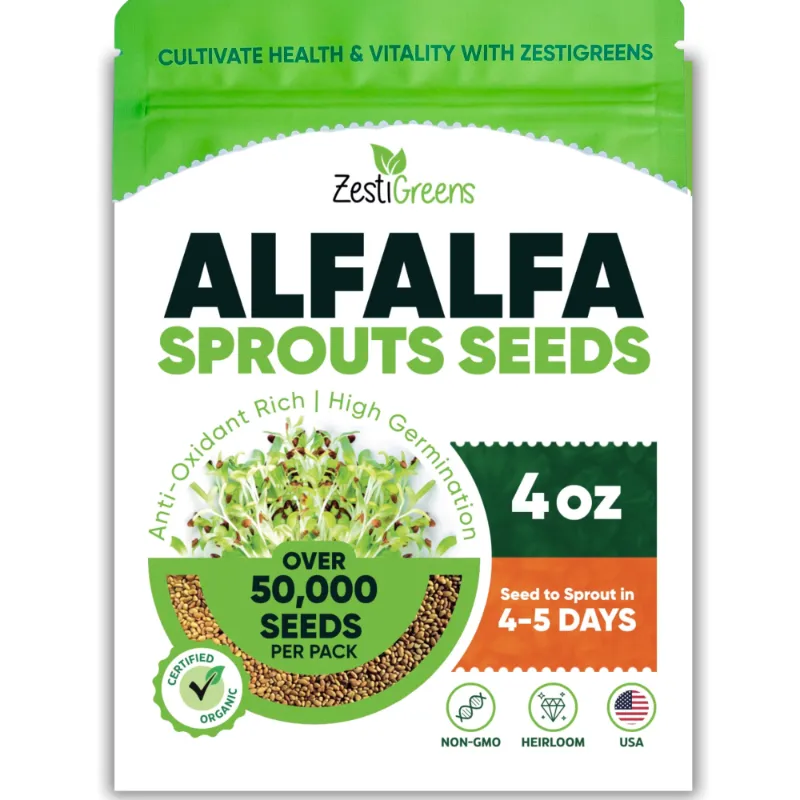
The mesh lid wins for convenience, but cheesecloth works fine as long as you rinse thoroughly. If you want a head start with everything included, the alfalfa seeds from ZestiGreens are tested for high germination rates and come in resealable bags. For a mixed batch, their sprouting seeds blend gives you a nice variety of textures and flavors.
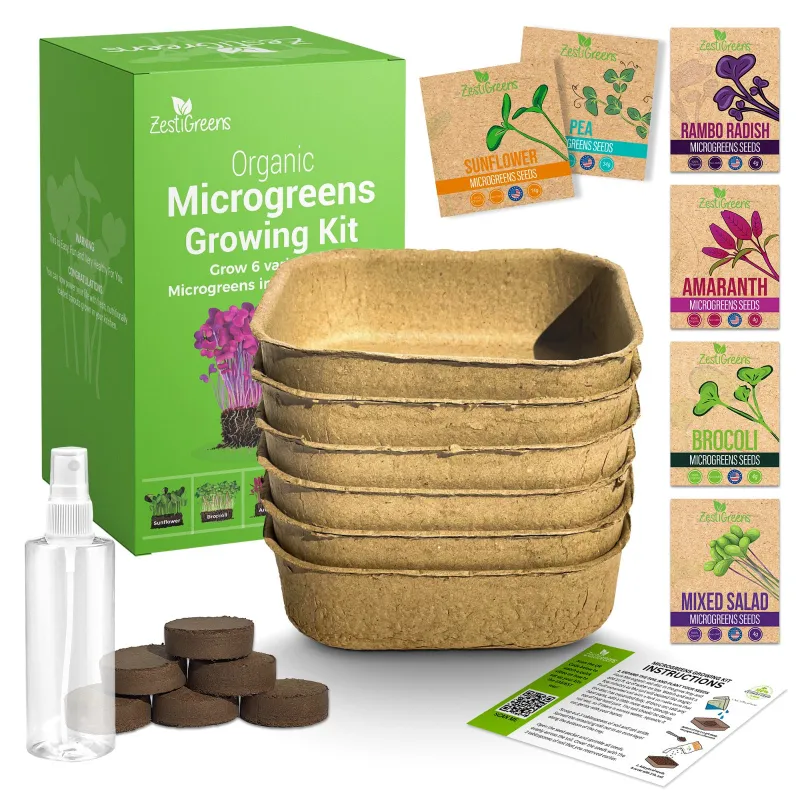
If you are new to sprouting and want a complete setup, their microgreen grow kits include trays and growing medium, though for the jar method you really only need the seeds and a jar.
Step by Step: How to Sprout Alfalfa Seeds in a Jar
Step 1: Measure and rinse. Add one tablespoon of alfalfa seeds to your jar. Fill the jar with cool water, swirl, and pour off the rinse water. This removes dust and wakes up the seed coat.
Step 2: Soak. Fill the jar again with water so the seeds are submerged by about two inches. Let them soak for 8 to 12 hours overnight. Small seeds like these double in volume during soaking, so do not overcrowd the jar.
Step 3: Drain and attach the lid. Fit your mesh sprouting lid or cheesecloth over the jar mouth. Pour out all the soak water. Rinse one more time with cool water and drain thoroughly. Shake the jar gently to spread the seeds along the sides and bottom. The seeds need air circulation, so do not leave them in a wet clump.
Step 4: Rinse and drain twice daily. Every morning and evening, fill the jar with cool water, swirl, and drain completely. Tilt the jar at a 45-degree angle in a bowl or on a drying rack so any residual water drips out. Standing water is the fastest way to ruin a batch of sprout seeds.
Step 5: Introduce indirect light on day three or four. Once the sprouts have visible tails, move the jar to a spot with bright, indirect sunlight. A kitchen counter a few feet from a window works well. This triggers chlorophyll development and turns the leaves a pale green.
Step 6: Harvest and store. After five to seven days, when the leaves have opened and the tails are about an inch or two long, give them a final thorough rinse and drain. Spread the sprouts on a clean towel or salad spinner to dry off excess moisture. Transfer to a sealed container lined with a paper towel and refrigerate. They keep for up to a week.
For a deeper walkthrough with photos, the guide on How to Grow Alfalfa Sprouts shows a similar method we recommend to friends getting started.
Best Seeds for Jar Sprouting
Not all seeds sprout well in a jar. Small, quick-germinating seeds work best because they need less water and air than larger seeds. Here are the varieties we rotate through:
| Seed Type | Sprout Time | Flavor | Best Use |
|---|---|---|---|
| Alfalfa seeds | 5 to 6 days | Mild, crisp | Sandwiches, salads |
| Organic broccoli seeds | 4 to 6 days | Mild, peppery | Bowls, wraps |
| Mixed organic sprouting seeds | 5 to 7 days | Varied | General use |
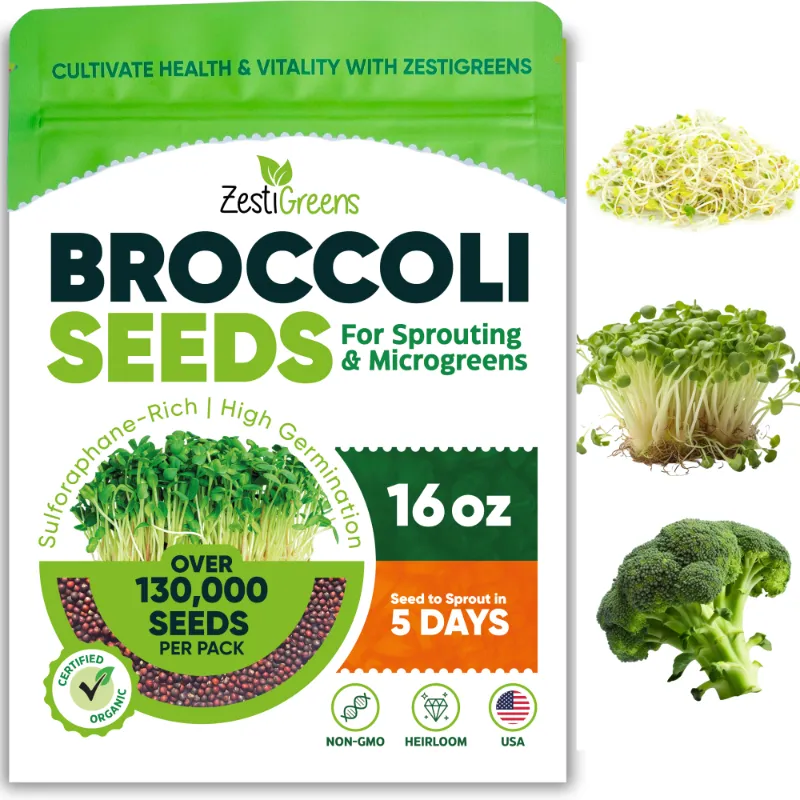
Alfalfa is the classic choice for beginners because it is forgiving and fast. If you want more heat, the organic broccoli seeds develop a light peppery kick that pairs well with avocado and eggs. For a spicier crunch, broccoli seeds organic or broccoli microgreen seeds work great as sprouts in the jar method, though they also grow beautifully as microgreens in a tray.
For anyone looking to stock up, alfalfa seeds bulk is a common search, and buying larger bags from a trusted source saves money over time. Just store bulk seeds in a cool, dark pantry and they stay viable for a year or more.
Common Mistakes and How to Avoid Them
- Skipping the soak. The 8 to 12 hour soak is non-negotiable. It softens the seed coat and kickstarts germination. Dry seeds will not sprout reliably.
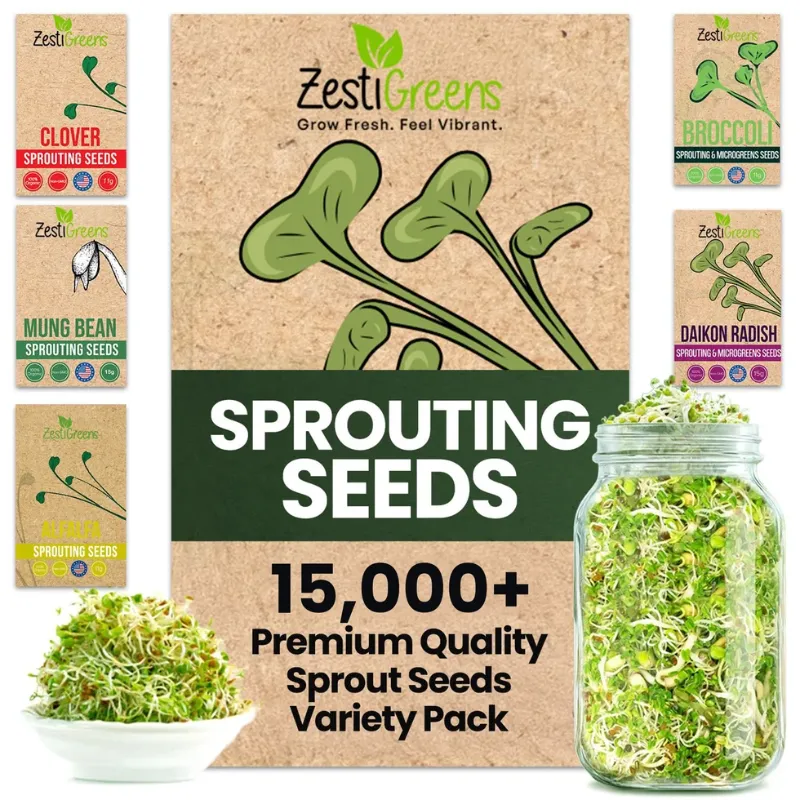
- Using treated or garden seeds. Only use seeds labeled for sprouting, not seeds sold for soil planting or livestock feed. Sprouting seeds are tested for pathogens and free of seed treatments. Our organic sprout seeds are specifically packaged for food sprouting.
- Letting seeds sit in water. The biggest cause of mold is inadequate drainage. After every rinse, tilt the jar so gravity pulls the water out. If you see a sour smell or slimy texture, you left too much water in the jar.
- Crowding the jar. One tablespoon of small sprouting seeds per quart jar is the sweet spot. More than that and the sprouts suffocate each other, leading to uneven growth and rot.
- Ignoring temperature. Sprouts grow best at room temperature (around 65 to 75 degrees Fahrenheit). Too hot and they stall or spoil. Too cold and they take forever.
Another useful resource we point beginners to is this How to Grow Alfalfa Sprouts guide, which covers troubleshooting for common issues like yellowing or limp sprouts.
When to Upgrade from a Jar to a Microgreen Kit
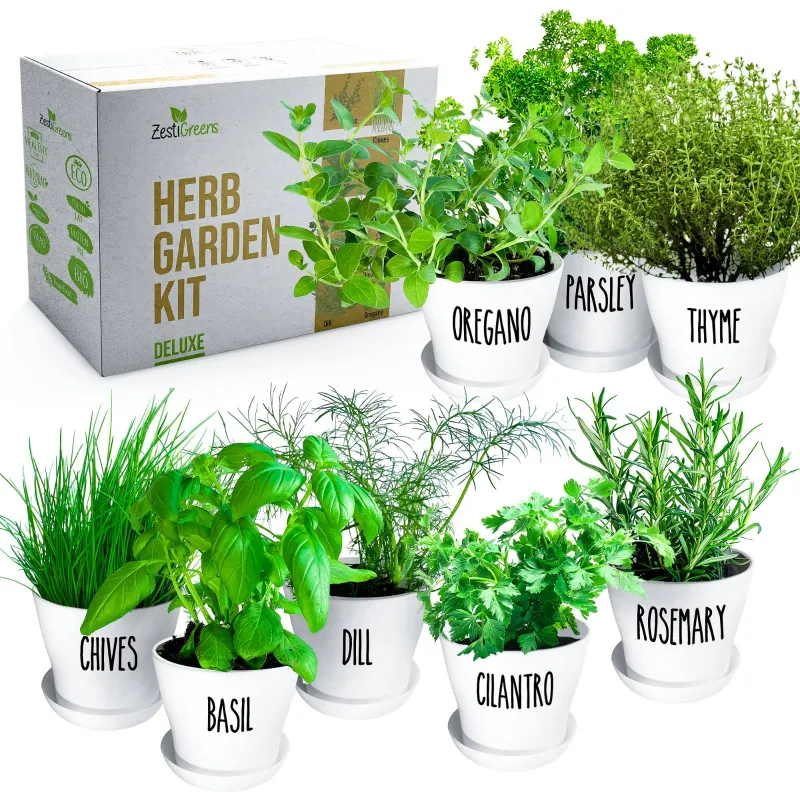
The jar method works perfectly for small batches of alfalfa seeds and other sprouting seeds. But once you start craving larger harvests or want to grow organic broccoli seed for its tender cotyledons and stems, a tray system makes more sense. The herbal garden kit from ZestiGreens includes everything you need to move from jar sprouts to soil-grown microgreens with drainage trays and growing medium.
Both methods can run at once: a jar of alfalfa sprouts for daily sandwiches and a tray of broccoli microgreens for smoothies and garnishes. They complement each other without competing.
Where to Buy the Best Seeds
ZestiGreens tests every batch of their organic sprouting seeds and ships in food-grade packaging. You can check the latest price and discount code to save on your first order. They currently offer 10 percent off sitewide.
If you are stocking up, alfalfa seeds bulk options from the same supplier ensure consistent quality across large bags.
For anyone wondering where to buy alfalfa seeds that are certified organic and non-GMO, we recommend starting directly with their sprout seeds page. The germination rate is printed on each bag, and the seeds arrive fresh.
Questions
How much alfalfa seeds do I need for one jar of sprouts?
One tablespoon of alfalfa seeds per quart jar produces a full jar of sprouts. That is enough for several sandwiches or salads.
Do I need a special lid to sprout alfalfa seeds in a jar?
A mesh sprouting lid makes rinsing and draining easier, but you can use cheesecloth secured with a rubber band. Both work as long as you drain the seeds thoroughly after each rinse.
Can I sprout organic broccoli seeds the same way as alfalfa seeds?
Yes. Organic broccoli seeds sprout well using the same jar method. They take about the same time and need the same rinsing schedule, though the flavor is slightly peppier.
How long do homegrown alfalfa sprouts last in the fridge?
Properly dried and stored in a sealed container with a paper towel, alfalfa sprouts keep for up to one week. For best texture, rinse them every couple of days before eating.
Why are my alfalfa seeds not sprouting?
The most common reasons are old seeds, water that is too hot or too cold, or not soaking long enough. Use cool water and soak for at least 8 hours. Seeds older than a year may have lower germination rates.
Is it cheaper to sprout alfalfa seeds at home than buy sprouts?
Yes. A bag of alfalfa seeds costs about the same as a few clamshells of store sprouts but yields many more batches. Homegrown sprouts also stay fresh longer since you harvest as needed.
Products in this guide
 Shopping at ZestiGreens? See the discount code
10% OFF Sitewide
Shopping at ZestiGreens? See the discount code
10% OFF Sitewide
More in this series
Organic Broccoli Seeds for Sprouting: What You Get for the Extra Cost7 Sep 20263 minWhat You Need to Start a Microgreen Garden Kit at Home7 Sep 20264 minHow Long Do Microgreen Grow Kits Last? Shelf Life and Storage Tips7 Sep 20264 minWhy Are My Sprouting Seeds Not Germinating? 5 Common Fixes7 Sep 20264 minBroccoli Microgreen Seeds vs. Organic Sprouting Seeds: What’s the Difference?7 Sep 20264 min