 A Maia Homes guide
How to Choose the Right Size Rug for Your Bedroom
Choosing the right bedroom rug size depends on your bed dimensions, room layout, and whether you want the rug tucked under the bed or floating in front of it.
A properly sized bedroom rug anchors your bed, adds warmth underfoot, and ties your entire room together. The right dimensions depend on your bed size, room proportions, and how much floor coverage you want.
Standard Bedroom Rug Sizes by Bed Type
Matching your rug to your bed frame creates visual balance. Here’s what works for each mattress size:
| Bed Size | Recommended Rug Size | Coverage Style |
|---|---|---|
| Twin | 5×8 or 6×9 | Float in front or partial under bed |
| Full/Queen | 8×10 or 9×12 | Extends 18-24 inches on three sides |
| King | 9×12 or 10×14 | Extends 24-36 inches on sides and foot |
An 8×10 rug is the most popular choice for queen beds. It allows the rug to peek out 18 to 24 inches on either side and at the foot of the bed, so your feet land on soft fibers when you get up. For king beds, size up to 9×12 to maintain those proportions. If you’re working with a smaller bedroom, a 6×9 can work as a runner-style accent placed at the foot of the bed only.
Check current bedroom rug pricing to compare options within your budget.
Three Bedroom Rug Placement Methods
How you position your rug changes the entire feel of the room. We recommend one of these three approaches:

Under the bed (two-thirds placement) Slide the rug under the lower two-thirds of your bed frame, leaving the headboard and nightstands off the rug. This is the most common layout and works beautifully with our tiger rug or any statement pattern. Your rug should extend 18 to 36 inches beyond the sides and foot of the bed so you step onto fabric, not cold floor.
Fully under the bed and nightstands A large 9×12 or bigger rug can tuck under your entire bed frame plus both nightstands, creating a plush island effect. This approach suits spacious master bedrooms and adds serious luxury. Make sure the rug extends at least 12 inches beyond your nightstands on the outer edges.
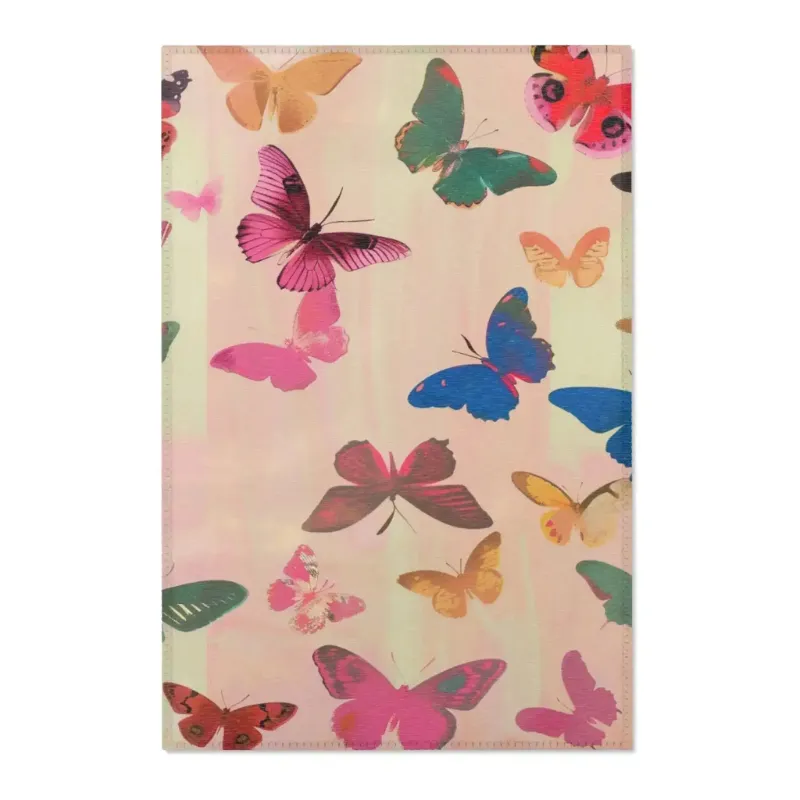
Floating in front (accent style) Place a smaller 5×7 or 6×9 rug entirely in front of the bed as a landing pad. This works in tight quarters or when you already have wall-to-wall carpeting and want a layered texture boost. A pink rug in this position adds a pop of color without overwhelming the space.
Architectural Digest’s guide to bedroom rugs shows how designers use each method in real homes.
Small Bedroom Rug Solutions
Not every bedroom can accommodate a bedroom rug that sprawls wall to wall. If your room measures 10×12 feet or smaller, try these space-smart tactics:

- Runner rugs on each side: Place two narrow 2.5×8 or 3×10 runners along either side of the bed instead of one large rug. You get the softness underfoot without crowding the room.
- Rug for bedroom under bed only: A 5×8 rug tucked halfway under a full or queen bed leaves walking space clear while warming up the sleep zone.
- Fluffy textures for impact: A smaller bedroom rug in a high-pile or shag finish (think fluffy textures) feels more luxurious than a larger flat-weave. Our floral carpet rug delivers plush depth even in compact sizes.
- Light colors to expand space: Pale neutrals or soft blush tones visually open up tight quarters better than dark, heavy patterns.
Skip rugs that come within six inches of your walls. That sliver of exposed floor makes the room look smaller, not bigger.
Material and Texture Considerations
The rug material affects both size perception and daily comfort. We evaluated these popular bedroom fibers:
Wool and wool blends resist wear and naturally repel dirt, making them ideal for high-traffic placement under beds. They typically come in traditional 8×10 and 9×12 dimensions and age beautifully over years of use.
Cotton and jute offer budget-friendly options in standard sizes. Cotton is machine-washable (a bonus for kids’ and guest rooms), while jute adds organic texture. Both flatten over time, so they work better as floating accent rugs than full under-bed coverage.
Synthetic fibers (polyester, polypropylene) deliver soft, fluffy pile in every size from small bedroom rug dimensions up to oversized 10×14. They’re stain-resistant and affordable. Grab the code to save 10% on synthetic options that mimic wool at a fraction of the cost.
Silk and viscose bring shimmer and drape but show footprints easily. Reserve these for low-traffic placements like floating in front of a bed in a formal master suite.
IKEA’s bedroom rug placement guide walks through material durability for each layout style.
Measuring Your Space Before You Buy
Avoid returns by measuring twice and ordering once. Here’s our process:
- Measure your bed frame (not just the mattress). Add 18 inches to each side and 24 inches to the foot. That total is your minimum rug width and length for two-thirds placement.
- Mark the footprint with painter’s tape on your floor. Live with the outline for a day or two. Does it look balanced? Can you open drawers and doors without catching the edge?
- Account for furniture legs. If you want nightstands on the rug, add their depth plus 6 to 12 inches of clearance to your rug length.
- Check door clearance. Bedroom doors that swing inward need to clear the rug pile by at least half an inch. Measure your door’s bottom clearance and subtract your rug’s pile height.
Most bedrooms look best when 60 to 80 percent of the floor remains visible around the rug perimeter. Too much coverage makes the space feel cramped; too little makes the rug look like an afterthought.
Layering and Styling Tips
Once you’ve nailed the size, layering adds depth and lets you mix patterns without commitment:

- Over existing carpet: Place an 8×10 flatweave or low-pile rug over wall-to-wall carpeting to define your sleep zone. Avoid stacking two high-pile rugs, which creates a tripping hazard.
- Pair with accent decor: Echo your rug’s palette in throw pillows, wall art, or even sculptural accents like a winged victory of samothrace on a dresser. Repeating tones creates cohesion.
- Mix textures, not sizes: If your rug is oversized, keep other textiles smooth (linen duvet, cotton curtains). If your rug is small and fluffy, you can layer in more texture elsewhere.
The Jaipur Rugs collection demonstrates how designers layer bedroom rugs with varying pile heights and fiber types for visual interest.
Your bedroom rug size should feel intuitive the moment you walk in, not too small, not overwhelming, just balanced. Measure carefully, consider your placement method, and check the latest pricing before you commit. Whether you choose a classic 8×10, a statement 9×12, or a cozy small accent, the right dimensions transform your bedroom from bare to beautifully grounded.
Questions
What size rug should I use for a queen bed?
An 8x10 rug is the most popular size for a queen bed. It allows the rug to extend 18 to 24 inches on either side and at the foot, so your feet land on the rug when you get out of bed. For more coverage, a 9x12 works beautifully if your room is spacious.
Should a bedroom rug go under the bed or in front of it?
Most designers recommend sliding the rug under the lower two-thirds of the bed frame, extending 18 to 36 inches beyond the sides and foot. For smaller rooms, you can place a 5x8 or 6x9 rug entirely in front of the bed as a landing pad instead.
How do I measure for a bedroom rug?
Measure your bed frame and add 18 inches to each side and 24 inches to the foot for two-thirds placement. Use painter's tape to mark the footprint on your floor and live with it for a day to confirm it looks balanced before ordering.
Can I use a small rug in a large bedroom?
Yes, but place it intentionally. A small 5x7 or 6x9 rug works as a floating accent in front of the bed or as a pair of runners on each side. Avoid small rugs centered under large beds, which look undersized and awkward.
What is the best material for a fluffy bedroom rug?
Synthetic fibers like polyester and polypropylene deliver the softest, fluffiest pile at an affordable price and resist stains well. Wool also offers plush depth with better durability, though it costs more. Both materials work for under-bed or floating placements.
How much of the floor should a bedroom rug cover?
Aim for 60 to 80 percent of visible floor around the rug perimeter. This balance anchors the bed without making the room feel cramped. Rugs that come within six inches of the walls actually make a bedroom look smaller.
Products in this guide

 Shopping at Maia Homes? See the discount code
10% OFF All Orders
Shopping at Maia Homes? See the discount code
10% OFF All Orders
More in this series
 Should You Use a Bath Mat or Rug in Your Bathroom?30 Jul 20265 min
 Art Deco Wallpaper Care Guide: Cleaning and Maintaining Your Investment30 Jul 20266 min
 Best Ways to Fill a Pillow Insert for Maximum Comfort and Support30 Jul 20265 minDo Wool Rugs Shed? What to Expect From Your 4X6 Wool Rug30 Jul 20264 minWinged Victory of Samothrace vs Nike Statue: Which Greek Sculpture Is Right for Your Home?30 Jul 20264 min