 A GLOCOLENS guide
How to Choose the Right Colored Contact Lens for Your Eye Color
A hazel contact lens transforms your look by blending warm browns, golds, and greens to mimic natural hazel eyes, and choosing the right one depends on your base eye color and skin tone.
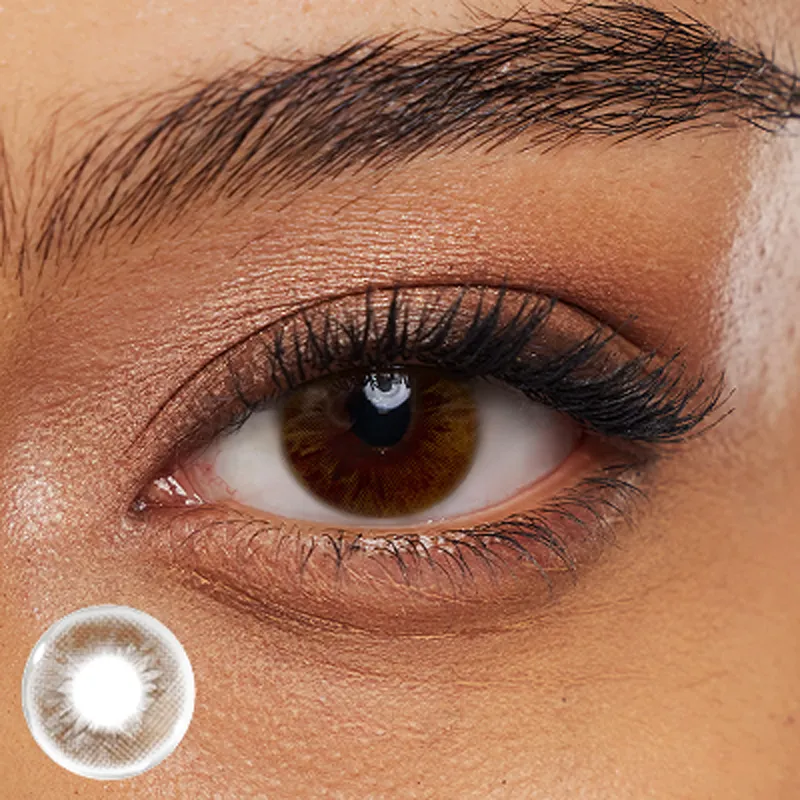
A hazel contact lens works by layering pigment over your natural eye color, so the final shade depends on what you start with. Light eyes show color differently than dark eyes, and warm or cool skin tones influence which hazel shades look most natural on you. This guide walks you through matching the right colored contact lens to your unique coloring, so you get the hazel look you want without it clashing with your complexion. You can find the current code on our GLOCOLENS discount code page.
In the US, the FDA requires a prescription and an eye doctor’s fitting for all contact lenses, including costume lenses.
How Hazel Contact Lenses Work on Different Eye Colors
The key to picking the right hazel contact lens is understanding color mixing. When you wear a colored lens over a light eye, you see the lens color almost exactly as it appears. Over a dark eye, the hazel pigment blends with your natural brown, creating a warmer, earthier tone.
- Light eyes (blue, green, light brown) show hazel shades with high clarity and brightness
- Dark brown eyes produce deeper, richer hazel tones because the underlying pigment shows through
- Medium brown eyes offer the most flexibility, working well with both warm and cool hazel shades
If you have dark eyes and want that vibrant hazel pop, look for lenses with multiple color layers rather than a single flat tint.
Green Hazel vs. Brown Hazel: Which Suits You
The hazel family includes several warm-toned variations, each suited to different preferences and undertones in your complexion.
| Shade | Best For | Effect |
|---|---|---|
| Green hazel | Cool undertones, fair skin | Bright, multi-tonal, defined limbal ring |
| Brown hazel | Warm undertones, deeper skin | Subtle blend, natural gradient, earthy warmth |
| Golden hazel | Neutral to warm undertones | Luminous center, amber rim, versatile |
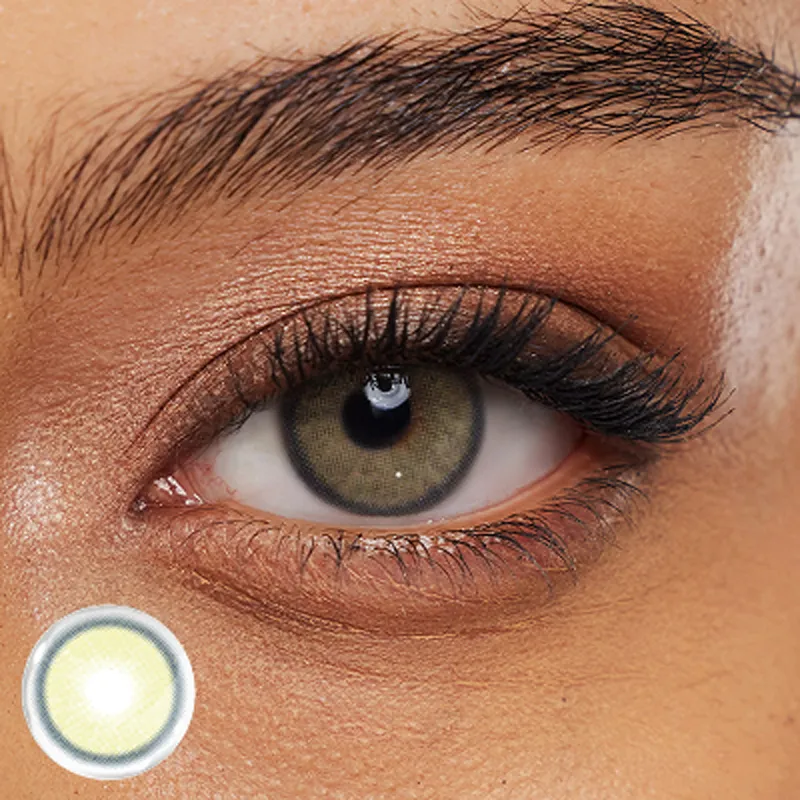
Green toast (Toast Green on the store) is described by GLOCOLENS as a naturally luminous green. Golden brown contacts link to the store’s Tender Brown shade, so check its photos on eyes like yours. Luminous gray lenses link to the store’s Radiant Blue Gray, a gray shade rather than a hazel.
Hazel lenses with warm gold centers work beautifully on deeper skin tones, while cooler green-hazel shades can feel more striking on fair skin. If you have medium brown skin, you have the most flexibility and can pull off both warm and cool hazel tones depending on your outfit and mood.
Natural Hazel Contact Lenses vs. Bold Colors
When shopping for natural hazel contact lenses, look for multi-layer designs that mimic how real hazel eyes vary in color. True natural hazels have:
- A lighter center (often amber or light brown)
- A darker mid-ring (brown or green)
- A defined limbal ring (dark outline)
This layering makes the eye look deeper and more three-dimensional than a flat single-color lens. Bold hazel shades skip subtlety and add extra pigmentation, creating a more dramatic, fashion-forward look. Both are valid, but they suit different occasions and personal styles.
If you’re new to colored contacts, start with a natural multi-layer hazel shade from a trusted brand. You can always go bolder once you know how the base tone works with your complexion.
Matching Hazel Lenses to Your Skin Tone
Hazel lenses read differently on dark skin, fair skin, and medium complexions. Here’s how to make the right choice:
Fair or light skin: Warm hazel shades (golden brown, warm green) stand out clearly. The contrast is high, so the lens color is very visible. Cooler hazel tones can look washed out.
Medium brown skin: You have the widest range. Warm hazel works naturally, and cooler greens add dimension. Aim for lenses with strong pigmentation so the color shows.
Deep brown or dark skin: Hazel lenses need multiple layers to show up. Warmer golds and browns blend better than pale or icy hazels. A strong limbal ring helps define the eye shape and makes the color pop.
Non-Prescription Hazel Contact Lenses
Hazel contact lenses non prescription (plano lenses with no vision correction) are still medical devices. In the US, you need a prescription and an eye doctor’s fitting for them too, even with 20/20 vision. They sit directly on your eye, so they require the same care, cleaning, and comfort considerations as prescription lenses.
Plano hazels change your eye color without vision correction. Check that the lens’s base curve and diameter match what your eye doctor measured; GLOCOLENS lists a base curve of 8.6 mm for its Toast Green and Mocha Hazel lenses, with diameters of 14.0 mm and 14.2 mm. Do not wear a lens that does not fit.
Choosing Between Top Hazel Lens Brands
Quality and color accuracy differ between brands, so look for lenses that list their material, water content, base curve, diameter and replacement period.
Read reviews from people with your eye color and skin tone. A lens that’s stunning on one person might not translate the same way on you.
Where to Buy and What to Check Before You Order
Before ordering, confirm:
- Your base curve and diameter (from your eye care provider)
- Your prescription power if you need correction
- The return or exchange policy in case the shade doesn’t match your expectations
- Customer reviews specifically from people with your eye color
Colored contacts are a personal choice, and the “right” hazel shade depends on your individual coloring and style. Take your time testing different options and don’t settle for a shade that feels off. The best hazel lens is the one that makes you feel confident and looks natural to you.
Questions
What's the difference between hazel contact lenses for dark eyes and light eyes?
On light eyes, hazel pigment shows with high clarity and brightness. On dark eyes, the hazel color blends with your natural brown, creating a richer, deeper tone. Dark eyes need stronger pigmentation to show the hazel shade effectively.
Can I wear a hazel contact lens if I don't need vision correction?
Yes, but in the US you still need a prescription and an eye doctor's fitting, even for lenses with no vision correction. They require the same care and fit specifications as corrective lenses.
Which hazel shade works best for dark skin?
Warm golden and brown hazel tones give contrast on deep brown skin. Look for multi-layer lenses with a defined limbal ring to make the color pop.
Are natural hazel contact lenses more comfortable than bold colored ones?
Comfort depends on the lens material and brand, not the color intensity. Both natural and bold hazel lenses should feel comfortable if they fit properly and are made from breathable materials. The key is getting the right base curve and diameter for your eye.
How long do colored hazel lenses last?
Colored contacts come with a replacement period that differs by product. GLOCOLENS lists its Toast Green and Mocha Hazel lenses as 3-month lenses, replaced 3 months after opening. Always follow the manufacturer's guidelines and never extend the recommended wear time.
Do I need a prescription from my eye doctor to buy hazel contact lenses?
Yes, in the US. The FDA requires a prescription and an eye doctor's fitting for all contact lenses, including costume and plano lenses, so get an eye exam first. It also gives you your base curve and diameter.
Products in this guide
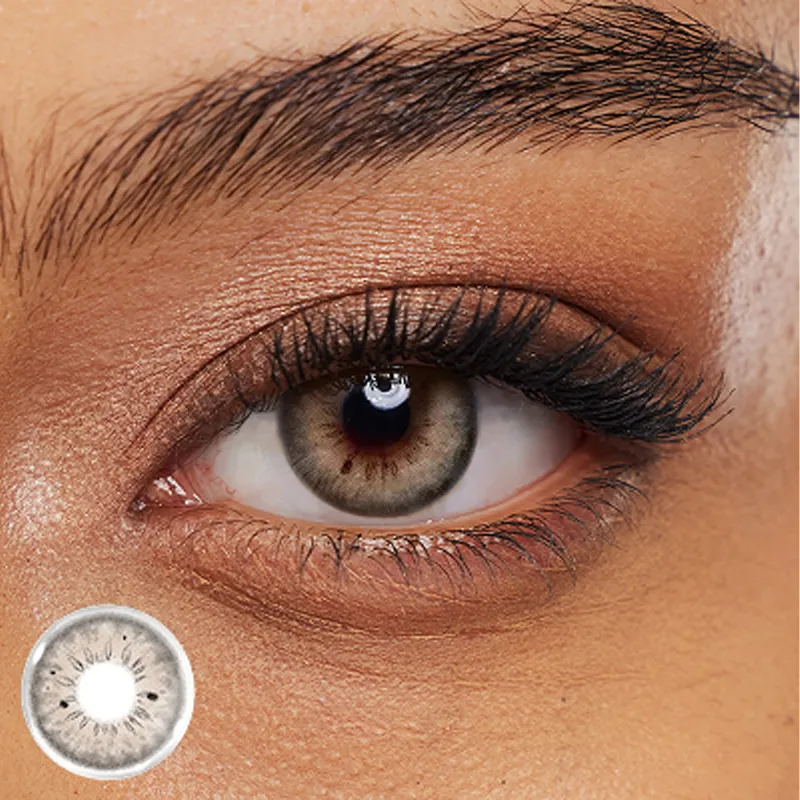
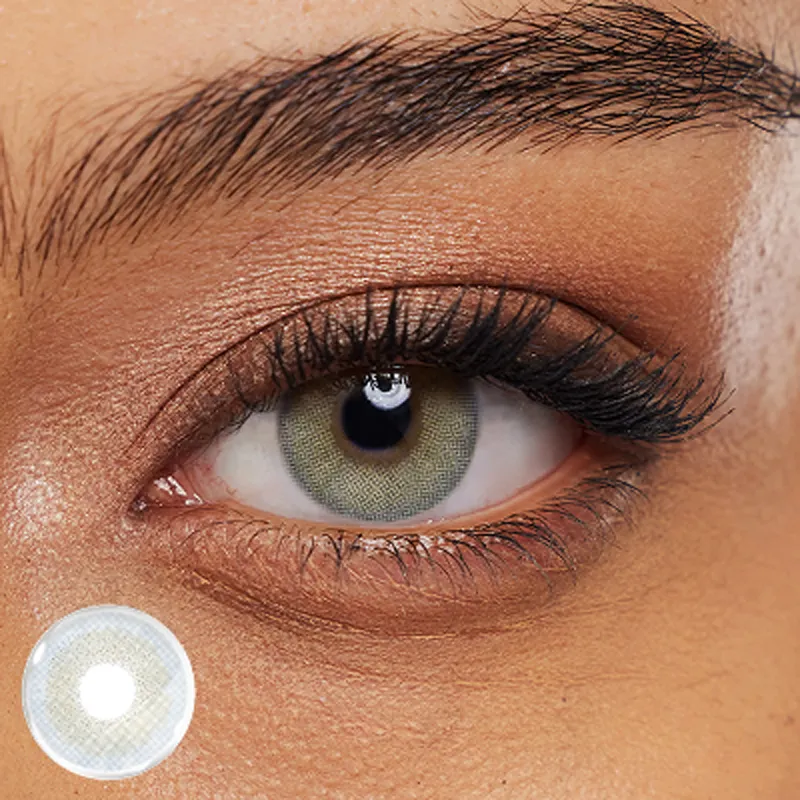 Shopping at GLOCOLENS? See the discount code
10% OFF Sitewide