 A FunWater guide
How to Choose Between an Inflatable Paddle Board and a Rigid Paddle Board
An inflatable paddle board offers portability and storage ease, while rigid boards deliver better performance and durability, so the right choice depends on where and how often you paddle.
An inflatable paddle board offers portability and storage ease, while rigid boards deliver better performance and durability, so the right choice depends on where and how often you paddle. Whether you’re a beginner or upgrading your current setup, understanding the key differences between these two board types will save you money and frustration.
Portability: Why an Inflatable Paddle Board Wins
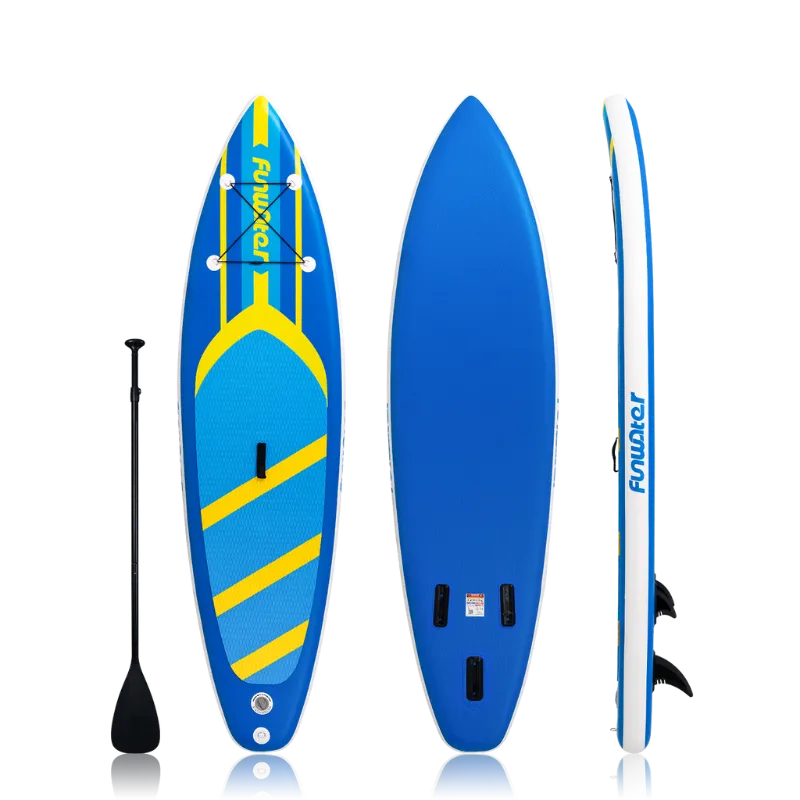
The biggest advantage of an inflatable paddle board is how easy it is to transport and store. Rigid boards require roof racks, large vehicle space, or dedicated storage rooms. With an inflatable paddle board, you deflate it, roll it up, and fit it in a backpack or duffel bag. This makes inflatables ideal if you live in an apartment, have limited garage space, or want to travel with your board.
Most inflatable models weigh between 15 to 20 pounds when deflated, compared to 25 to 35 pounds for rigid boards. You can carry an inflatable to the water solo without straining your back. If you paddle at different locations or take trips to lakes and rivers, the portability difference is decisive. Check the latest price on FunWater’s options and grab the 5% OFF All Orders code to save on your first inflatable.
Performance and Stability on Water
Rigid boards typically outperform inflatables in speed, tracking, and responsiveness. They’re stiffer, so energy transfers more efficiently to forward motion. If you’re interested in racing or covering long distances, a rigid paddle board is the stronger choice. Rigid boards also handle waves and choppy conditions better because they don’t flex or absorb impact the same way inflatables do.
That said, modern inflatables have closed the gap significantly. High-quality inflatable sup designs now offer excellent stability for beginners and casual paddlers. The slight flex of an inflatable actually helps absorb shock, which some riders prefer on rough water. For flatwater paddling, cruising, and recreational use, an inflatable performs just fine. Experts at paddlingmag.com have tested the latest models and confirm that quality inflatables hold their own in most real-world conditions.
Durability and Long-Term Maintenance
Rigid boards are built to last. They resist UV damage, don’t develop leaks, and hold their structural integrity for years with basic care. They require less active maintenance, though you’ll still need to wax or protect the surface.
Inflatables need more attention. Repeated inflation and deflation can stress seams over time. Sharp objects like rocks or shells can puncture the material, and UV exposure degrades the PVC or vinyl coating. However, quality inflatable paddle board models include repair kits, and most damage is manageable if caught early. Avoid leaving an inflatable in direct sun for extended periods, and always store it in a cool, dry place when not in use. With proper care, a good inflatable lasts 5 to 10 years.
| Factor | Inflatable | Rigid |
|---|---|---|
| Portability | Excellent (packs small) | Poor (bulky, heavy) |
| Storage | Minimal space needed | Requires garage or roof rack |
| Performance | Good (beginner-friendly) | Excellent (competitive-grade) |
| Durability | 5-10 years (with care) | 10+ years (minimal care) |
| Cost | Lower upfront | Higher upfront |
| Maintenance | Regular (check seams, UV protection) | Minimal |
Weight Capacity and Sizing
Both inflatable and rigid boards come in a range of sizes and weight capacities. An inflatable paddle board typically handles 200 to 400 pounds depending on the model and thickness (measured in inches of construction). Rigid boards often accommodate similar or slightly higher weights. If you’re heavier or plan to paddle with a passenger, check the manufacturer’s specs carefully.
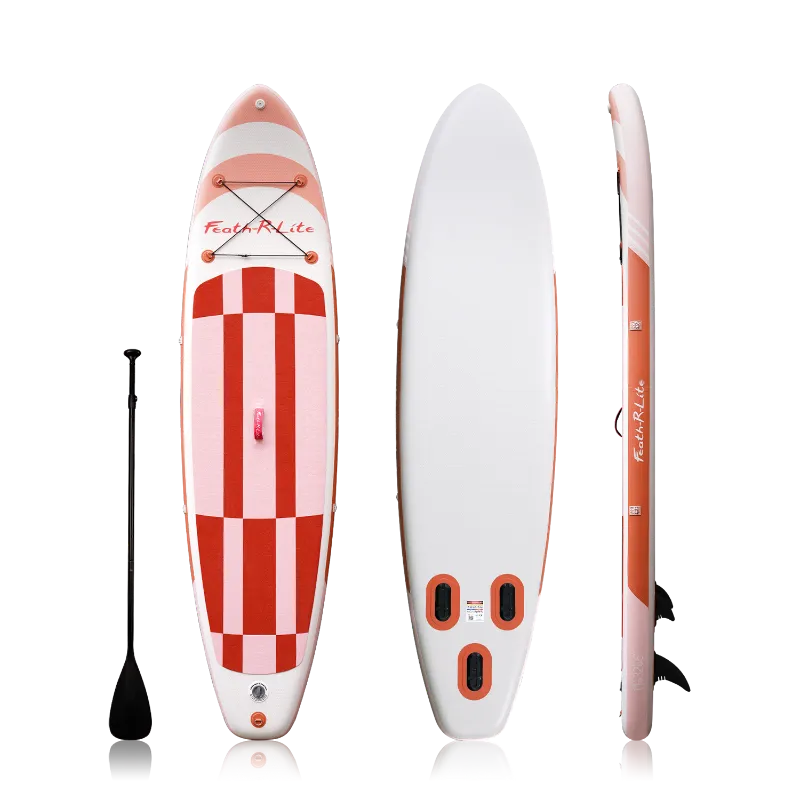
Length also matters. Longer boards (10 to 12 feet) go faster and track straighter but are harder to maneuver in tight spaces. Shorter boards (8 to 10 feet) turn easier and feel more responsive. Beginners usually do better with a wider, more stable board, whether inflatable or rigid. The paddle rider option from FunWater combines stability with playful handling for recreational paddlers.
Best Use Cases for Each Type
Choose an inflatable paddle board if you paddle casually, travel frequently, live in an apartment, or want to try paddling without a major investment. Inflatables suit flatwater paddling, family outings, and exploring local lakes. They’re forgiving for beginners and don’t require costly transportation gear.
Choose a rigid board if you’re serious about paddling, race or tour regularly, live near consistent water conditions, and have storage space. Rigid boards reward technique and efficiency, making them ideal for fitness paddlers and distance enthusiasts. They also hold their value better over time.
For budget-conscious shoppers, isupworld.com and inflatableboarder.com have tested solid options across price ranges. Many quality inflatables cost less than entry-level rigid boards, so if budget is your main constraint, an inflatable makes sense. Grab the code for 5% off to stretch your budget further.
Making Your Final Decision
Start by asking yourself three questions: Where will you paddle most often? How much storage space do you have? How frequently will you use the board? If you travel, lack garage space, or paddle once or twice a month, an inflatable sup is the practical choice. If you have dedicated storage, paddle weekly or more, and want peak performance, invest in a rigid board.
Many paddlers own both. Rigid boards satisfy performance needs, while an inflatable serves as a travel backup or lets friends join without hauling multiple boards. Your choice isn’t permanent either; starting with an affordable inflatable lets you learn whether paddling is a hobby worth upgrading for. FunWater offers both styles, so you can compare them side by side and find what fits your lifestyle.
Questions
Is an inflatable paddle board good for beginners?
Yes. Inflatables are wider and more stable than many rigid boards, making them forgiving for new paddlers. They're also less expensive, so you can learn without a large investment before committing to a rigid board.
How long does an inflatable paddle board last?
With proper care, most inflatables last 5 to 10 years. Avoid prolonged sun exposure, check seams regularly, and use a repair kit if small punctures occur. Rigid boards typically last 10+ years with less active maintenance.
Can you store an inflatable paddle board indoors?
Absolutely. That's one of the main advantages. Deflate it, roll it up, and store it in a closet, under a bed, or in a small closet. Rigid boards need garage or roof-rack space.
What's the best inflatable paddle board for lakes?
Look for a board 10 to 11 feet long with a weight capacity that exceeds your body weight. FunWater's [inflatable paddle board](/go/p/6820) and [inflatable sup](/go/p/6825) are popular for calm flatwater and are well-suited to lake paddling.
Is a rigid paddle board worth the extra cost?
If you paddle frequently and want better speed and performance, yes. Rigid boards also last longer and hold their value. If you paddle casually or travel often, the portability of an inflatable offers better overall value.
How does an inflatable paddle board compare to a solid paddle board for touring?
Rigid boards are better for long-distance touring because they're faster and more efficient. Inflatables work fine for short recreational tours on calm water but require more effort to cover distance.
Products in this guide
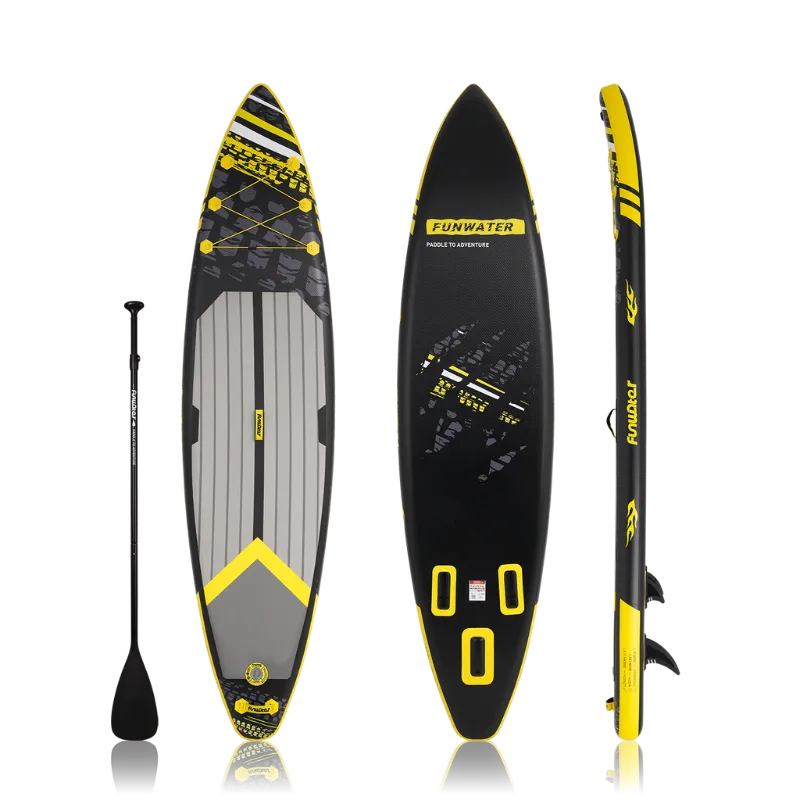 Shopping at FunWater? See the discount code
5% OFF All Orders
Shopping at FunWater? See the discount code
5% OFF All Orders
More in this series
Why an Electric Pump Matters When Inflating Your SUP28 Aug 20264 min Will Kids Waders Keep Your Child Dry? A Parent’s Buying Guide28 Aug 20263 min
 Ice Fishing Tent vs. Regular Tent: Which One Do You Need?28 Aug 20264 min
 Best Camping Tents for Backyard Use: Portable and Easy Setup28 Aug 20265 min