 A Carpuride guide
Carpuride Motorcycle Dash Cam vs Traditional Helmet Cameras: Which Records Better?
A motorcycle dash cam mounts to your bike for stable, hands-free recording, while helmet cameras offer rider perspective but come with trade-offs in weight and positioning.
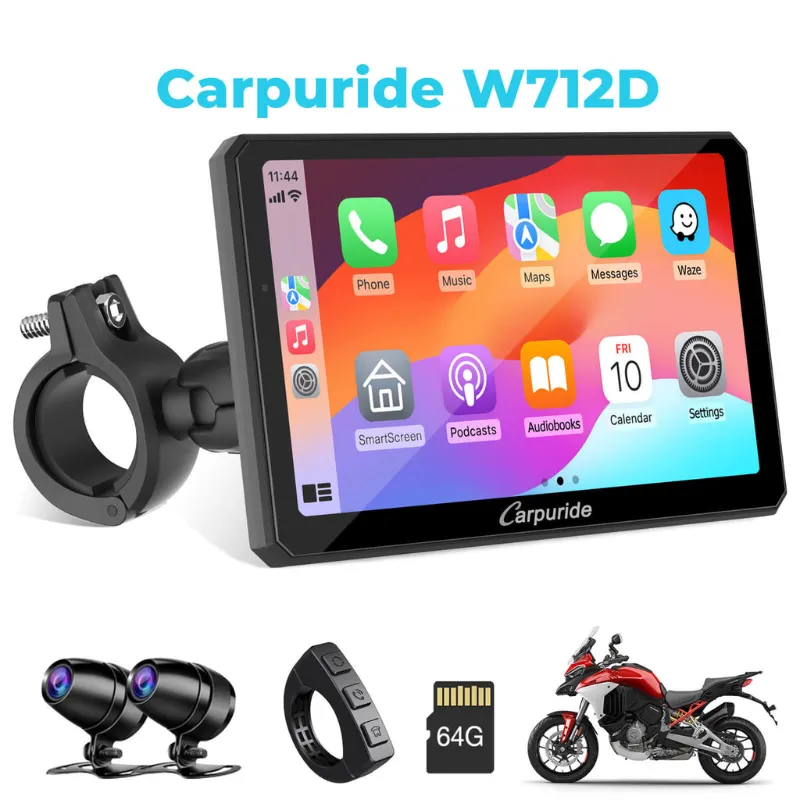
A motorcycle dash cam typically delivers more stable footage and wider coverage than helmet-mounted alternatives because it anchors directly to your bike’s frame or handlebars.
Helmet cameras dominated the market for years, but dashboard-style systems designed specifically for motorcycles now offer front-and-rear recording, vibration dampening, and integration with navigation displays. The choice depends on your riding style, legal needs, and whether you want POV adventure footage or reliable incident documentation.
How Mounting Position Affects Video Quality
Bike-mounted systems sit lower and closer to the centerline, which means less shake from head movement and a more consistent frame.
Helmet cameras excel at capturing your exact line of sight, especially when you check mirrors or scan intersections. But that same flexibility introduces micro-movements that software stabilization struggles to smooth out at highway speeds. If your goal is insurance documentation or evidence collection, the fixed dash cam perspective wins. For vlogging or action content where you want first-person immersion, helmet placement still makes sense.
Stability comparison:
- Dash cam: minimal vibration with rubber mounts, steady horizon line
- Helmet camera: follows every head turn, bobbing visible during acceleration
- Wind resistance: dash cams hide behind fairings; helmet cams add drag above 60 mph
This buyer’s guide highlights how professional testers evaluate mounting systems across different bike types.
Front and Rear Coverage: Why Two Angles Matter
The best motorcycle dash cam front and rear setups record simultaneously, so you capture the car that merged into your lane and the tailgater who caused the chain reaction. Dual-channel systems are especially valuable in no-fault states or when filing claims where fault isn’t immediately obvious.
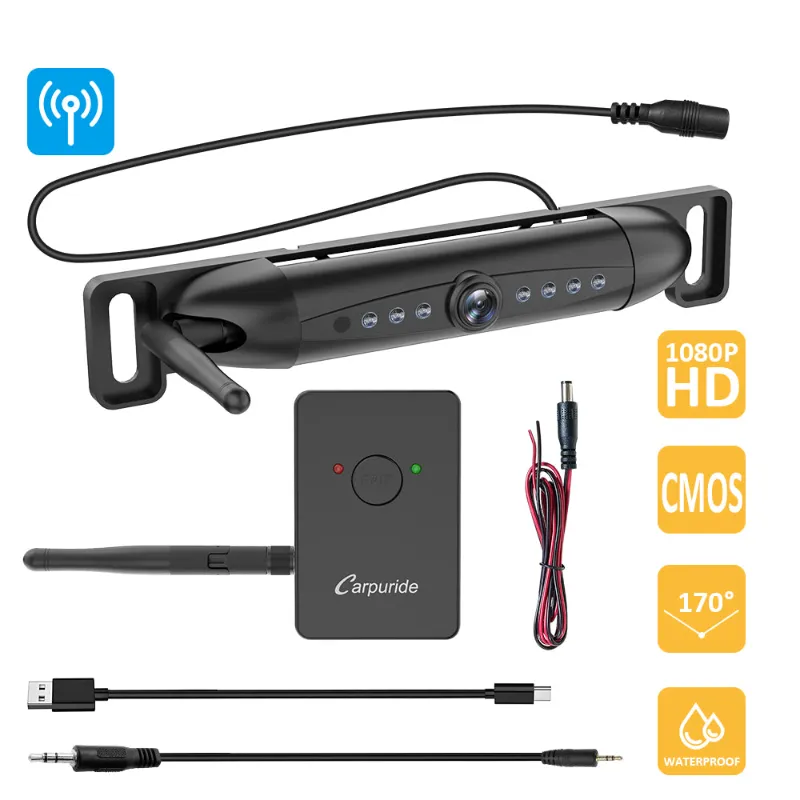
Most helmet cameras record a single forward view unless you rig a second camera on the back of your helmet, which adds weight and creates a snag point in a crash. Carpuride’s dash cam systems pair a front unit with a wireless rear view camera for car adapted for motorcycle use, running both feeds to a single storage card. That means synchronized timestamps and no gaps in coverage.
Dual-camera advantages:
- Simultaneous recording of threats from both directions
- Rear footage shows following distance and aggressive drivers
- Single power source and storage system
- No second mount cluttering your helmet
If you ride in high-traffic areas or tour long distances, check the latest pricing on dual-camera bundles that include weatherproof connectors.
Integration With Carpuride CarPlay Systems
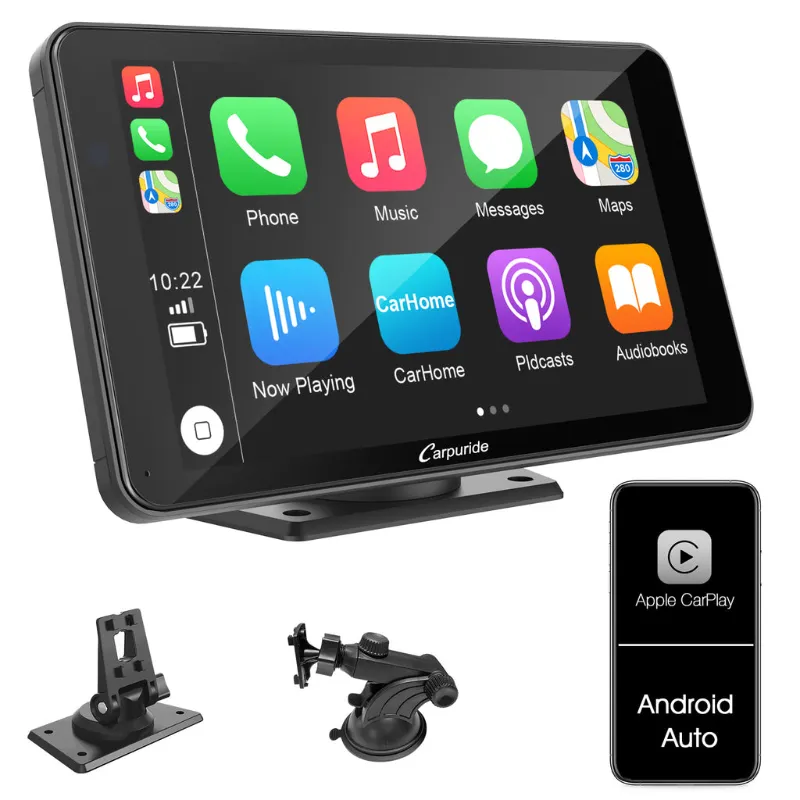
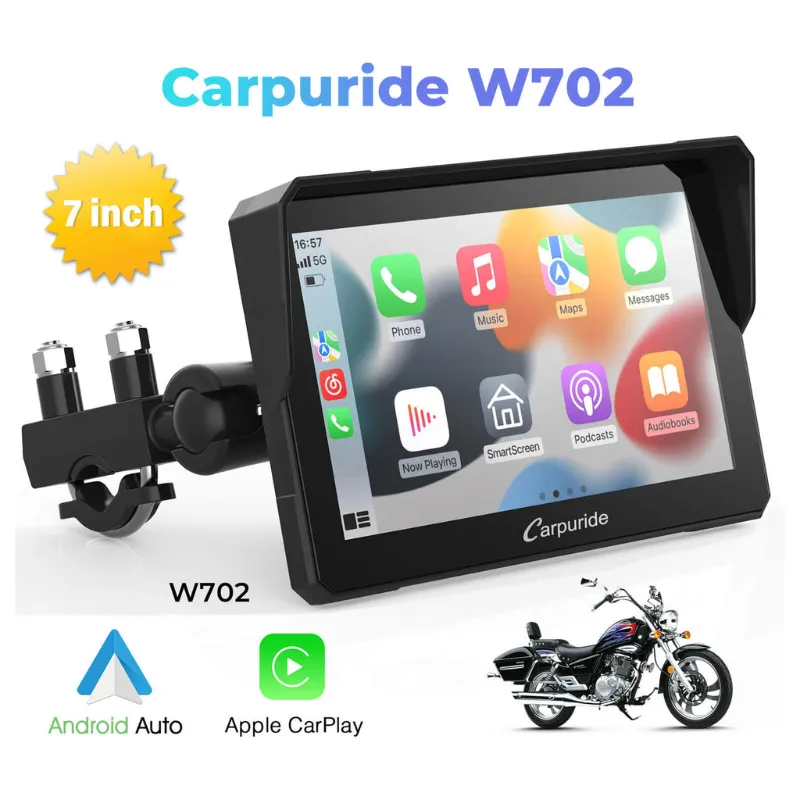
One reason we recommend Carpuride’s motorcycle dashcam to riders who already use their navigation gear is seamless integration. If you run a portable carplay screen or carpuride carplay device for maps and music, adding a dash cam often means a single display handles both functions.
You control recording, review footage, and adjust camera angles from the same car touch screen interface you use for Waze or Spotify. No separate app, no second screen zip-tied to your bars. Helmet cameras require you to stop, remove the unit, and either replay on a tiny built-in screen or transfer files to your phone.
Integration benefits:
- Live camera preview on your navigation screen
- Touch controls for quick clip saving after an incident
- Shared power harness reduces cable clutter
- Firmware updates through the same ecosystem
Riders who prefer minimal cockpit complexity appreciate that the portable apple carplay hardware doubles as the dash cam monitor. Grab the discount code if you want to bundle camera and display in one order.
Durability, Weather Resistance, and Power
Motorcycle dash cams hardwire into your bike’s electrical system, so they turn on with the ignition and never run out of battery mid-ride. Helmet cameras rely on internal batteries that last two to four hours, forcing you to swap cells or carry a power bank on all-day trips.
An IP67-rated dash cam housing shrugs off downpours, while a helmet-mounted camera often needs a separate waterproof case that muffles audio and adds bulk. Vibration is another factor: learn what experts say about lens mounts and shock absorption on two-wheelers.
Reliability factors:
- Dash cam: hardwired power, weatherproof by design, no battery anxiety
- Helmet camera: 2-4 hour runtime, requires charging routine, vulnerable to drops
- Loop recording: both overwrite old footage, but dash cams often include G-sensor crash lock
Helmet cameras win if you switch between multiple bikes or ride rentals often since you carry the camera with you. For daily commuters or single-bike owners, the permanently installed dash cam is the simpler solution.
Video Resolution and Night Performance
Many riders assume a motorcycle dash cam 4k model will always outperform older helmet cameras, but resolution alone doesn’t guarantee usable footage.
That said, the best motorcycle dash cam systems now include Sony STARVIS sensors and wide dynamic range, closing the night-performance gap. If you commute before dawn or ride twisty roads under tree cover, prioritize sensor specs over raw resolution. A 1080p camera with good low-light tuning beats a 4K unit that turns grainy after sunset.
Resolution and sensor guide:
| Feature | Dash Cam | Helmet Camera |
|---|---|---|
| Typical resolution | 1080p, 4K | 1080p, 5.3K |
| Low-light sensor | STARVIS, WDR common | Larger sensors, better in extreme dark |
| Field of view | 140 to 170° | 120 to 170° (adjustable lens) |
| Frame rate | 30 to 60 fps | 60 to 240 fps (action modes) |
For insurance and legal purposes, 1080p at 60 fps with good exposure latitude is more useful than 4K at 30 fps that freezes motion blur on license plates.
Which Setup Fits Your Riding Style?
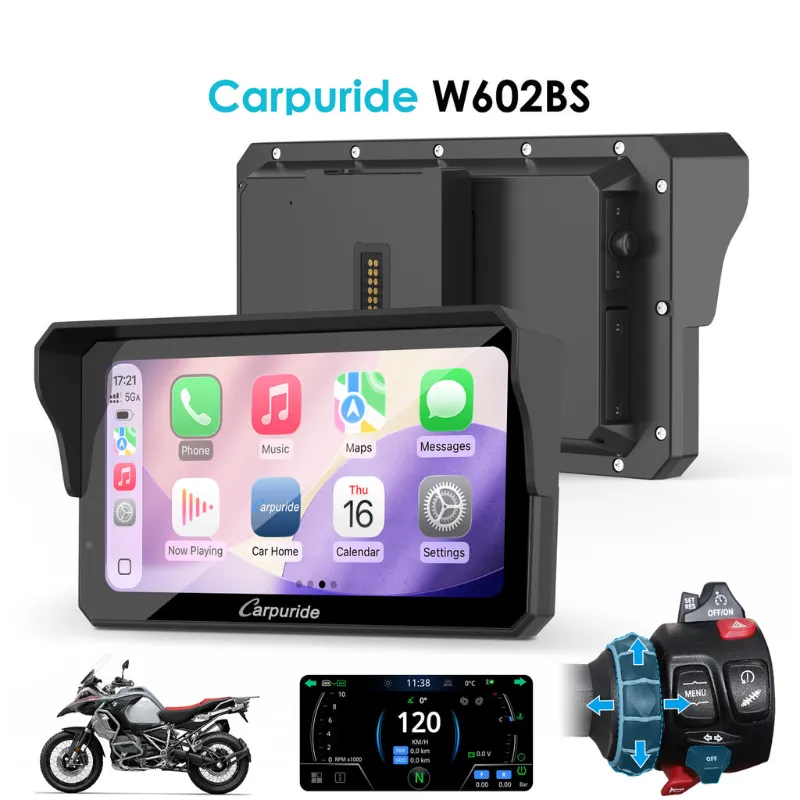
Choose a bike-mounted best car stereo and dash cam combo if you commute daily, prioritize hands-free operation, and want reliable documentation without thinking about batteries. The multimedia touch systems that combine navigation and camera into one interface suit touring riders who value clean handlebars and integrated controls.
Go with a helmet camera if you create content, switch bikes frequently, or ride off-road where your head angle matters more than a fixed bike perspective. Action vloggers and adventure riders often run both: a dash cam for legal coverage and a helmet GoPro for the cinematic shots.
Decision matrix:
- Commuters and urban riders: dash cam for stability and dual coverage
- Touring and long-distance: integrated CarPlay dash cam for navigation sync
- Off-road and adventure: helmet camera for flexible POV
- Content creators: both systems for multi-angle editing
This comparison roundup covers additional mounting strategies if you want to test hybrid setups. For current bundle pricing on Carpuride’s dual-camera and CarPlay packages, visit our discount page to apply the latest sitewide offer before you ride out.
Questions
Can I use a motorcycle dash cam and helmet camera together?
Yes, many riders run both systems to get stable bike-mounted footage for insurance and POV helmet footage for vlogs or action content. The dash cam handles legal documentation while the helmet camera captures your exact line of sight.
Does a Carpuride dash cam work with any motorcycle?
Carpuride dash cams work on most motorcycles with a 12V electrical system. You'll need to hardwire the camera to your ignition circuit or use an accessory power outlet, and ensure your handlebars or fairings have mounting space.
How long does a helmet camera battery last on a ride?
Most helmet-mounted action cameras run for two to four hours on a full charge. Extended rides require spare batteries or a portable power bank, whereas hardwired dash cams draw from your bike's electrical system and never run out.
Which records clearer license plates, dash cam or helmet camera?
A motorcycle dash cam usually captures sharper license plates because it mounts in a fixed position with less vibration. Helmet cameras move with your head, introducing motion blur that makes reading plates harder.
Do I need 4K resolution for a motorcycle dash cam?
4K helps if you need to zoom into footage for details, but 1080p at 60 fps with a good sensor often performs better in low light and is sufficient for insurance claims. Prioritize sensor quality and frame rate over raw resolution.
Can I view my dash cam footage on a CarPlay screen while riding?
Yes, if you use an integrated system like Carpuride's portable CarPlay screen with dash cam support. You can preview the live feed, save clips, and adjust settings directly from the navigation display without stopping.
Products in this guide
 Shopping at Carpuride? See the discount code
30% OFF Sitewide
Shopping at Carpuride? See the discount code
30% OFF Sitewide