 A Cuddobaby guide
Can’t Get Your Baby to Sit in a Bouncy Seat? Common Reasons and Easy Fixes
If your baby arches, cries, or lasts 30 seconds in a bouncy seat, these common causes and simple fixes usually turn things around fast.
Most babies who refuse a bouncy seat aren’t rejecting the seat itself. They are reacting to one of a handful of fixable problems: the recline angle, the timing, the harness, or the fact that the seat has nothing for them to actually do. Work through the fixes below in order and most babies settle in within a week or two of short, positive sessions.
Why babies reject the bouncy seat in the first place
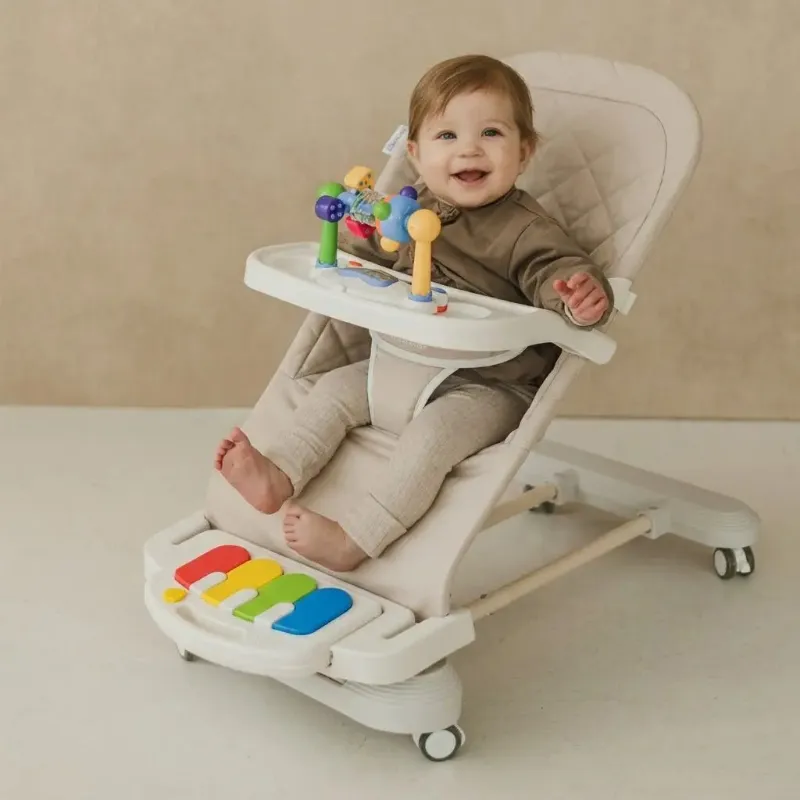
A bouncy seat is designed for short, supervised stretches, so resistance usually has a clear cause. Before you assume your baby just “hates it,” check these common culprits:
- Wrong recline angle. Newborns often arch and fuss when a seat is too upright, because they cannot hold their head comfortably. A nearly flat newborn position works far better than a sit-up angle.
- Bad timing. An overtired or hungry baby will reject almost any seat. Aim for the calm-alert window right after a feed and a burp.
- Harness friction. Straps twisted, pinching, or rubbing bare skin can make the seat feel like a trap. Pad the straps and check the crotch buckle position.
- No stimulation. A plain seat gives a baby no reason to stay. Seats with toys, and the baby activity center style setup once they can sit with support, give them a job to do.
- Temperature and texture. Plastic or synthetic fabric against skin, or a warm room, makes some babies wriggle out fast.
- Gas or reflux. If your baby cries consistently about 10 minutes into every session, post-feed discomfort is a likely reason, not the seat.
Match the seat to your baby’s age and stage
One of the biggest mistakes is using the same seat the same way from week one to month eight. What works for a newborn will bore a 6 month old, and a sit-up position can be unsafe for a brand-new baby.
| Stage | What they need | What usually goes wrong |
|---|---|---|
| Newborn (0-3 months) | Deep recline, gentle vibration or bounce, eye contact | Seat too upright, sessions too long |
| 3-6 months | Reaching toys, a bar bouncer with an activity bar, more bounce | Boredom, toys out of reach |
| 6 months plus | Upright play, jumping or standing action, weight-limit checks | Baby has outgrown it and protests loudly |
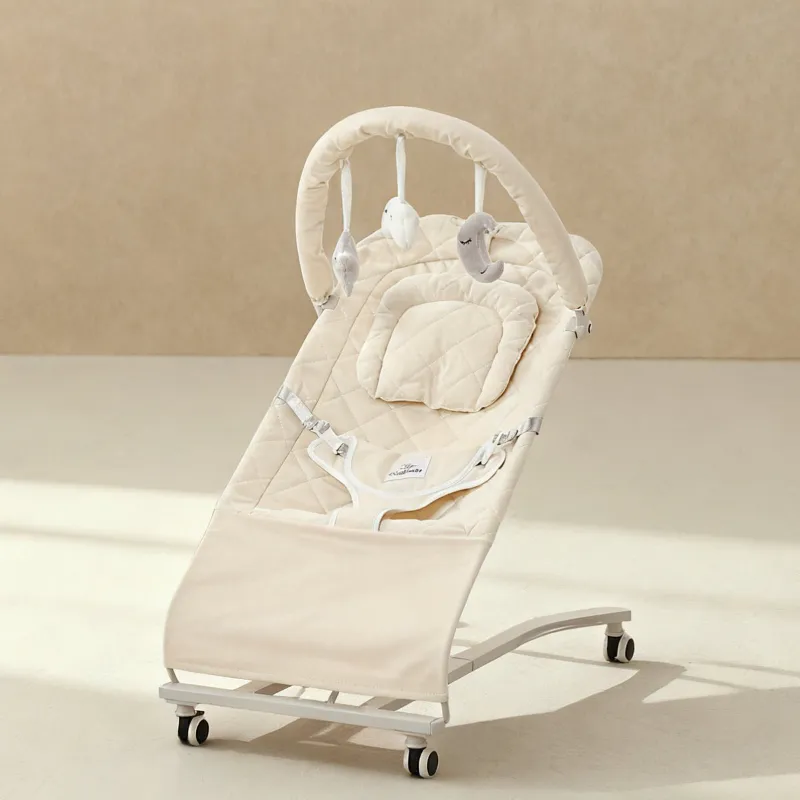
If your baby is in that 3-6 month window and seems restless, a bar bouncer with a removable toy bar often solves the “she only lasts two minutes” problem, because there is something to bat at and grab. For a baby who wants to stand and jump, a baby bouncer jumper or an activity center gives that outlet a regular bouncy seat cannot.
And check the weight limit. A bouncy seat for a 6 month old is often past its ceiling, and a bouncy seat for a toddler simply does not exist for most models. If your baby is close to the limit, move on rather than pushing through the protests.
Easy fixes to try this week
Start with these, in this order:
- Recline fully and stay low-key. For a bouncy seat for newborn use, lay the seat back as far as it goes, use the gentlest vibration setting, and keep sessions to 5 to 10 minutes.
- Bounce it yourself. Babies who are bounced in your arms often accept the same motion from a bouncer and rocker seat if you start the motion with your foot and stay in view.
- Warm the seat. Put a receiving blanket over the surface for a few minutes before you lay your baby down. A cold seat against a warm body is a real, underrated reason for instant protests.
- Add one toy, then rotate. Clip a single high-contrast toy at arm’s reach. Swap it every few days so it stays interesting.
- Sit on the floor beside them. Your face at eye level beats any toy. Narrate, make eye contact, then gradually step back over a week.
- Build the association. Put your baby in the seat for one pleasant minute, then take them out before they fuss. Repeat and slowly stretch the time. Never use the seat during a fussy period at first, or it becomes the place where crying happens.
When you have picked one, grab the code before you check out so you are not paying full price.
Safety checks before every session
Rejection aside, a seat that feels wrong to a baby is sometimes a seat set up wrong. Run through this quick list:
- The seat sits on a flat, hard floor, never on a table, bed, or sofa.
- The harness is buckled every single time, snug but with a two-finger gap.
- The recline matches your baby’s head control, fully back for newborns.
- Baby stays in the room with you. A bouncy seat is never a place for unsupervised sleep.
- You stop using the seat once your baby can roll, sit up unassisted, or hits the stated weight limit, whichever comes first.
For a plain-English rundown of what independent testers look for, Consumer Reports’ baby bouncer guide covers frame stability, harness design, and recline positions well.
When the problem is the seat, not the baby
Sometimes you try everything and your baby still squirms out in under a minute. That is a sign the seat does not fit your baby’s temperament or stage, and swapping gear is the honest answer:
- Loves motion, hates sitting: a bouncer and rocker model with your-foot bounce usually wins.
- Wants to grab and kick: a baby activity mat gives full-body play with no confinement at all, and many fussy-seat babies settle happily on the floor.
- Wants to be upright and busy: wait for supported sitting and move to an activity center, which is where most babies genuinely prefer to spend their awake time.
- Seat is secondhand or worn: sagging fabric, a stretched harness, or a dead vibration unit can make even a tolerant baby miserable.

One more practical tip for parents reading this during pregnancy: getting your own rest first makes every one of these fixes easier to execute calmly. A good maternity pillow or a body pillow in pregnancy can genuinely improve the sleep that makes patient seat-training sessions possible, and a baby body pillow can help support safe, comfortable side-lying play once your baby is here.
If you decide to upgrade rather than persevere, check the latest price on our coupon page, where we keep the current 10% off offer for all orders updated. A seat your baby actually tolerates is worth more than a feature list you never use.
Questions
Can a newborn use a bouncy seat safely?
A bouncy seat can be safe for a newborn only when it has a deep recline, the harness is always buckled, and sessions are short and supervised. Never use it for sleep, and never place it on an elevated surface.
Is a bouncy seat still useful at 6 months?
A bouncy seat for a 6 month old usually only works if your baby is still within the seat's weight limit and cannot yet sit or roll unassisted. Most babies this age do better in an activity center or on an activity mat.
How long can my baby stay in a bouncy seat at a time?
Start with 5 to 10 minutes of calm, happy time in the seat and build up slowly. Total daily time should stay modest, since babies also need floor play, tummy time, and variety for development.
My baby cries every time I put her in the seat. Should I give up on it?
Try a fuller recline, a warmed seat surface, a gentle bounce from your foot, and very short sessions when your baby is calm and fed. If the protests continue for weeks, the seat may simply be the wrong fit for your baby's stage or temperament.
What is the difference between a bar bouncer and a baby bouncer jumper?
A bar bouncer adds a toy bar for reaching and grabbing, which suits babies from around 3 months. A baby bouncer jumper offers upright, standing bounce action for older babies who have head control and the strength to bear weight.
When should we stop using the bouncy seat completely?
Check the manufacturer's weight limit printed on the frame or label, and stop using the seat earlier if your baby can sit up unassisted, roll over, or climb out. Many babies outgrow their seat by weight or mobility well before their first birthday.
Products in this guide
Shopping at Cuddobaby? See the discount code
10% OFF All Orders
More in this series
 How to Clean and Care for Your Baby Activity Mat and Bouncy Seat15 Sep 20264 minHow Long Can Your Baby Use a Bouncy Seat or Bar Bouncer? Age and Weight Limits Explained15 Sep 20265 minMaternity Pillow vs Pregnancy Body Pillow: How Are They Different?15 Sep 20264 min
 How to Safely Use a Baby Bath Seat and Tubside Seat for Babies 6 Months and Up15 Sep 20265 min
 Baby Activity Center vs Baby Activity Mat: Which Comes First for Your Baby?15 Sep 20265 min