 A Maestri House guide
How to Use a Coffee Scale for Perfect Espresso Shots Every Time
An espresso scale helps you measure dose and yield precisely so you can dial in extraction and pull consistently excellent shots at home.
An espresso scale is essential for measuring your coffee dose and shot yield with the precision needed to pull repeatable, balanced espresso every single time.
Why You Need an Espresso Scale
Eyeballing your coffee or relying on volumetric buttons rarely delivers consistent results. Espresso depends on exact ratios between ground coffee and liquid output, typically 1:2 (18 grams in, 36 grams out) for a classic ristretto-to-normale range. Without a scale, you’re guessing, and even small variations wreck extraction.
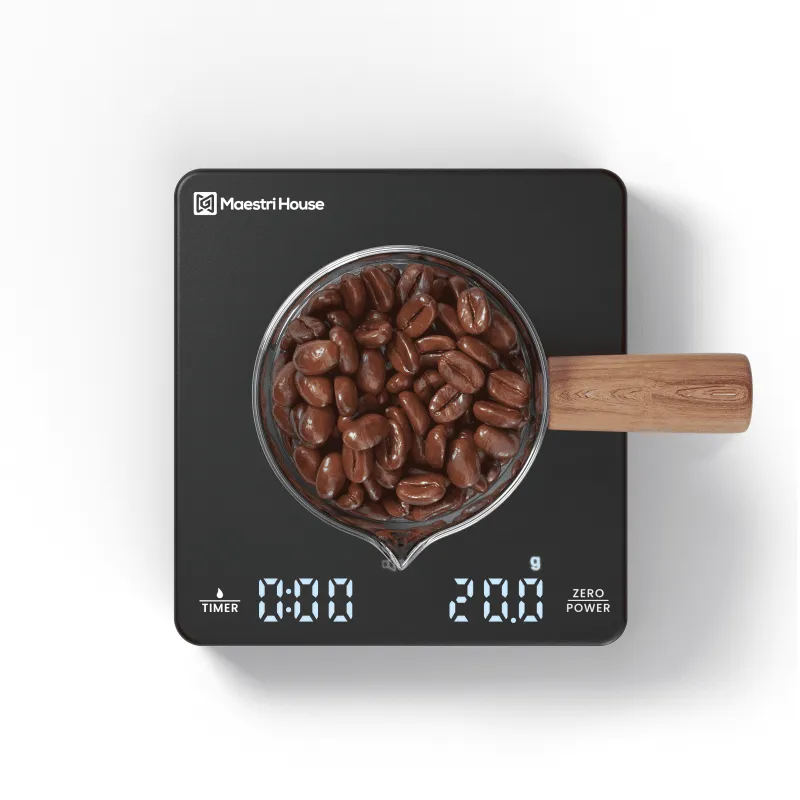
A quality espresso scale gives you:
- Accurate dosing so you use the same amount of coffee every time
- Real-time yield tracking to stop the shot at your target weight
- Built-in timers (on most models) to monitor extraction speed
- Consistency that lets you tweak one variable at a time when dialing in
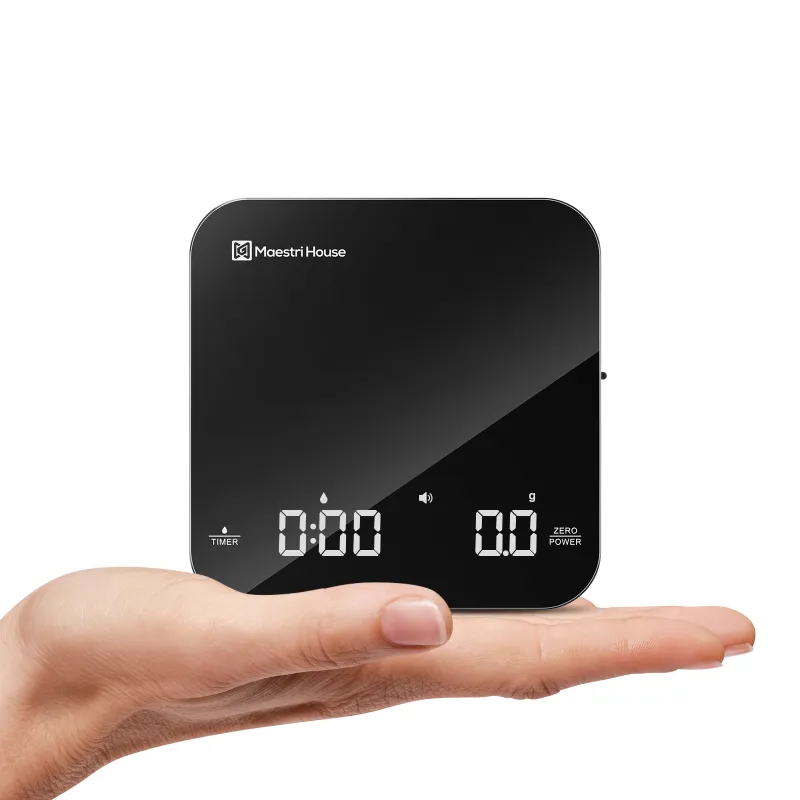
Many home baristas wonder whether a standard kitchen scale works. It can, but response time, water resistance, and size matter. The maestri house mini coffee scale fits neatly under a portafilter or on a drip tray, updates fast enough to catch rapid flow, and survives the occasional splash.
How to Dose Your Coffee with a Scale
Start by placing your portafilter basket on the scale and taring to zero. Grind directly into the basket or dose into a cup first, aiming for your target weight. For a double shot, 18 to 20 grams is the standard range, though some baskets hold up to 22 grams.
Check your grinder’s output every few days because bean density, humidity, and grinder retention shift your dose. We grab the code when stocking up on gear to keep our setup dialed without breaking the budget.
Step-by-step dosing:
- Tare the empty portafilter basket
- Grind your target dose (typically 18 g for a double)
- Level and distribute the grounds
- Tamp evenly with 30 pounds of pressure
- Wipe the basket rim and lock into the group head
If you’re off by half a gram, adjust your grinder’s timer or dose manually. Precision here sets the foundation for everything downstream.
Weighing Your Espresso Yield in Real Time
Place your cup or carafe on the scale under the portafilter spouts, tare to zero, and start your shot. Watch the weight climb as espresso flows. Your target yield depends on your ratio: for an 18-gram dose at 1:2, you want 36 grams of liquid.
Most espresso scales with timer functionality let you monitor both weight and extraction time simultaneously. A well-dialed shot typically finishes in 25 to 30 seconds. If yours runs faster, grind finer; if it chokes and drips past 35 seconds, coarsen the grind.
Stop the shot manually when you hit your target weight. Volumetric programming on your machine can help, but scales are more accurate because crema volume varies wildly. The best espresso scale models update multiple times per second so you can cut the pump right at your number without overshooting.
| Feature | Why It Matters |
|---|---|
| 0.1 g precision | Catches small dose and yield variations |
| Fast refresh rate | Tracks flowing espresso without lag |
| Water-resistant | Survives splashes and steam |
| Timer function | Monitors extraction speed in one glance |
For a detailed comparison of top models, The Best Coffee & Espresso Scales in 2026 breaks down refresh rates, accuracy specs, and real-world durability.
Dialing In Your Espresso with Consistent Ratios
Dialing in means adjusting grind size, dose, and yield until your espresso tastes balanced. An espresso scale turns this from guesswork into a systematic process.
The dialing-in workflow:
- Pick your ratio (1:2 is a safe starting point)
- Dose precisely (e.g., 18.0 g)
- Pull a shot and weigh the yield (targeting 36.0 g)
- Taste and evaluate: sour means underextracted (grind finer or pull longer), bitter means overextracted (grind coarser or pull shorter)
- Change one variable and pull another shot
Repeat until you hit the sweet spot where acidity, sweetness, and body align. Without a scale, you can’t isolate whether your sour shot came from a light dose, a short yield, or a coarse grind. With one, you know exactly what changed.
We keep a simple log: dose, yield, time, and tasting notes. After a few sessions, patterns emerge and you’ll recognize your ideal window for each coffee.
Choosing the Right Scale for Your Setup
Not every scale fits every machine. Measure your drip tray or counter space before buying. A mini espresso scale like the maestri house mini coffee scale slides under low-clearance group heads and tight portafilter spouts without forcing you to remove the drip tray.
What to look for:
- Size and height: Low-profile designs fit under most machines
- Capacity: 2,000 to 3,000 g handles espresso, pour-over, and batch brews
- Battery life: Rechargeable beats constantly swapping AAA cells
- Auto-off delay: 3 to 5 minutes prevents the scale from sleeping mid-shot
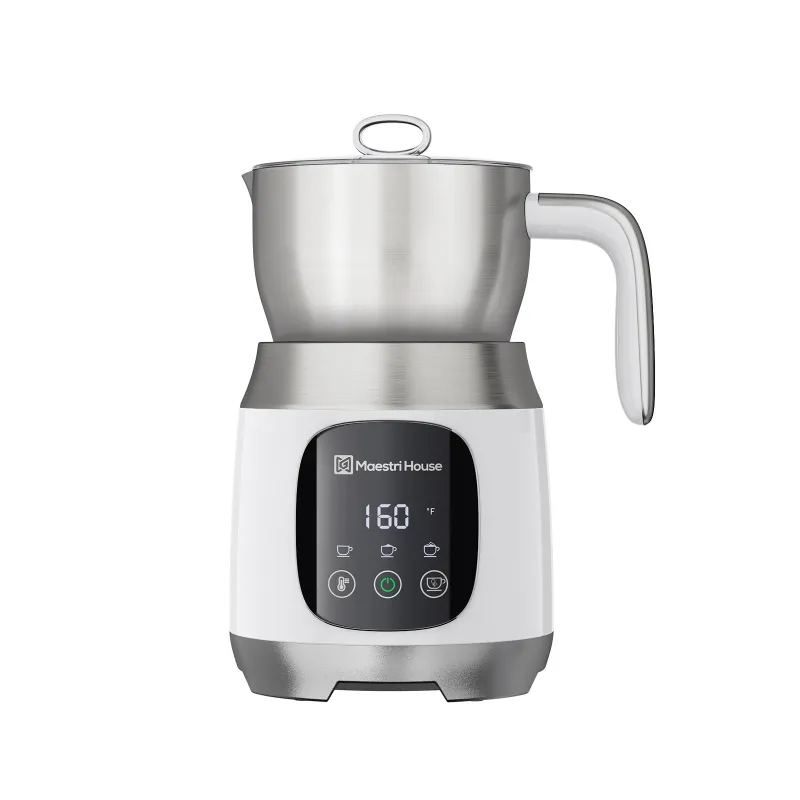
If you’re also steaming milk, a maestri house rechargeable milk frother pairs well with your scale-based workflow, letting you control texture and temperature for consistently silky microfoam.
Budget matters, but so does frustration. Check the latest price on our tested picks before settling for a generic kitchen scale that lags or drifts.
Tips for Using Your Scale Every Day
Even the best espresso scale with timer won’t help if your workflow fights it. Keep your scale clean, calibrate it monthly with a check weight, and replace the battery or recharge before it dies mid-session.
Daily best practices:
- Tare between every step (empty basket, then empty cup)
- Wipe grounds and liquid off the platform immediately
- Store the scale in a dry spot away from steam vents
- Use a dosing cup if your grinder flings grounds everywhere
We also recommend pulling a throwaway shot first thing in the morning to heat-stabilize your machine. Your second shot, pulled with precise measurements, will taste dramatically better.
For more insights on what makes a scale great for coffee, Best Coffee Scales in 2026 for Accurate Brewing compares response time, durability, and value across dozens of models.
Common Mistakes and How to Avoid Them
New users often tare the cup with liquid still inside, dose without leveling, or forget to account for the portafilter’s weight. Each error compounds, throwing your ratio off by several grams.
Watch out for:
- Not taring after each addition: Leftover weight skews your numbers
- Stopping by sight instead of weight: Crema looks like more liquid than it is
- Ignoring your timer: A 36-gram shot in 18 seconds will taste thin and sour
- Skipping recalibration: Scales drift over time, especially after moves or drops
If your shots suddenly taste off and your process hasn’t changed, weigh a known check weight. A scale reading 19.8 grams for a 20-gram reference weight will wreck your ratios without you realizing it.
Finally, remember that the best espresso scale is the one you’ll actually use. A $200 Bluetooth scale gathering dust helps no one, while a reliable $30 model that fits your counter and updates fast transforms every shot.
Questions
Do I really need an espresso scale or can I use a regular kitchen scale?
You can use a kitchen scale, but espresso-specific models offer faster refresh rates, compact size, water resistance, and built-in timers that make real-time shot weighing much easier. A slow scale will lag behind the actual yield and cause you to overshoot your target.
What's the best coffee-to-espresso ratio to start with?
Start with a 1:2 ratio, meaning if you dose 18 grams of ground coffee, you pull 36 grams of liquid espresso. This classic range works for most medium roasts and gives you a balanced shot to dial in from.
How accurate does my scale need to be for espresso?
Look for 0.1-gram precision. Variations of even one gram in your dose or yield can noticeably shift extraction, sweetness, and body, so a scale that reads to the tenth of a gram keeps your shots consistent.
Can I weigh my portafilter and cup at the same time?
No, weigh them separately. Tare the portafilter to dose your grounds, then tare your empty cup under the spouts to measure yield as the shot pours. Trying to weigh both together makes it impossible to track real-time output.
Why does my shot taste different even when I use the same weight?
Weight is only one variable. Grind size, water temperature, tamp pressure, and bean freshness all affect extraction. Use your scale to isolate dose and yield, then adjust grind or temperature to fine-tune flavor.
How do I keep my espresso scale clean and working longer?
Wipe spills immediately, store it away from steam, and recalibrate monthly with a check weight. Avoid submerging it in water even if it's splash-resistant, and recharge or replace batteries before they fully drain.
Products in this guide
 Shopping at Maestri House? See the coupon code
10% OFF All Orders
Shopping at Maestri House? See the coupon code
10% OFF All Orders
More in this series
Cleaning and Maintaining Your Rechargeable Milk Frother17 Sep 20265 minBest Coffee Scale Size: Full Espresso Scale or Mini Coffee Scale?17 Sep 20264 minHow Long Does the Maestri House Milk Frother Battery Last?17 Sep 20265 minMini Coffee Scale for Pour Over: When You Need One and When You Don’t17 Sep 20264 minMaestri House Rechargeable Milk Frother vs Manual Frothers: Which Is Worth It?17 Sep 20264 min