 A Creative Wagons guide
Foldable Wagon Cart Stability on Rough Terrain: What to Look For
A foldable wagon cart only works if it holds steady when the ground gets rough—here's what our testing revealed about the top models.
A foldable wagon cart stays stable on rough terrain when it has large, grippy wheels, a rigid frame, a wide wheelbase and a load packed low in the middle. Small hard wheels, a flexible frame and a top-heavy load are what make a wagon wobble or tip on gravel, roots and slopes. Here is what to check before you buy and how to load and pull one safely.
What Makes a Foldable Wagon Cart Stable on Rough Terrain
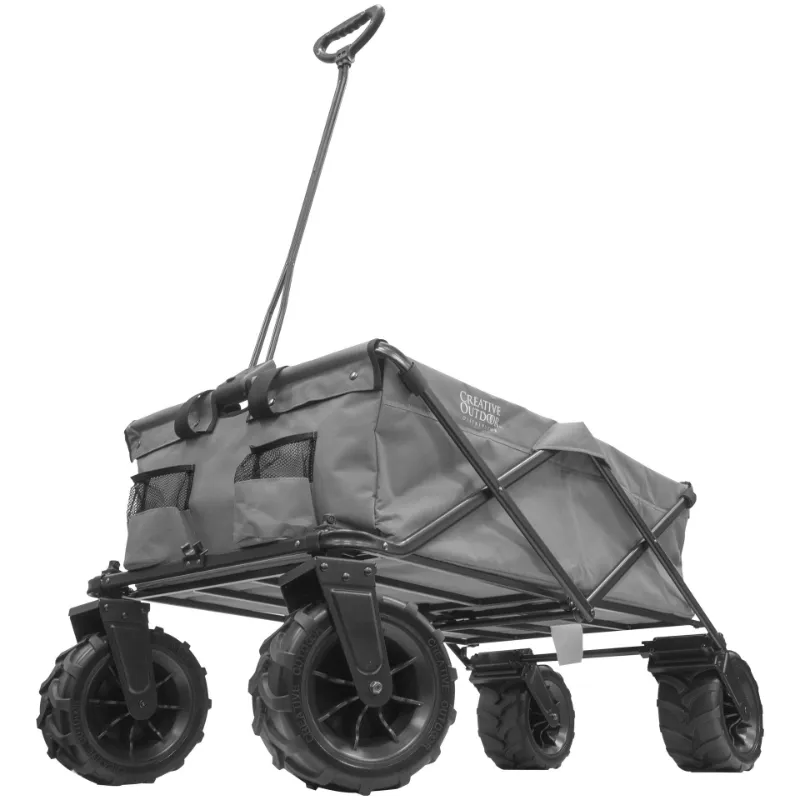
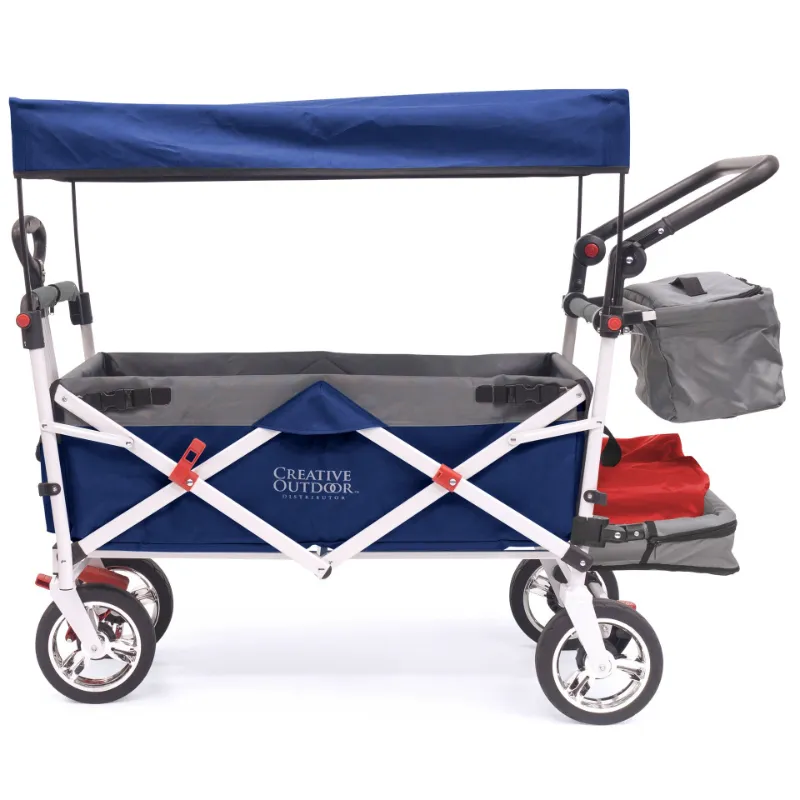
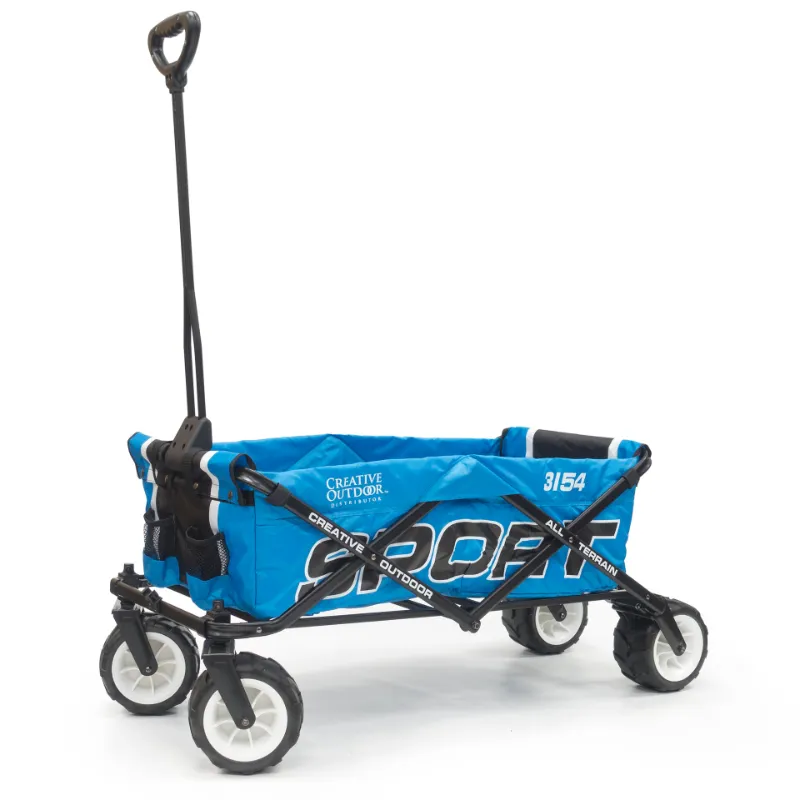
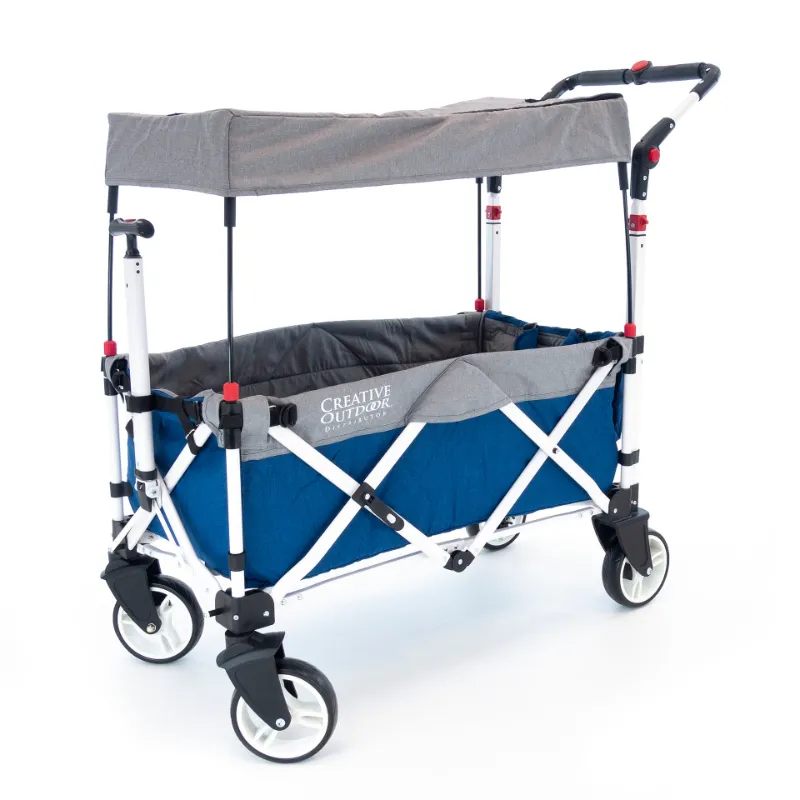
Four things decide how a folding wagon behaves off the pavement: the wheels, the frame, the stance (how wide and long the wheelbase is) and the steering. Creative Wagons sells several styles that differ on these points, from the large XXXL Monster Hauler heavy duty wagon and the XXL Hauler Deluxe heavy duty wagon with a cooler rack, to the all-terrain sport wagon, the compact Pack and Push stroller wagon and the Silver Series stroller wagon. Compare each listing on the points below rather than on the name alone.
Wheel Size and Material
Wheels are the biggest factor. Small wheels sink into soft ground and catch on rocks, while larger wheels roll over bumps and ruts more easily. Check the wheel diameter on each listing and pick the largest that still suits the way you store and carry the wagon.
Material matters too. Hard plastic wheels tend to skip and slide on gravel. Rubberized, foam-filled or air-filled (pneumatic) tyres absorb bumps better and grip more, which reduces the chance of the wagon tipping. For rough ground, look for:
- Large wheels, with wider tyres for sand and soft grass
- Rubberized, foam-filled or pneumatic tyre construction
- A tread pattern made for traction, not a smooth surface
Pneumatic tyres need their pressure checked now and then, while foam-filled tyres cannot go flat. Think about which suits you before you choose.
Frame Rigidity and Wheelbase
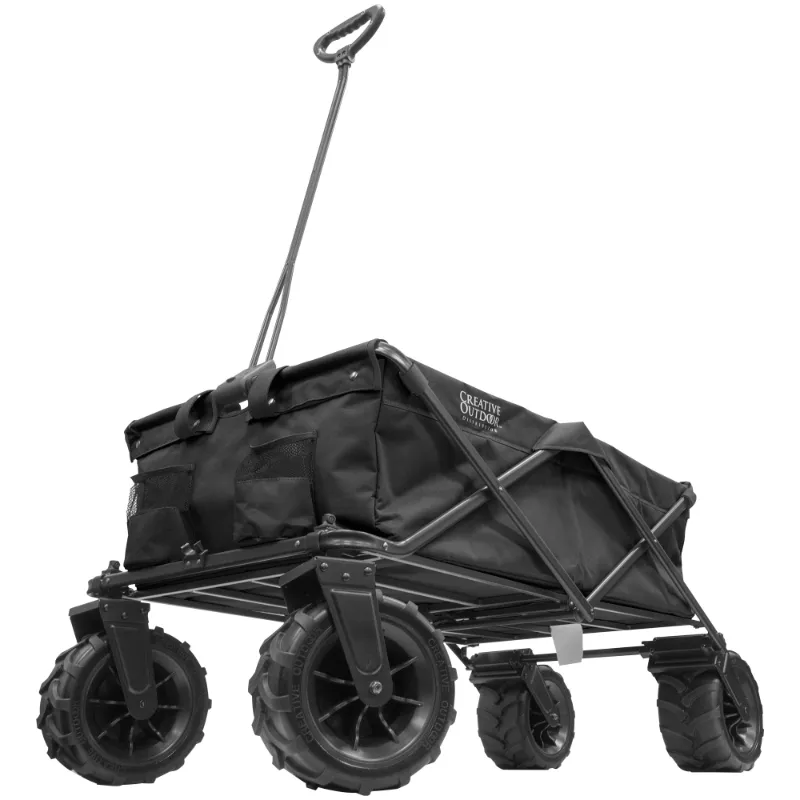
A frame that flexes under load turns every bump into a tilt or a wobble. A reinforced steel frame generally stays straighter under weight than a light frame, though it adds weight to lift into the car. A wider, longer wheelbase and a lower centre of gravity both help a foldable wagon cart resist tipping on slopes and ruts.
If you haul on truly rough ground, such as a building site, a farm track or a rocky beach path, a heavy duty wagon is the safer choice over a lighter recreational model. For maintained paths, park grass and sports fields, a lighter foldable wagon cart is easier to lift and store.
Steering Control on Uneven Ground
A wagon that is hard to steer becomes a safety risk on slopes and rocky paths. Fixed front wheels feel stiffer but track straight and predictably. Swivel wheels make turning easier but take more effort to hold in line on a side slope. Some wagons offer swivel wheels that lock straight, which gives you both.
The handle matters as well. A long, sturdy handle lets you make small corrections smoothly, while a short handle exaggerates every movement. On a steep downhill, walk in front of the wagon and hold it back, rather than letting it roll ahead of you.
Which Style Fits Which Ground
| Ground | What to look for | Why |
|---|---|---|
| Rocky or gravel paths | Large wheels and a rigid frame | Bigger wheels roll over stones; a stiff frame limits wobble |
| Grass and soft ground | Wide tyres and a wide stance | Spreads the weight so the wheels sink less |
| Hills and slopes | Low centre of gravity and a long wheelbase | Harder to tip sideways or backwards |
| Mixed rough ground | Air-filled or foam-filled tyres with tread | Absorbs bumps and keeps grip across surfaces |
| Beach sand | The widest tyres you can find | Narrow wheels dig in and stall |
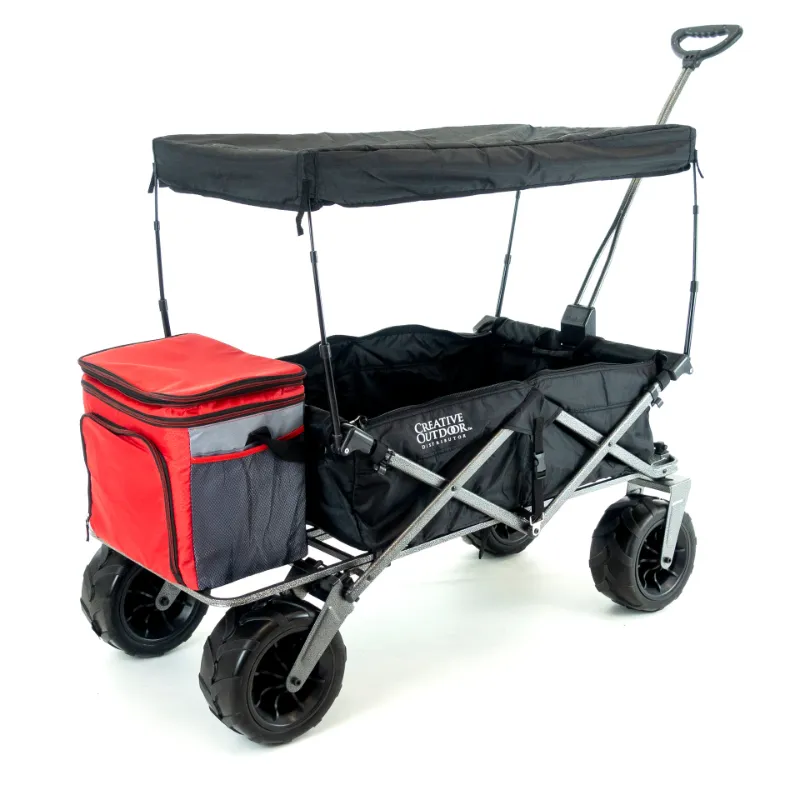
Stroller-style wagons with a canopy add sun shade and a wide stance, which helps on grass, but the extra weight makes pulling uphill harder. Sport-style wagons suit maintained gravel and fields better than deep ruts.
Load Management for Stable Hauling
How you load the wagon affects stability as much as the wagon itself:
- Put the heaviest items low and in the middle, over the axles
- Keep lighter items around the edges, not stacked high
- Balance the load from side to side so the wagon does not lean
- Stay under the maximum load on the listing, and carry less on slopes and rough ground
- Strap down tall or loose items so they cannot shift on a bump
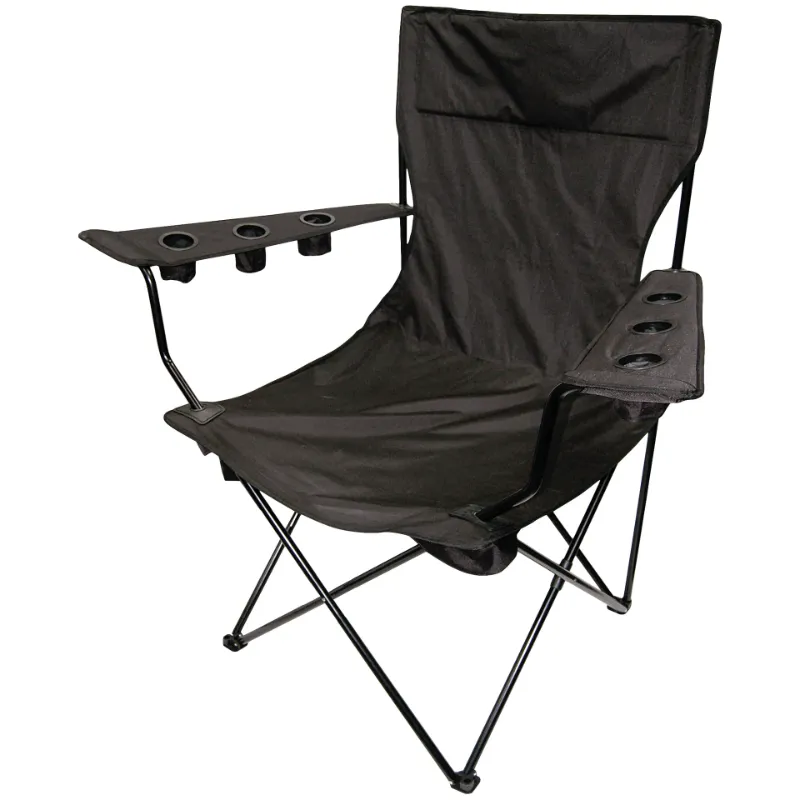
If you carry seating as well, the Giant Kingpin heavy duty folding chair is sold separately and folds down to ride in the wagon.
How to Choose and Where to Read More
For rough terrain, put wheel size and frame rigidity ahead of a low price. A heavy duty model costs more but copes with ground that a lighter wagon cannot. If you mainly need something light to store and lift into a car boot, a lighter wagon is fine for gentle ground like paths and lawns.
For more views, Field Mag’s guide to folding utility wagons, The Spruce’s collapsible wagon review and Wirecutter’s folding wagon picks cover a range of models and budgets.
Try a wagon in person if you can, or buy from a retailer with a clear return policy so you can check it on your own ground. Before you order, see the current Creative Wagons discount code.
Questions
Can a foldable wagon cart stay stable on gravel and rocky paths?
Yes, if it has large wheels with rubber, foam-filled or air-filled tyres, a rigid frame and a wide wheelbase. Hard plastic wheels are more likely to skip and slide on gravel, and a top-heavy load makes any wagon easier to tip.
What size wheels do I need for a foldable wagon cart on rough terrain?
Bigger is better on rough ground. Larger wheels roll over stones and ruts, while small wheels sink into soft ground and catch on rocks. For sand, look for wide tyres as well as large ones. Check the wheel diameter on the listing before you buy.
Is a heavy duty foldable wagon cart worth the extra cost?
On rough terrain, usually yes. Heavy duty models tend to have stiffer frames and a wider stance that keep them steadier under load. For maintained paths and lawns, a lighter model is easier to lift and store.
How should I load a foldable wagon cart to keep it stable?
Put heavier items low and in the centre, keep lighter items at the edges, balance the load from side to side and stay under the listed maximum load, carrying less on slopes.
Do swivel wheels make a foldable wagon cart less stable?
Swivel wheels make steering easier but can feel less steady on side slopes. Wheels that swivel and also lock straight give you easy turning on flat ground and straight tracking on rough ground.
Products in this guide
 Shopping at Creative Wagons? See the discount code
5% OFF All Orders
Shopping at Creative Wagons? See the discount code
5% OFF All Orders
More in this series
 Mosquito Net for Your Wagon: How to Keep Bugs Out While Transporting Gear3 Sep 20264 minCamping Chair vs. Folding Camping Stool: What Actually Fits in Your Tent3 Sep 20263 minBest Camping Wagon Setup: Combining a Wagon Cart with Canopy and Mosquito Net3 Sep 20264 minHeavy Duty Wagon Carts: How to Pick One for 300+ Pounds3 Sep 20264 minHow to Choose Between a Folding Wagon Cart and a Wheelbarrow for Your Backyard3 Sep 20264 min