 A Book Nook World guide
Best Lighting Options for Book Nook Kits and Miniature Houses
A book nook kit transforms with the right lighting, from warm LED strips to battery-powered fairy lights that bring miniature scenes to life.
What Lighting Works Best for Book Nook Kits
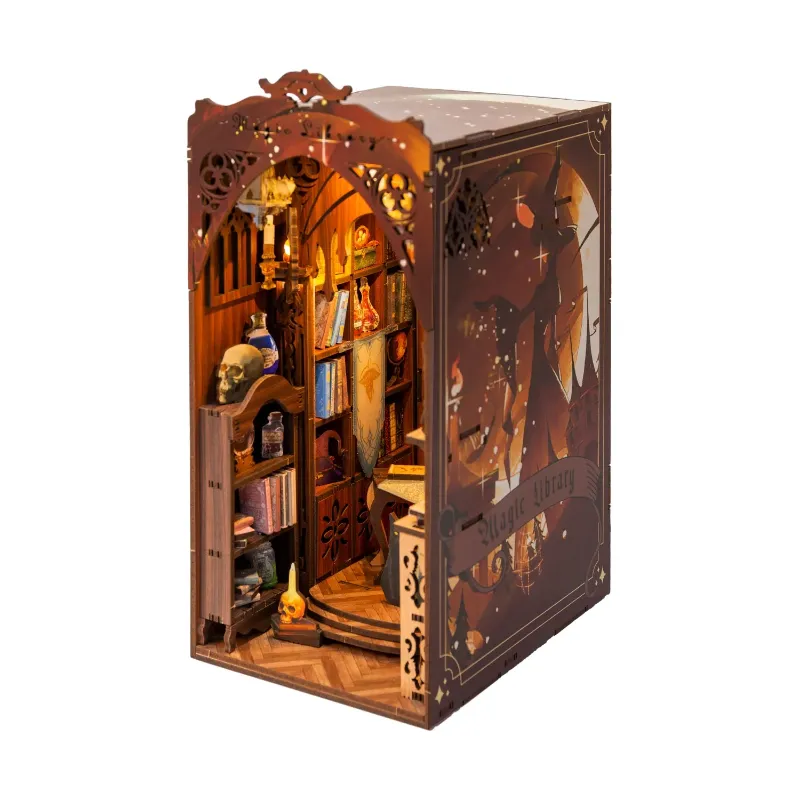
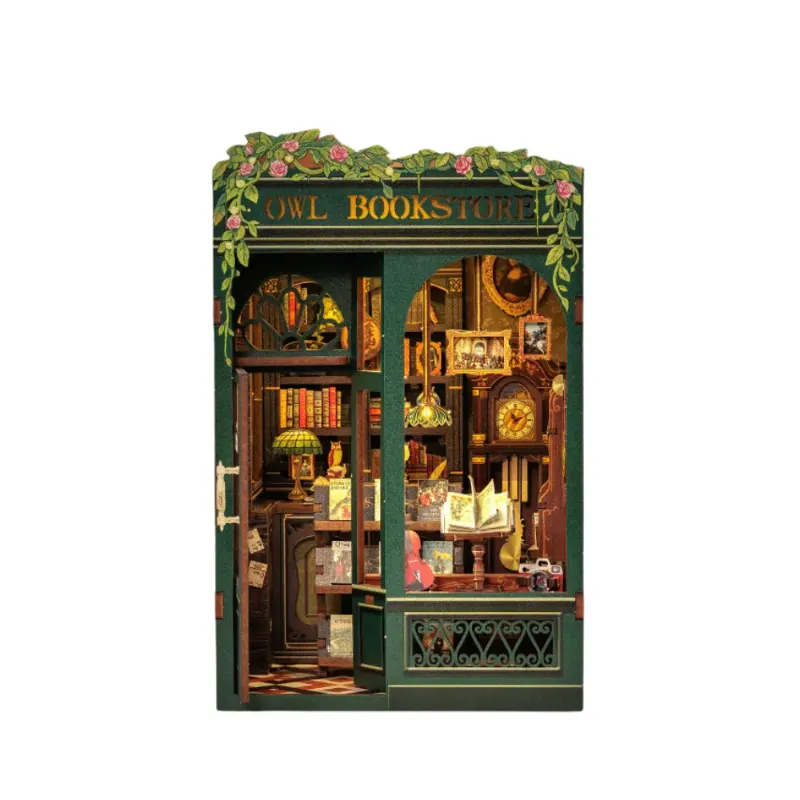
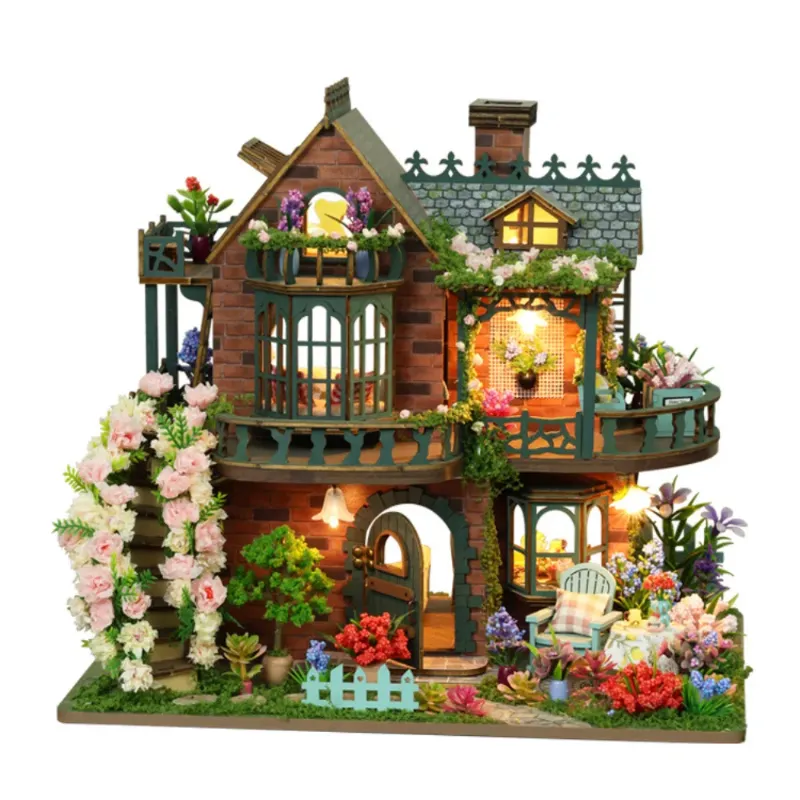
A book nook kit looks dramatically better with proper lighting, and the right choice depends on your power source, the size of your miniature, and the mood you want to create. Warm white LED strips deliver the most natural glow for detailed scenes like the magical library or owl bookstore book nook, while cool white suits modern designs and fairy lights add whimsy to projects like a fairy house kit.
Most kits for adults include basic lighting, but upgrading or adding your own gives you control over color temperature, placement, and intensity. Below we break down every option, from plug-in strips to coin-cell solutions, so you can light your diy miniature house or corner bookstore 3d miniature house kit like a pro.
LED Strip Lights vs. Individual Bulbs
LED strips and individual bulbs solve different problems, and many builders use both in a single project.
LED strip lights work best when you need:
- Even, diffused light across multiple rooms or shelves
- A single power source for the entire build
- Flexible placement around curves or tight corners
- Low heat output for delicate paper or fabric details
Individual LED bulbs excel when you want:
- Pinpoint light sources like table lamps, chandeliers, or street lamps
- Realistic scale (a 3 mm bulb looks like a real bulb at 1:24 scale)
- Independent control over each light’s position
- Simple wiring with fewer connection points
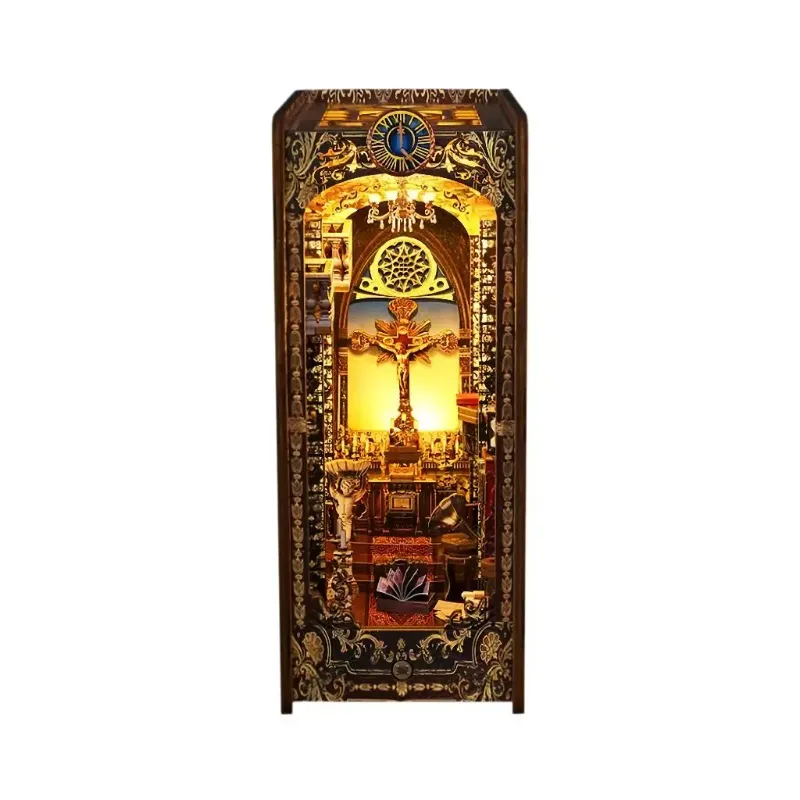
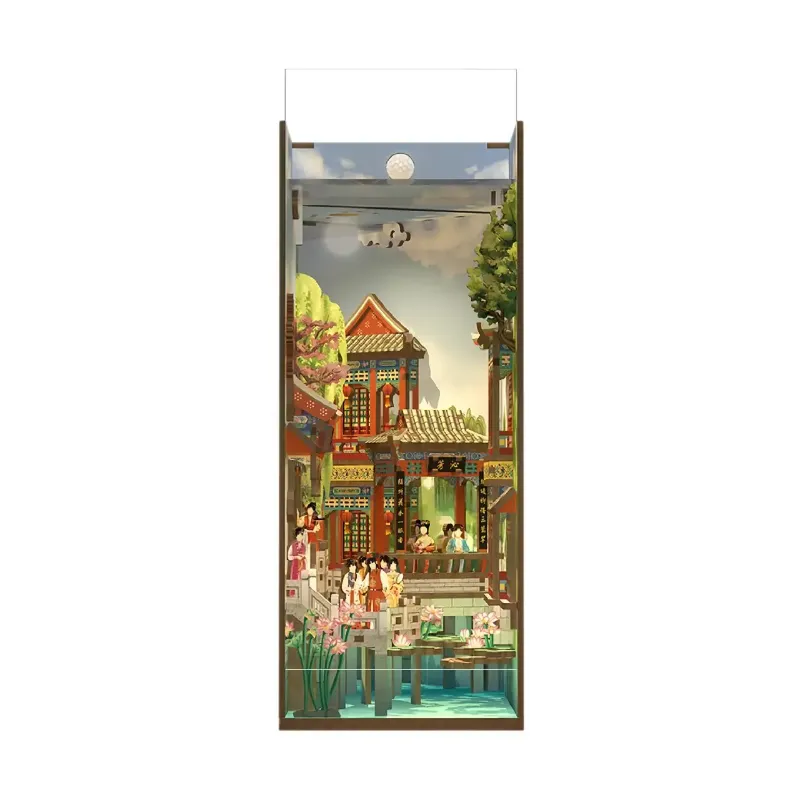
We use strips for ambient fill light in projects like the church nook and individual bulbs for accent lighting in the dream of red mansions, where tiny lanterns need to glow independently. If your kit includes pre-wired lights, check the voltage before adding strips; mixing 3V coin-cell circuits with 5V USB strips will blow the lower-voltage components.
Warm White vs. Cool White: Color Temperature Guide
Color temperature changes how your miniature feels, and the difference between 2700K and 6000K is dramatic.
| Temperature | Appearance | Best For |
|---|---|---|
| 2700K, 3000K (Warm White) | Soft yellow-orange, like incandescent bulbs | Cozy interiors, bookstores, libraries, Victorian scenes |
| 4000K, 4500K (Neutral White) | Crisp white with no color cast | Modern kitchens, offices, clean Scandinavian designs |
| 5500K, 6500K (Cool White) | Bright blue-white, like daylight | Outdoor scenes, sci-fi builds, clinical or industrial spaces |
Warm white is the safest choice for book nook kits for adults because it mimics the glow of old Edison bulbs and candlelight. We use 3000K strips in 80% of our builds, including every bookstore and café scene. Cool white can make wood tones look gray and creates harsh shadows that flatten detail.
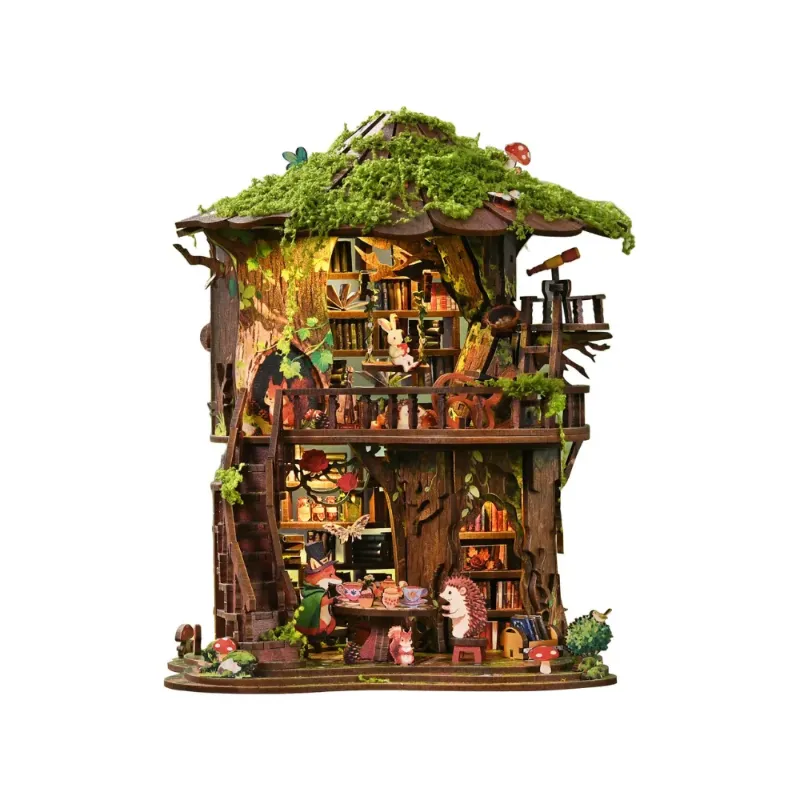
If your mini house kit has both indoor and outdoor sections, use warm white inside and neutral or cool white for exterior “daylight” zones. Some advanced strips offer tunable white, but they require a more complex controller and eat battery power quickly.
Battery-Powered vs. USB-Powered Options
Your power choice locks in your display location and maintenance routine.
Battery-powered lighting (coin cells or AA packs):
- No visible cables or outlets required
- Portable; move your build anywhere
- Batteries last 20 to 60 hours depending on LED count and brightness
- Best for gifts, shelves far from outlets, or temporary displays
- Higher long-term cost if you run lights daily
USB-powered lighting (5V via USB-A or USB-C):
- Unlimited runtime when plugged in
- Brighter output without voltage sag
- Powers complex effects like twinkling or color-changing LEDs
- Requires cable management and a nearby outlet or power bank
- One-time cost after the initial USB adapter
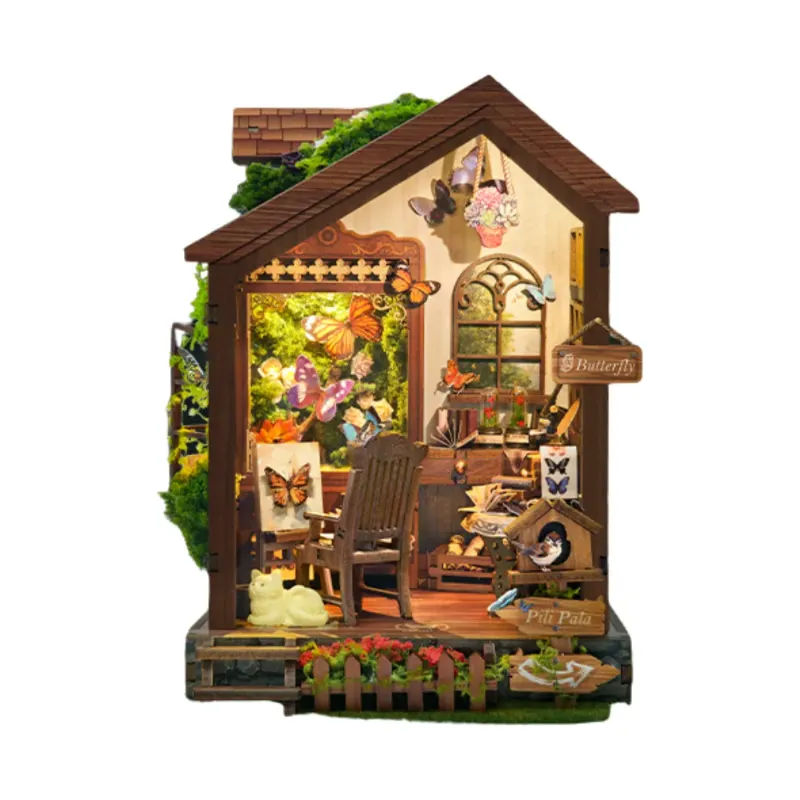
We recommend USB for permanent shelf displays and any build with more than six LEDs. Battery power works beautifully for a best butterfly house kit for kids that gets handled and moved, but a detailed miniature diy house with a dozen lights will drain coin cells in days. Grab the latest Book Nook World code to save on whichever option fits your setup.
How to Add Lighting to a DIY Book Nook Kit
Most best book nook kits for adults arrive with pre-wired LED circuits, but adding or upgrading lights takes less than an hour with basic tools.
Step-by-step installation:
- Plan your layout before gluing walls. Sketch where each light will sit and how wires will route to the power source. Hide wires behind walls, under floors, or inside furniture.
- Test the circuit outside the kit. Connect all LEDs and strips to the battery or USB pack, check polarity (red to +, black to ground), and verify every bulb lights up.
- Secure LEDs with hot glue or double-sided tape. Avoid super glue, which can fog clear plastic and creates permanent bonds you cannot adjust.
- Route wires through pre-cut channels or drill 2 mm holes in hidden corners. Use painter’s tape to hold wires flat against surfaces before final gluing.
- Add a switch inline between the power source and the first LED. Tiny SPST slide switches cost pennies and save you from unplugging cables or popping batteries.
- Diffuse harsh LEDs with a dot of white acrylic paint on the bulb or a tiny square of tissue paper. This softens pinpoint light into a realistic glow.
If your book nook kit DIY project includes paper windows, back them with translucent vellum and place LEDs 1 to 2 cm behind the window. This creates a warm, inviting glow without visible hotspots.
Best Lighting Upgrades for Specific Kits
Different builds benefit from different lighting strategies. Here is what we install in our most popular projects.
Bookstore and library nooks (magical library, owl bookstore book nook):
- 3000K LED strip along the top edge for ambient fill
- 3 mm warm white bulbs inside tiny desk lamps and chandeliers
- Rear backlighting behind stained-glass windows or signage
Victorian and historical builds (dream of red mansions, church nook):
- Low-brightness warm LEDs (avoid overly bright modern looks)
- Individual bulbs for candles, lanterns, and wall sconces
- Amber or orange LEDs instead of pure white for candlelight realism
Fairy and fantasy kits (fairy house kit):
- Battery-powered fairy lights (20 to 30 micro LEDs on thin copper wire)
- Color-changing RGB strips for magical effects
- UV-reactive paint on mushrooms or crystals, lit by a tiny UV LED
Modern minimalist builds:
- Neutral white strips with even spacing
- Hidden LED channels under shelves or behind furniture
- Single accent bulb in a statement pendant lamp
We have seen builders add fiber-optic strands to star ceilings, flickering flame LEDs to fireplaces, and motion-sensor triggers to pop-up scenes. Check current pricing on the best book nook kits to find a base that matches your lighting ambition.
Common Lighting Problems and How to Fix Them
Even experienced builders hit snags. Here are the four issues we troubleshoot most often.
Lights flicker or dim over time: Loose solder joints or corroded battery contacts. Re-solder connections with rosin-core solder and clean battery terminals with isopropyl alcohol.
One LED does not light up: LEDs are polarized. Swap the leads (positive to negative, negative to positive) and test again. If it still fails, the LED is likely dead; replace it.
Lights are too bright and wash out detail: Add a resistor inline (try 100Ω to 330Ω for 3V circuits) or cover LEDs with diffusion material. You can also move lights farther from surfaces or angle them toward walls for bounce lighting.
Visible wires ruin the realism: Paint wires the same color as the surface they cross, tuck them into grooves carved with a hobby knife, or cover them with decorative trim like tiny baseboards or crown molding.
If you are working with a kit that has no lighting instructions, search for the product name plus “wiring diagram” online. Most manufacturers publish PDFs, and the Book Nook World community shares upgrade guides for popular kits.
Questions
What type of lighting comes with most book nook kits?
Most book nook kits for adults include warm white LED strips or individual bulbs powered by coin-cell batteries or USB. Higher-end kits add pre-wired switches and sometimes multi-color or flickering effects.
Can I add more lights to a book nook kit after assembly?
Yes, but it is much easier before gluing walls. If the kit is already assembled, thread wires through existing gaps or drill small holes in hidden areas, then secure new LEDs with hot glue or museum putty.
How long do coin-cell batteries last in a miniature house kit?
Coin cells typically last 20 to 60 hours depending on the number of LEDs and brightness. For daily display, USB power or rechargeable battery packs are more economical.
What is the best color temperature for a cozy bookstore book nook?
Warm white at 2700K to 3000K creates the most inviting, realistic glow for bookstores, libraries, and cafés. It mimics incandescent bulbs and candlelight without harsh blue tones.
Do LED strips get hot enough to damage paper or wood in a DIY miniature house?
No. Quality LED strips run cool to the touch, typically under 40°C, which is safe for paper, wood, fabric, and plastic. Avoid incandescent bulbs, which can scorch materials.
Where can I find replacement LEDs if one burns out?
Most craft stores and online hobby suppliers sell 3 mm and 5 mm LEDs in warm white, cool white, and colors. Match the voltage of your original circuit, usually 3V or 5V, and solder or twist the new LED in place.
Products in this guide
 Shopping at Book Nook World? See the coupon code
5% OFF All Orders
Shopping at Book Nook World? See the coupon code
5% OFF All Orders
More in this series
Mechanical Puzzles for Adults: Difficulty Levels and Completion Times6 Aug 20265 minHow Long Does It Take to Build a DIY Miniature House Kit?6 Aug 20264 minDo Butterfly House Kits Actually Attract Butterflies? What to Expect6 Aug 20264 minBook Nook vs Miniature House Kit: Which DIY Craft Is Right for You?6 Aug 20266 min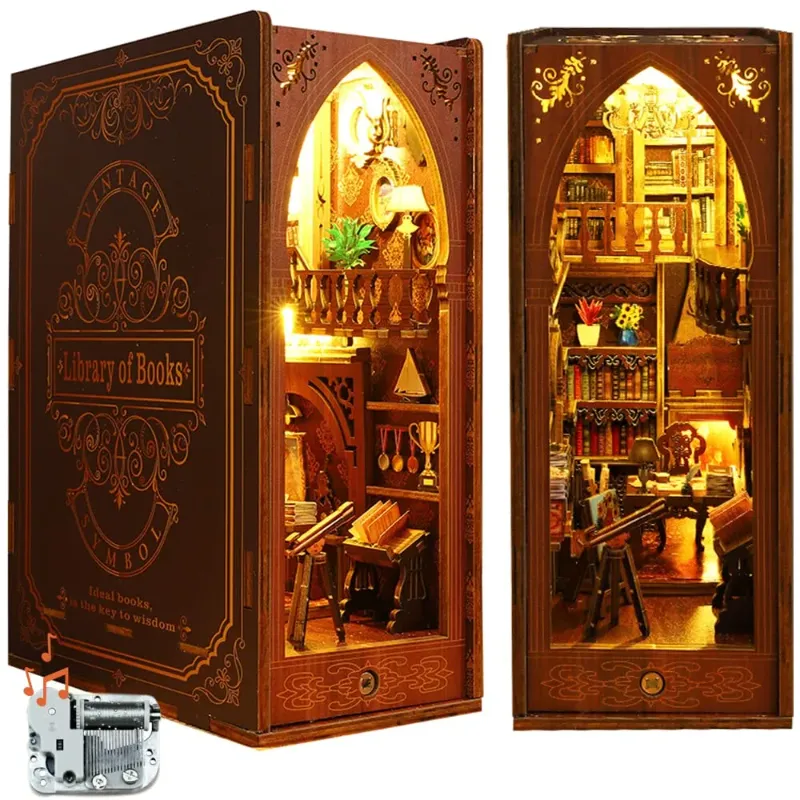 How to Choose the Right Book Nook Kit for Your Bookshelf Size6 Aug 20264 min